




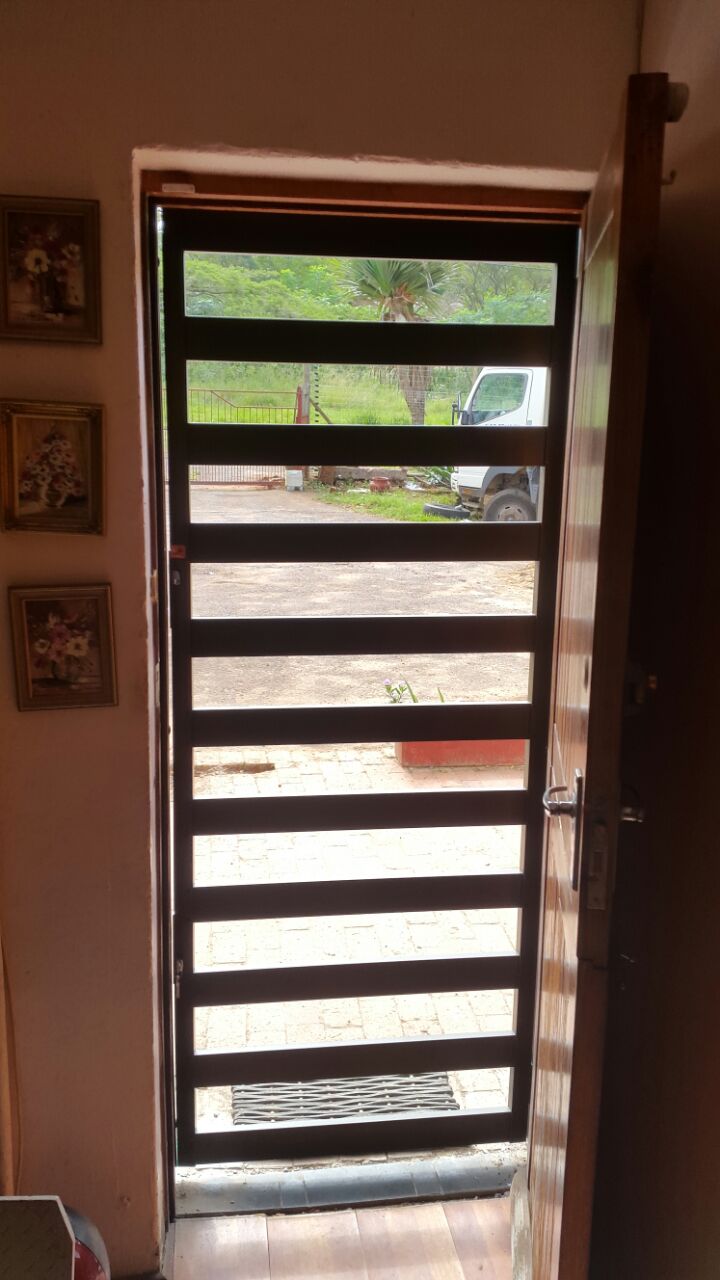
Most hinged security gate failures have nothing to do with cheap materials—they trace back to one overlooked decision made before installation even begins. Your climate, traffic load, and driveway demands quietly determine whether your gate stands firm for twenty years or becomes a persistent headache. The difference between a sagging eyesore and a fortress-grade entrance often comes down to hinge configuration, ball-bearing fittings, and galvanised steel working together. Get this wrong, and no amount of maintenance saves you.
Why Hinged Gates Remain the Top Choice
When you’re choosing a security gate for your South African property, hinged gates consistently deliver the performance and reliability that property owners demand. You’ll appreciate how hinged security solutions combine sturdy protection with architectural elegance—an advantage that sets Wonder Bars’ custom selections apart from mass-produced alternatives.
These gates excel because they distribute weight evenly across multiple hinges, helping to prevent sagging and ground scraping over time. You benefit from proven durability: galvanised steel construction resists coastal corrosion while maintaining structural integrity for years. Three-hinge configurations offer improved security by making forced entry significantly more difficult than two-hinge designs. Like properties protected by security services, hinged gates provide defence against unauthorised access through layered protection mechanisms.
You also gain smooth operation. Ball bearing cushions reduce friction, ensuring your gate swings reliably through frequent use and harsh weather conditions. Wonder Bars offers a free property consultation to help you identify the ideal hinged gate configuration for your specific access points and architectural style. When you invest in quality hinged security gates, you’re choosing a solution that protects your property while complementing your home’s aesthetic appeal.
Choosing Your Hinge Type: Weight, Width, and Traffic Load
Selecting the right hinges turns your security gate from a functional barrier into a durable, long-lasting installation that delivers years of reliable operation. Your hinge choice depends on three critical factors: gate weight, width, and how frequently it’s used.
Selecting the right hinges transforms your security gate into a durable, long-lasting installation built for years of reliable operation.
Load capacity: Gates weighing over 100 lb require hinges rated for at least 20 lb each. Heavy-duty steel T hinges support up to 100 lb per hinge, while standard models handle around 55 lb. For gates over 330 lb, adding a fifth hinge increases total capacity to 440 lb.
Gate width: Wider gates create greater torque stress on hinges. A 5–6 ft gate weighing 100–150 lb faces a sagging risk. Industry standards recommend strap hinge length measuring 25–33% of Gate width. Working with manufacturers who use SABS and UKAS approved components helps ensure your hinges meet verified load and durability standards.
Traffic load: High-traffic front door security installations benefit from ball-bearing hinges, which reduce friction and prevent wear during frequent opening cycles.
What Hinged Gates Cost in South Africa
Investment in a quality hinged security gate reflects your commitment to reliable property protection.
You’ll find hinged gates in South Africa ranging from R1,210 to R40,000, depending on materials and customisation. Basic manual swing gate installation starts at R3,500, while complete installations typically cost R15,000 to R40,000. Steel gates cost between R25,000 and R60,000, aluminium options between R20,000 and R50,000, and wooden alternatives between R15,000 and R35,000. Installation fees range from R550 to R15,000 depending on complexity. Standard gate sizes like 1000 x 2000 mm are the reference point for most pricing estimates in the industry.
Adding mechanisation increases costs to R30,000 to R80,000. Custom designs with logos or patterns add R5,000 to R15,000. Your door security investment scales with material selection, labour requirements and desired features, with premium motorised systems reaching R42,000 for residential applications. Working with specialists who have completed over 4,000 bespoke security installations ensures your gate is crafted and fitted to professional standards.
Hinged vs. Sliding vs. Pivot: Which Fits Your Property
Your choice between hinged, sliding, and pivot gates hinges on three critical factors: the physical space you’re working with, the upkeep you’re willing to handle, and what you’ll actually spend over time.
Hinged gates demand a swing arc equal to their width plus flat, level ground, while sliding gates eliminate clearance concerns and adapt to slopes, and pivot gates offer luxury flexibility but at a premium cost.
Understanding how each system performs under your specific property conditions—terrain slope, driveway width, and available space—ensures you’ll select a gate that delivers both security and longevity without unnecessary expense. High-quality hardware preserves the appearance and functionality of your chosen gate system over time, protecting your investment regardless of weather exposure or frequent use.
For added peace of mind, pairing your gate system with SABS and UKAS approved materials ensures the surrounding security framework meets rigorous durability and strength standards.
Give your home a grand entrance that keeps uninvited guests strictly on the outside! Check out our master guide on Swing Gates for Doors to see how custom-welded strength can perfectly match your home’s classic style.
Space requirements and clearance
When you’re planning a hinged security gate installation, the physical space on your property becomes your primary design constraint. Swing gates require full arc clearance equal to your gate width plus 10–15% additional room for the swing movement. Your hinges need a 1/2″–1″ gap on the latch side for correct operation, with no gap needed on the hinge side.
For swing gate safety, the UL325 standard requires protection for any gap under 16 inches between your gate and fixed objects. Ensure your opening width is at least 1 inch wider than the gate width to maintain adequate clearance. Measure the gap at your driveway’s highest point when your driveway has a peak, to ensure the gate swings smoothly over uneven surfaces.
Your centre-to-centre post spacing calculation: gate width plus hinge/latch gap plus one post width. Sliding gates use less ground space, needing only 10–20% extra horizontal clearance on one side. Pivot gates are suitable for tight spaces but require robust vertical structural support. Wonder Bars fabricates solutions tailored to your property’s unique constraints. Their process starts with a free on-site assessment to evaluate your specific spatial limitations before any design work begins.
Maintenance Demands By Gate Type
Because different gate types operate through distinct mechanical systems, their maintenance requirements vary greatly—and understanding these differences helps you choose the right solution for your property and budget.
Hinged security gates require annual hinge lubrication using weather-resistant products, along with regular checks of the fixings. Quality hinges often include zerk grease fittings, allowing you to use a standard automotive grease gun for quick, periodic maintenance.
Sliding gates need the track cleared every 6–12 months and roller inspections to prevent binding.
Pivot gates require lubrication at the pivot points and monitoring of the welds to detect early wear.
All three gate types share critical maintenance tasks:
- Clean moving parts regularly to remove debris that causes friction
- Tighten bolts and screws quarterly to prevent misalignment caused by vibration
- Test safety features and electrical connections on motorised security gates
When selecting materials for any gate type, prioritising high-grade steel fabrication over lower-grade industry alternatives significantly reduces long-term maintenance frequency and extends the gate’s service life.
Professional annual servicing helps catch internal issues before they compromise the gate’s performance and longevity.
Cost effectiveness and longevity comparison
Security gate selection involves weighing up the upfront costs against long-term durability, and hinged swing gates typically offer the most attractive initial investment.
You’ll spend between ZAR 11,000 and ZAR 18,000 for a standard installation, compared with sliding systems that cost ZAR 11,000 to ZAR 18,500 or more.
However, your classic swing gate choice deserves honest consideration.
Sliding gates show superior durability in windy conditions and resist forced entry more effectively. Simple mechanism using hinges means swing gates generally need fewer moving parts to maintain over time.
Swing gates require frequent adjustments in challenging weather, which could shorten service life. A free home security assessment can help you determine which gate type best suits your property’s specific environmental and structural conditions.
Installation checklist: what to measure before you buy
You’ll need to measure your opening width at both the top and bottom edges, then use the smaller measurement to ensure the correct fit.
Your headroom clearance and ground conditions—including slope and levelness—directly affect how the gate swings and whether it will hang properly. If you’re installing extension brackets to clear overhead door tracks or bollards, you’ll need to allow for the 6″ or 9″ extension depth in your measurements and in the positioning of the floor holes.
Taking these measurements before you buy ensures you order a gate sized precisely for your property, rather than discovering installation problems after purchase. For properties in areas prone to wildlife, a free home assessment can help identify additional entry points that may require bespoke security solutions tailored to your specific architecture.
Opening Width And Space
When installing a hinged security gate, the opening dimensions you measure today will determine whether your gate operates smoothly and functions as intended. You’ll find that accurate measurements prevent costly installation delays and ensure your custom security solution fits perfectly.
Start by measuring your opening at three distinct points:
- Measure the top of the opening and again 150 mm down from the top
- Measure the middle section horizontally between posts or pillars
- Measure the bottom of the opening and 150 mm up from the bottom
Record all measurements in millimetres for precision. Use the narrowest measurement as your base dimension. For residential pedestrian gates in KZN, standard widths range from 32 to 48 inches, with 36 inches being the most common.
Vehicle driveway openings require 10 to 12 feet for single-car access or 16 to 20 feet for double-car entries. Professional burglar bars KZN installations depend on these exact specifications for peak performance and security. Wonder Bars offers swing gates and burglar bars across Hillcrest and the wider KZN region, making it practical to confirm your measurements before requesting a free personalised quote.
Overhead clearance requirements
How high is the space above your gate opening? You’ll need to measure clearance zones carefully for proper home security South Africa installations. No overlapping objects can protrude into maneuvering clearances, even partially. The floor or landing area within the required maneuvering space must stay level and free of overhead obstructions.
Your maneuvering clearance can be offset by up to 8 inches from the door face to accommodate wall thickness. For deeper recesses, position the maneuvering clearance within 8 inches maximum for a forward approach. Measure wall thickness and adjacent elements from their leading edge to ensure full clearance freedom.
These specifications help prevent entrapment hazards and ensure safe gate operation. At Wonder Bars, we design custom security gates that respect these clearance requirements while maintaining aesthetic appeal. Proper overhead planning delivers great results for your property’s security and functionality.
Grade and Alignment Conditions
Before you purchase hinged security gate hardware, your property’s grade and alignment conditions must be precisely measured and documented.
Wonder Bars Durban recommends that you complete these critical measurements before ordering:
- Measure the grade differential across your entire opening to determine drainage needs and identify low spots where water collects.
- Record the soil type at your site to calculate the correct post embedment depth, ensuring stability and longevity in KwaZulu-Natal’s varied terrain.
- Confirm the total opening width before purchasing hardware to guarantee gate frame compatibility and proper swing mechanics.
You must ensure the ground slope allows your gate bottom to follow the grade naturally, or whether a V-shaped cut is required for proper drainage.
Verify swing-arc clearance to prevent the gate from striking fences or walls during operation.
These foundational measurements determine your project’s success.
Annual Maintenance for 20+ Years of Reliable Performance
Regular annual maintenance is your greatest investment in extending your hinged security gate’s operational lifespan to 20+ years.
You’ll carry out visual inspections of the frame, hinges and hardware for rust, damage or loosening caused by operational vibrations. Clean all panels, tracks and hinges using mild soap and water, removing debris that obstructs movement. Lubricate moving parts as appropriate to reduce friction and wear. You’ll tighten bolts, screws and brackets immediately upon detecting any slackness.
Test the gate’s functionality by opening and closing it several times, observing its speed and responsiveness. Listen for unusual noises that may indicate wear.
Your commitment to this structured maintenance schedule protects your physical security investment, ensuring your hinged gate operates reliably for decades while maintaining aesthetic appeal alongside strong protection for your Durban property.
Ready to give intruders the boot while welcoming in the fresh air? Swing into action and discover how sturdy swing gates for doors offer simple, track-free protection that operates just as easily as your normal entrance.