

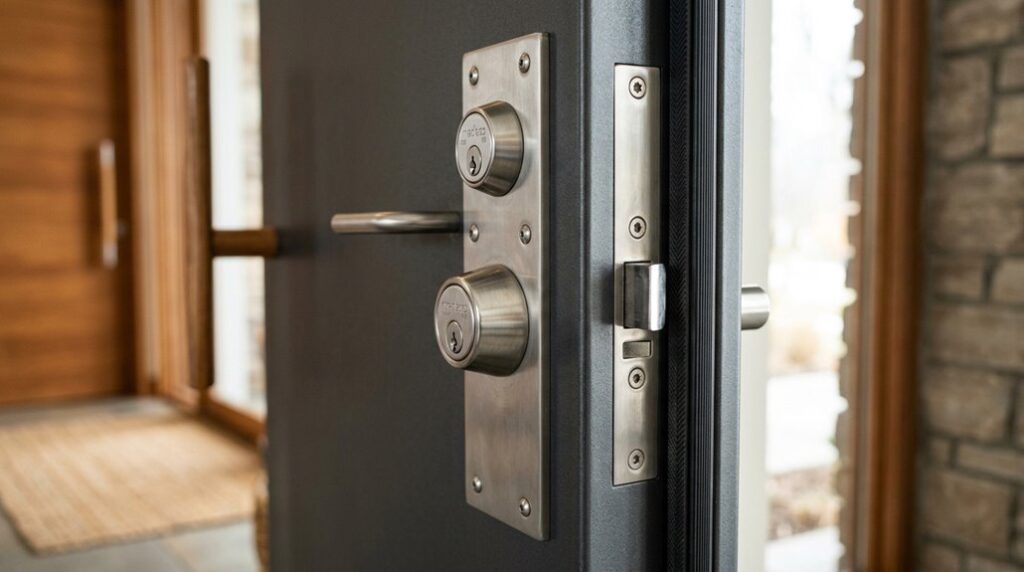
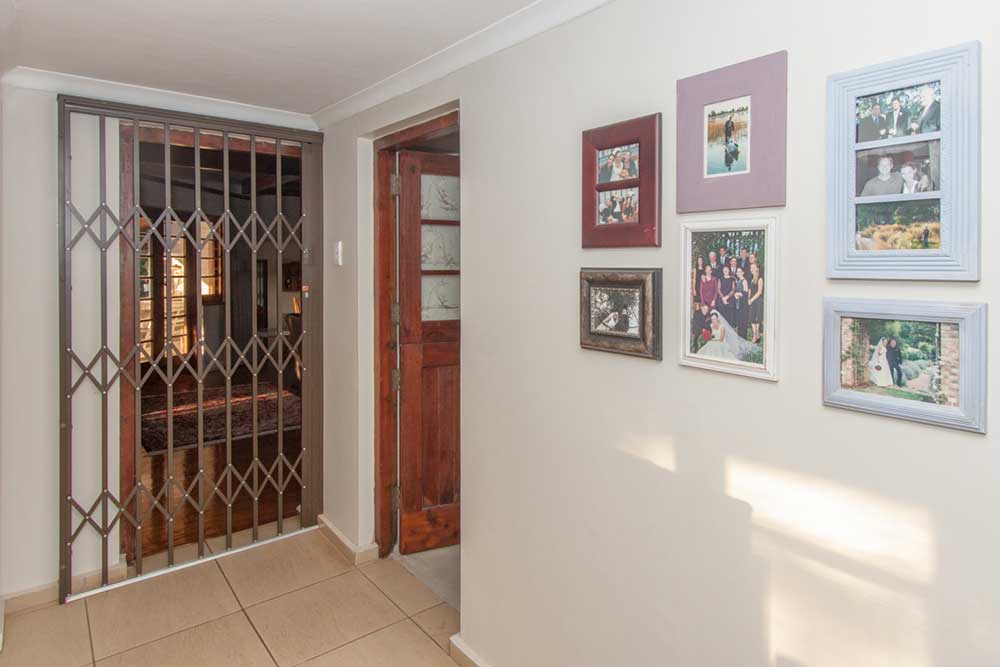
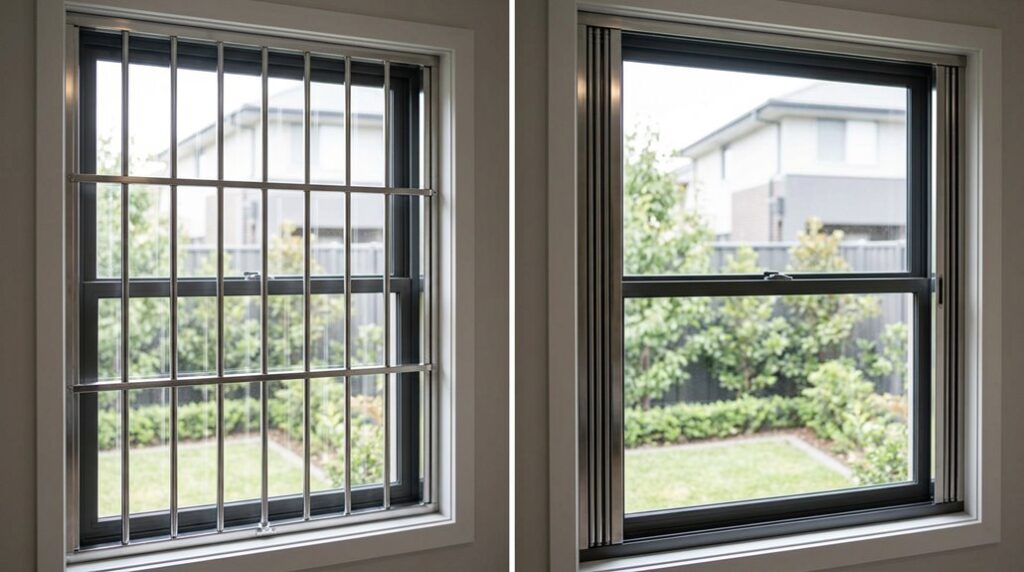
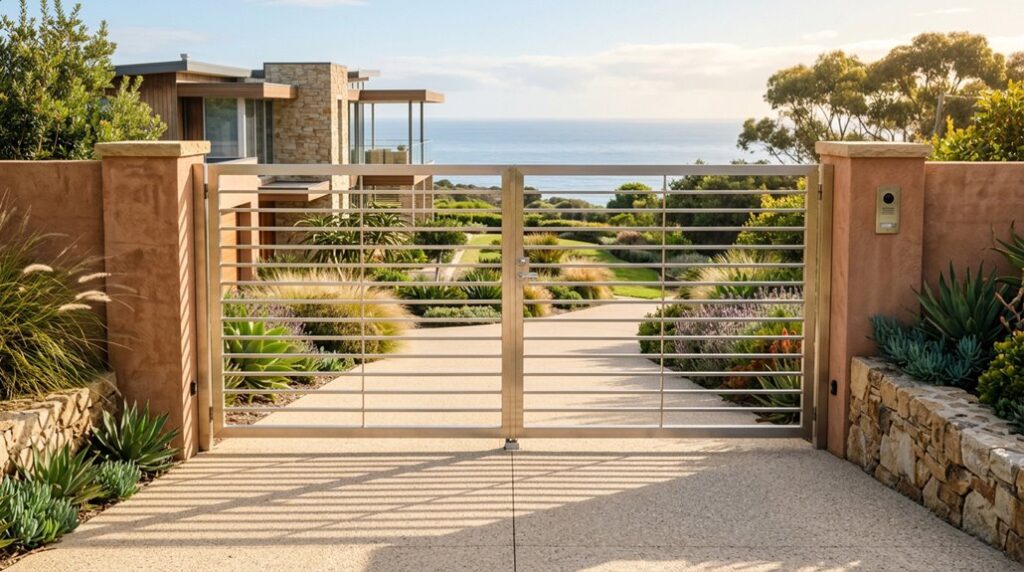

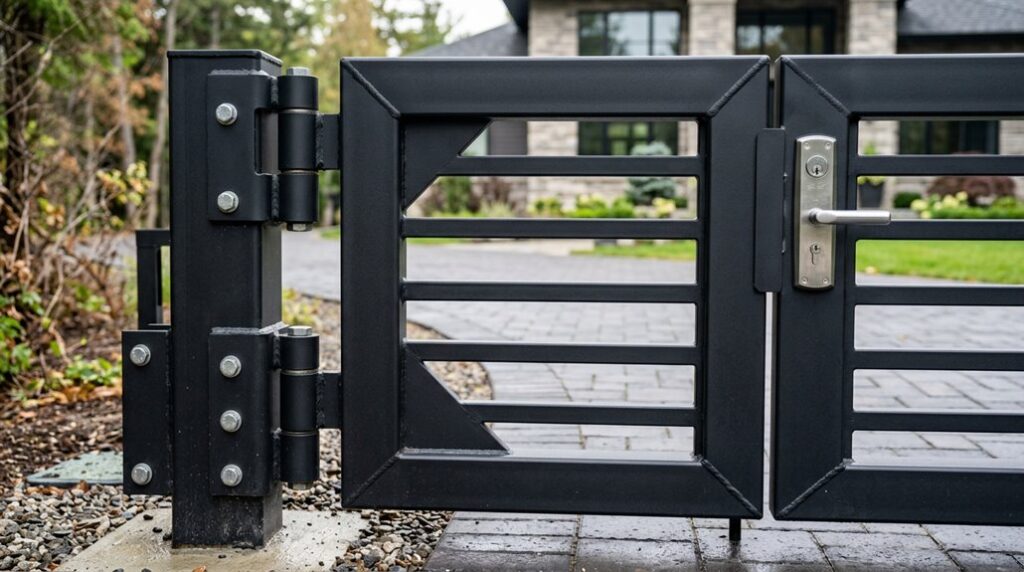

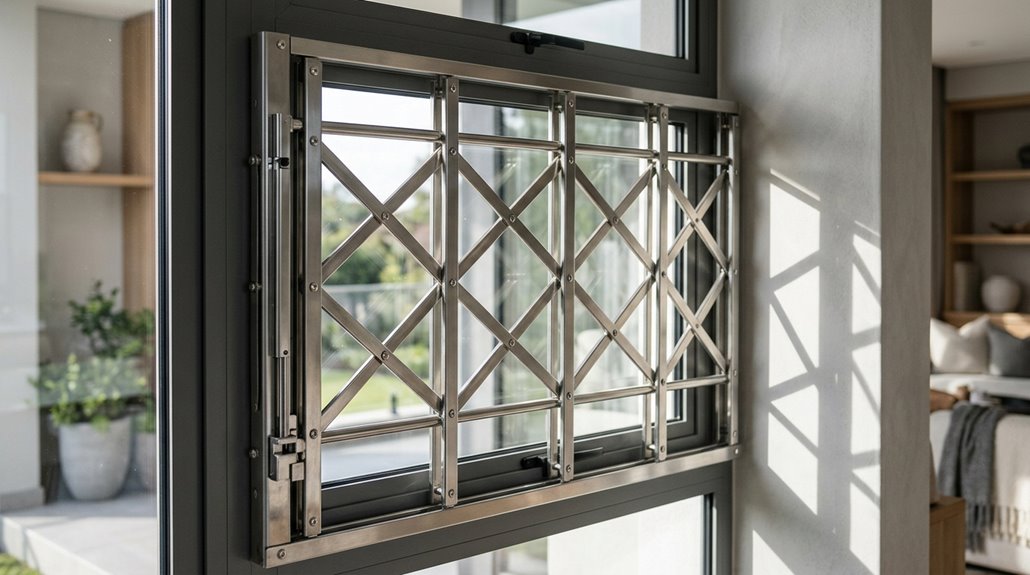
Most window security bars are a permanent trade-off between protection and escape—but retractable trellis bars quietly challenge that assumption. They slide shut against intruders, then stack completely out of sight when you need them gone. Fixed bars can never do both. Yet the design you choose determines whether your family stays safe from break-ins *or* gets out safely in an emergency. Those two priorities don’t always point towards the same solution, and the difference matters more than most homeowners ever consider.
When Retractable Bars Actually Make Sense: Flexibility, Escape, and Design
When you’re evaluating security options for your home, retractable bars offer a practical advantage that fixed burglar bars simply can’t match: they provide protection on demand while remaining completely unobtrusive when retracted.
Retractable windows with trellis bars slide closed for secure locking when you need protection, then stack neatly to the side when opened. This flexibility means you maintain quick access to window handles, latches and sills for cleaning and fresh-air ventilation.
Your home security South Africa strategy benefits from custom-made tight fits that eliminate the weak points criminals look for. Design integration becomes seamless when you powder-coat fixed and retractable barriers in matching colours. Ensuring at least one retractable barrier in your safe zone provides quick unlock-and-open emergency escape routes via windows.
One retractable unit can protect multiple windows, reducing both visual clutter and installation costs. This approach balances aesthetic appeal with strong physical security. Wonder Bars offers a free on-site assessment to help you identify the most effective placement for retractable trellis doors and windows across your property.
Single Trellis vs. Double: Which Design Stops Break-Ins Better?
When you’re comparing single and double trellis designs, you’re fundamentally considering one protective layer against two, and that difference matters greatly for break-in resistance. Single trellis bars apply the criss-cross mesh pattern to only one side of the vertical bars, leaving the opposite face exposed and vulnerable to cutting tools and prying attacks. Double trellis systems cover both sides with overlapping mesh, forcing intruders to cut through two layers instead of one while eliminating the visual gaps and leverage points that make single designs easier to breach. Choosing a reputable installer that uses SABS and UKAS approved components ensures that whichever trellis design you select meets rigorous material and safety standards. Double trellis patterns resemble the stronger fixed design with double uprights, providing comparable security benefits for cost-conscious property owners.
Single-layer security effectiveness
A single trellis barrier on its own cannot reliably stop determined burglars attempting window break-ins, and security experts consistently identify this limitation as a critical vulnerability in home protection strategies. When you’re considering burglar bars KZN options, understanding this reality helps you make informed decisions for your property.
Single-layer designs function mainly as deterrents rather than prevention measures. They add climbing difficulty and height, creating a useful time delay—typically 30–60 seconds—for alarms to trigger and response teams to act. However, without additional layers, determined intruders can breach a lone trellis using targeted force and the right tools. Layered security approaches ensure every point of failure has a backup and a coordinated response, making them far more effective than relying on a single barrier alone.
Consider these essential integration points for bars to improve window effectiveness:
- Motion-sensor lighting to improve visibility and deter intrusion
- Security cameras positioned for real-time monitoring
- Reinforced gates to reduce alternative entry routes
This retractable guide highlights that layered security approaches provide superior protection compared with single-barrier installations. Choosing products manufactured with SABS and UKAS approved materials also strengthens your overall security framework by ensuring the physical barriers themselves meet stringent durability and strength standards.
Double Trellis Resistance Advantages
Double trellis designs offer measurable structural advantages over single-layer configurations, though it’s important to understand exactly what those benefits deliver in a security structure. Double trellis uses increased timber volume and closely spaced battens, creating denser panel structures compared with standard designs. This density reduces open gaps, limiting visual access and providing greater screening capabilities.
However, density alone doesn’t equate to resistance to forced entry. The real difference lies in material specification and installation depth. When Wonder Bars Durban fabricates custom window grilles, engineers prioritise high-tensile coated steel wire (minimum 12-gauge, 2.7mm diameter) and appropriate anchorage methods. Similar to load-bearing applications in agricultural settings, the wire must be rated for sustained tensile stress to maintain structural integrity under pressure.
Your physical security investment succeeds through material grade and secure mounting—not batten density alone. Double configurations cost more, but deliver superior aesthetics alongside structural integrity for discerning homeowners seeking lasting protection. Wonder Bars brings this expertise to every project, having completed over 4 000 installations of bespoke security solutions across homes requiring both functional performance and refined craftsmanship.
Design Selection For Protection
Now that you understand how material specification and installation depth drive superior performance in double configurations, the question becomes practical: which design actually stops break-ins better for your specific situation?
Single trellis designs offer aesthetic appeal with moderate protection. Double trellis configurations deliver superior break-in resistance. Your choice depends on environmental risk factors and security priorities.
Consider these factors when selecting your design:
- Risk assessment – High-risk areas benefit from double trellis density; low-risk environments can accommodate single trellis aesthetics.
- Forced entry resistance – Double trellis requires considerably more time and effort to breach than single-layer systems.
- Long-term durability – Increased material density in double configurations resists deformation under sustained pressure.
Single trellis may flex under lateral force. Double trellis maintains structural integrity through multiple intersection points and material density. Security experts recommend double trellis for determined intruders using cutting tools. Natural fibre materials such as jute and hemp offer environmental advantages while maintaining comparable tensile strength to synthetic alternatives when properly specified. When prioritising both security and appearance, bespoke craftsmanship solutions ensure your bars are fabricated to match your exact window design rather than relying on inferior standard alternatives. Your specific situation determines the best choice.
Get Your Window Size Right: Measuring and Spacing Trellis Bars
Getting your window measurements right is the foundation of a properly fitted trellis bar security system. You’ll measure the daylight opening (DLO) by opening the window sash and placing a tape measure across the visible glass area. Record the width at the top, middle and bottom, using the smallest value. Take height measurements at the left, centre and right, again selecting the smallest dimension. Your guard must expand to a width larger than the measured opening to ensure proper fit and security function.
| Measurement point | Required action |
|---|---|
| Width | Record the smallest of three positions |
| Height | Record the smallest of three positions |
| Diagonals | Verify within 1/8 inch variance |
| Mounting area | Confirm minimum 1 inch clearance |
Hold your tape measure straight without bending into corners. Verify window squareness by measuring diagonals. Add 12 inches total width (6 inches per side) for proper coverage. When scheduling your measurements, consider booking a free home security assessment to have an advisor confirm your dimensions and identify any unique property requirements. This precision guarantees your custom trellis bars fit seamlessly while providing dependable security protection customised to your Durban-area property.
Your Safe Zone First: Where to Install and How to Budget
You’ll want to start your security installation by identifying which windows face the least visible yet most accessible entry points—these represent your highest-risk zones and should be prioritised for protection.
Once you’ve mapped your vulnerable windows, you can strategically phase your installation by beginning with those critical areas, while budgeting for custom trellis bars that fit your financial capacity—whether that’s immediate full coverage or a staged approach across multiple quarters. Fitting burglar bars can reduce insurance premiums and increase your home’s resale value, making the investment financially worthwhile beyond immediate security benefits. For a tailored approach to your property, consider booking a free, no-obligation consultation to assess your specific security needs and determine the most cost-effective coverage plan.
Identifying Your Safe Zone First
Before installing trellis bars on your windows, you’ll need to identify the structural locations where they’ll perform most effectively and set a realistic budget for materials and installation.
You’re identifying your safe zone by evaluating three critical factors:
- Structural integrity verification – Inspect vertical supports and solid framing capable of bearing load. Avoid untreated softwoods or flimsy plastic mesh that lacks the required strength for window safety zones.
- Optimal window positioning – Install trellis bars above door frames with the horizontal bar sitting 4 to 6 inches higher than the frame top for proper clearance and alignment.
- Material selection – Choose rot-resistant wood (cedar, redwood), pressure-treated pine rated for ground contact, or powder-coated aluminium for the primary materials to ensure longevity and an attractive finish. Most fully grown vines with fruit weigh approximately 15 lb at the roller hook, so your material choice must be able to accommodate this seasonal load. Where wildlife intrusion is also a concern, transparent durable materials offer an unobtrusive barrier that preserves natural light and views while strengthening your window’s structural defence.
Prioritising Windows for Accessibility
When securing your home with trellis bars, deciding which windows to protect first depends on accessibility—both how easily an intruder can reach them and how practical it is for you to fit barriers.
| Window location | Accessibility risk | Installation priority |
|---|---|---|
| Ground floor, street-facing | High | First |
| Ground floor, rear/side | High | First |
| First floor, accessible via structures | Medium | Second |
| Upper floors, limited access | Low | Third |
| Windows near entry points | High | First |
Assess each window’s vulnerability by checking how close it is to the ground, how visible it is from public areas, and whether there are nearby climbing aids. Ground-floor windows need immediate attention because intruders can access them most easily. You’ll achieve excellent results by installing barriers at high-risk entry points first, then working systematically upwards. This approach maximises your security investment while managing installation costs effectively across your property. Wonder Bars offers retractable trellis doors and retractable windows and fixtures, providing flexible security options that can be tailored to different window types and risk levels throughout your home.
Budgeting for phased security installation
Rather than installing security across your entire property at once, a phased approach lets you protect your home strategically while managing costs over time.
You’ll allocate your budget in distinct phases. This method spreads expenses across months or years, reducing financial strain while maintaining continuous protection.
- Initial Phase (15–20% of budget): Set up perimeter barriers and signage. This establishes your baseline security layer for access control and deterrence.
- Peak Activity Phase (50–60% of budget): Install primary trellis bars and detection systems when vulnerabilities are highest. Focus spending here to maximise protection impact.
- Finishing Phase (15–25% of budget): Complete installations and protect finishes from damage or theft during the final work stages.
Reserve 5–10% for demobilisation and cleanup. This structured approach guarantees you’re delighted with both protection and financial management.
Steel, aluminium, or hybrid: what material fits your home
Choosing the right material for your trellis bars determines both the security performance and long-term value of your window installation. You’ll find three main options: steel, aluminium, and hybrid systems.
Steel offers superior rigidity and tensile strength, helping to resist forced entry attempts effectively. However, you’ll need hot-dip galvanisation to prevent rust in outdoor environments. Steel is suitable for indoor applications where powder-coated finishes are preferred.
Aluminium provides natural corrosion resistance and a strength-to-weight ratio 2.8 times better than steel. You’ll find installation is easier and design options are wider. Aluminium performs better than steel in coastal KwaZulu-Natal’s high-humidity climate.
Hybrid systems combine aluminium frames with strategic steel reinforcements at key load points, balancing durability and weight. They’re recommended when your budget allows for extensive coverage.
Consider your location’s environmental demands and your preferred maintenance routine when making your decision.
Install Once, Protect for Years: Setup and Long-Term Care
Proper installation and consistent maintenance turn your trellis bars into a reliable security investment that performs effectively for decades.
Your installation success depends on following precise steps with the right tools:
- Measure your window frame dimensions accurately (length and width), then leave small gaps at the top and bottom for proper fit and function.
- Pre-drill holes in wooden frames using a 2 mm wood bit, then secure bars with one-way screws that resist removal by intruders.
- Check glazing regularly; inspect putty and bonding around glass, and lubricate stiff latches with spray to maintain functionality.
You’ll achieve great results by replacing rotten frames with BS PAS24-2012 manufactured items and ensuring at least one unbarred window remains for emergency access.
Your Wonder Bars installation delivers lasting protection when you prioritise these maintenance practices.