





Most people treat front doors as an afterthought—a cosmetic decision rather than a critical security investment. That’s a dangerous miscalculation. The gap between a standard retail door and a certified high-risk barrier isn’t measured in price alone; it’s measured in seconds versus minutes before an intruder breaks through. Material ratings, threat classifications, and certification standards determine whether your perimeter holds or collapses under pressure. What you choose today defines exactly how vulnerable you remain tomorrow.
Threat Assessment: Matching Door Ratings to Your Risk Level
Before you select a high-risk entry door, you’ll need to understand the specific threats your property actually faces. Door security isn’t one-size-fits-all. Your threat assessment determines everything—from material specifications to locking mechanisms.
Start by identifying credible threats affecting your location. Consider criminal activity, natural disasters, and existing vulnerabilities. Quantify the likelihood and potential impact of each scenario. This data-driven approach ensures you’re not over-investing or under-protecting. Forced-entry resistant doors work best as part of a layered protection strategy that integrates surveillance, access control, and trained response alongside physical barriers.
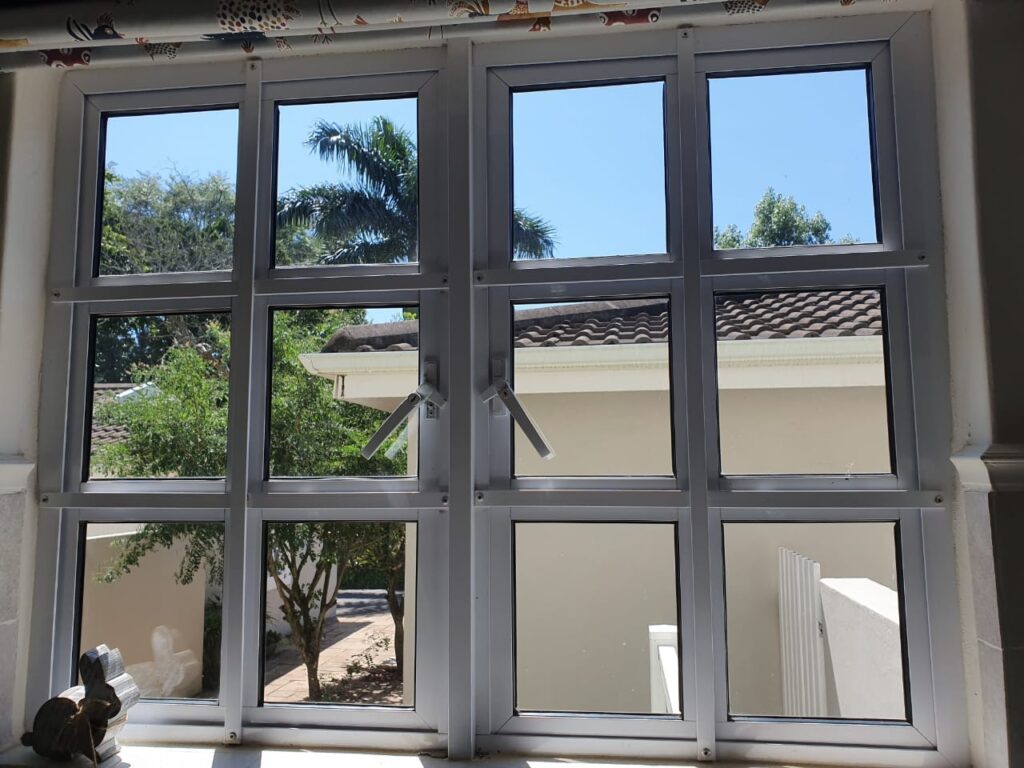
Match your findings to three primary resistance tiers: 5 minutes, 15 minutes, or 60 minutes. These durations align with law enforcement response times in the wider Durban area. If firearms pose a genuine threat, specify the appropriate UL 752 ballistic levels. For complete perimeter protection, window security should also be addressed using SABS and UKAS approved materials to ensure consistent strength and durability across all vulnerable entry points.
Consult with property stakeholders about perceived risks and security goals. This collaborative process creates balanced, effective door security solutions tailored to your actual risk profile.
Material Selection: Why Steel and Hardwood Beat Retail Alternatives
Once you’ve matched your property’s specific threats to an appropriate resistance tier, the next decision centres on what materials will actually deliver that protection. Steel emerges as the gold standard for high risk entry doors because it passes ASTM forced entry resistance tests that wood and fibreglass fail.
Steel doors last 30 to 40 years with minimal maintenance, requiring only occasional cleaning. Wood demands frequent re-sealing and staining to prevent rot and warping. Steel acoustic doors can achieve 3-hour fire ratings while maintaining superior sound transmission performance, providing dual protection in critical facilities.
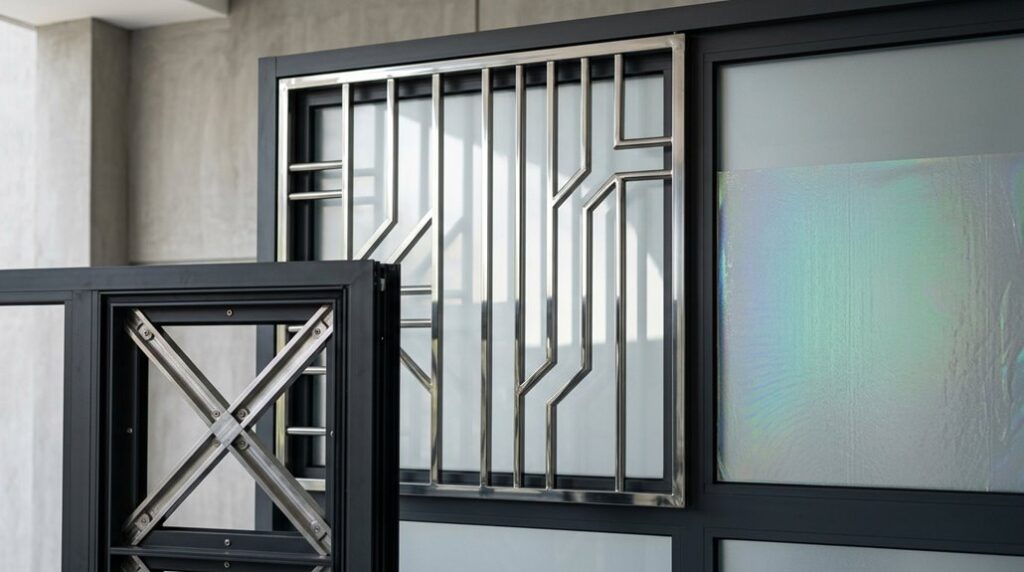
Steel offers superior corrosion resistance, maintains structural integrity through environmental stress, and resists denting and abuse. For high risk applications, steel’s proven performance against forced entry, combined with its longevity and low maintenance requirements, positions it as the material that reliably protects your property for decades without compromising aesthetics. Complementing steel entry doors with bespoke security installations such as burglar bars and trellis doors creates a layered defence system that addresses vulnerabilities across every access point of the home.
Certification Standards That Guarantee Performance
Material selection and aesthetic design matter, but they are meaningless if your entry doors cannot actually withstand a forced entry attack. You need verified certification standards to back up your security investment.
The ASTM F3038 standard assesses complete door assemblies under coordinated tool-based attacks by six assailants over 5, 15, 30, or 60-minute intervals. Your doors must resist 41 separate assaults, including 50 fire axe impacts, to achieve certification. The ASTM F3038 rating time levels are specifically defined as 5, 15, 30, or 60 minutes to set performance benchmarks for different security requirements.
The U.S. Department of State SD-STD-01.01 Rev G sets forced entry levels FE5, FE15, and FE60 for diplomatic and high-security facilities, requiring products to appear on the official DOS certified equipment list.
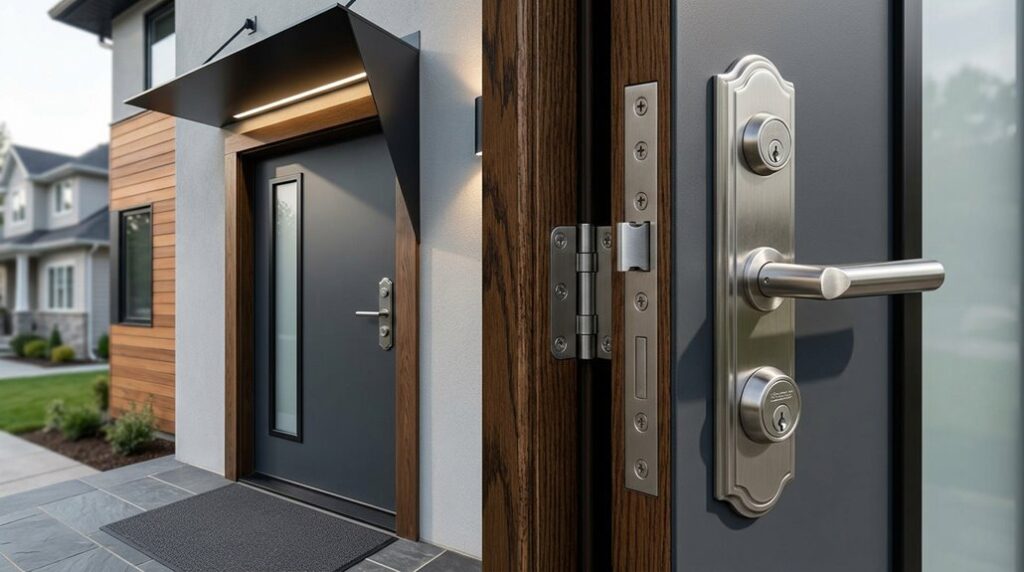
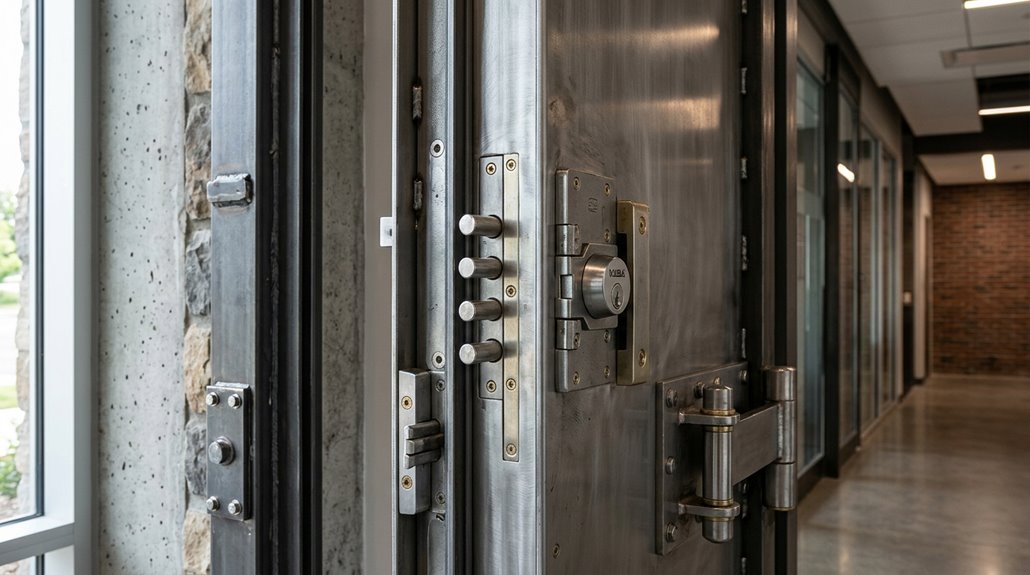
European EN1627 defines resistance classes RC1 through RC6 based on attack duration and tool complexity, with RC3–RC4 being standard for commercial applications. Beyond the door panel itself, certified assemblies must include robust locking mechanisms and reinforced hinges that meet the same resistance class as the rated door unit.
Always request certified laboratory test reports confirming the exact standard used, the lab’s accreditation, and the test dates. Your specified assembly must match the tested unit exactly.
The Hardware That Actually Stops Forced Entry
Certification standards verify that your door can withstand coordinated attacks, but the actual resistance comes from the hardware you install.
When you’re evaluating door security KZN solutions, you’ll want to focus on components that physically stop forced entry attempts.
The strongest barriers combine three critical elements:
- Deadbolts with Grade 1 certification extend deep into the door frame, resisting kicking and drilling through 250,000 reliable lock-unlock cycles
- Heavy-duty strike plates with 3-inch stud screws distribute force across steel framing instead of snapping under pressure
- Security hinges crafted from corrosion-resistant stainless steel prevent hinge sabotage and door lifting
Solid steel construction prevents bending during attacks.
Thin metal reinforcements fail immediately.
Wonder Bars fabricates custom hardware that blends seamlessly with your architecture while providing genuine protection. Backed by over 21 years of industry experience, their team understands which configurations deliver the most resistance against coordinated forced entry.
Installation quality matters equally—proper fit guarantees each component performs as designed. Drilling pilot holes before driving screws prevents wood splitting and ensures hinges anchor securely into the door frame stud.
Vision Panels and Ballistic Glazing Done Right
You’ll find that vision panels represent your entry door’s most critical vulnerability, and a single unrated glazing section completely negates the ballistic protection of your entire system.
Your ballistic glazing specifications must match your door’s UL 752 rating level across every transparent component—including sidelites, transoms, and vision lites—because projectiles will exploit any mismatched rating without exception.
Lamination thickness, typically ranging from 0.5 inches to 2.25 inches (12 mm to 57 mm), directly determines your glazing’s ability to absorb impact energy through alternating hard and soft layers that deform bullets and capture dangerous fragments. The entire window system must be rated, including frame, hardware, and anchoring, to avoid weak points that compromise your door’s overall ballistic certification. Beyond ballistic performance, your glazing selection should take into account high-strength materials that simultaneously resist weather exposure and deter forced-entry attempts between ballistic threat events.
Eliminating Weak Point Vulnerabilities
While vision panels serve an important functional purpose in front doors—allowing occupants to identify visitors and monitor exterior areas—they represent the most significant structural vulnerability in high-risk security installations.
Standard annealed glass fails instantly under minimal force, eliminating the critical delay time security personnel need to respond to forced entry attempts. Adjacent side panels create direct reach paths to interior locks when standard glass is shattered, compounding the vulnerability.
You’ll strengthen your entry doors by implementing these proven solutions:
- Install ballistic glazing using polycarbonate or laminated glass systems that meet LPS 1673 threat standards
- Secure glazing with steel reinforcement beads and heavy-duty retention frames to prevent panel displacement
- Reinforce perimeter frames with jamb kits and 3-inch structural screws anchoring into wall studs
When properly installed, ballistic glazing holds together after impact, creating the essential response time.
This layered approach—combining hardened glazing with electronic monitoring—delivers the enhanced protection that burglar bars KZN installations require for genuine high-risk security. For properties with traditional window designs, bespoke cottage pane burglar bars can be integrated alongside hardened front door systems to eliminate additional perimeter vulnerabilities without compromising architectural character.
Ballistic glazing specifications matter
Choosing the right ballistic glazing material determines whether your entrance door can withstand genuine high-risk threats or merely creates the illusion of security. You’ll find four main material types: acrylic, polycarbonate, glass-clad polycarbonate, and insulated glass units (IGUs). Each offers distinct advantages for the strongest barriers.
Monolithic acrylic requires at least one inch thickness for Level 1–2 protection. Laminated polycarbonate combines multiple layers with TPU interlayers for improved energy absorption. Glass-clad polycarbonate fuses glass and polycarbonate, offering protection across UL 752 Levels 1–8.
SchoolSafe™ Premium glazing achieves a Level 1 rating at just 0.544 inches thick, weighing 5.15 lbs per square foot. Your vision panels directly affect forced entry resistance—up to 30 minutes depending on specifications. Correct glazing selection turns your entrance door into genuine high-risk protection. For properties requiring reinforced openings beyond glazing alone, retractable trellis doors provide an additional certified layer of deterrence when integrated at entry and internal thresholds. Effective protection requires complete barrier system design, including rated frames, doors, surrounding materials, structural support, and anchoring to ensure barrier performance and architectural integration.
Lamination thickness and performance
The thickness of lamination layers in your entry door’s vision panels and ballistic glazing directly determines how well it resists forced entry and ballistic threats. You’ll find that interlayer thickness acts as the primary performance controller, not glass thickness alone.
Consider these critical specifications:
- Minimum 1.52 mm interlayer thickness resists typical forced-entry resistance effectively
- Level 3 ballistic laminate requires three 0.76 mm PVB layers totaling 2.29 mm between glass plies
- UL 752 Level 1 (9 mm handgun) protection demands approximately 32 mm total thickness
Your security gates and entry doors benefit from SentryGlas® interlayers, which outperform standard PVB by 25.8% in blast energy dissipation. Strategic multi-layer designs with thicker middle layers reduce deflection by 73% compared to uniform configurations. Composite PVB interlayers can achieve equal or higher penetration resistance at thinner constructions versus conventional PVB, allowing more cost-effective specification without sacrificing performance. Proper lamination thickness converts your barrier into a great result for long-term protection. For properties with high-risk access points such as patios and garden entrances, pairing ballistic glazing with retractable trellis doors provides a layered security approach that addresses both impact resistance and perimeter control.
Access Control: Automating Your Door’s Verification Layer
You’ll find that electronic access control systems turn your high-risk entry doors from static barriers into intelligent verification layers that log every access attempt and enforce role-based permissions.
Automated visitor verification methods, ranging from cloud-managed credentials to biometric solutions such as fingerprint and facial recognition, remove the need for shared codes while maintaining audit trails that are essential for compliance and incident investigation.
By integrating these systems with your door’s forced-entry ratings, you ensure that both the physical barrier and its electronic gatekeeper work in harmony, creating a cohesive security framework that addresses threats across both mechanical and digital fronts. For properties in wildlife-prone regions, pairing electronic access control with bespoke monkey proofing solutions adds a dual layer of protection that deters both human intruders and vervet monkeys without compromising the integrity of your entrance points.
Electronic Access Control Systems
While traditional mechanical locks have served property security for centuries, electronic access control systems now offer a fundamentally different approach to managing who enters your home or business. These systems represent the modern standard for home security in South Africa, automating verification through integrated technology rather than physical keys alone.
Your electronic access control system operates through five core components working together:
- Access control panels process requests and make permission decisions based on programmed credentials
- Digital credentials replace traditional keys, including cards, fobs, and biometric data such as fingerprints
- Readers and management software provide real-time monitoring and detailed access logs
Remote management capabilities allow you to grant or revoke permissions from anywhere. Real-time audit trails record every access attempt, whether granted or denied, creating exhaustive security documentation for your property.
Automated Visitor Verification Methods
Once your electronic access control system is in place, mechanising how visitors verify their identity becomes the next essential layer of protection for your property. You’re safeguarding your physical security by implementing biometric facial recognition, which completes identity verification in under 30 seconds with border-control level accuracy.
Digital ID scanning captures details from drivers’ licences and passports across 196 countries, automatically checking visitors against watchlists. QR codes and mobile credentials streamline entry while reducing manual oversight.
Pre-approval workflows allow authorised hosts to configure visitor access in advance, ensuring only legitimate guests are admitted. Automated badge printing generates time-limited credentials immediately upon verification.
These integrated systems achieve approximately 60% automation within thirty days, creating a seamless, secure entry experience that protects your facility while welcoming authorised visitors efficiently.
Integration With Forced-Entry Ratings
Effective access control systems depend on doors that can genuinely withstand forced entry, which is why integrating your electronic verification layer with certified forced-entry ratings creates a complete security solution. You’re combining two essential protective pillars that operate independently but work best together.
When you choose a door with ASTM F3038 or SD-STD-01.01 certification, you establish measurable delay times—typically 5 to 60 minutes—against determined attackers. Your access control system then monitors this barrier in real time through door position sensors connected to your PACS platform.
Integration benefits include:
- Automatic activation of the video feed when forced-entry alarms trigger
- Failed credential attempts logged alongside physical entry attempts
- AI-enabled systems flagging suspicious activity patterns
Wonder Bars Durban specialises in bespoke doors engineered for both aesthetic integration and certified forced-entry performance, ensuring your facility receives matched layers of protection.
Looking for the perfect match? Finding the ultimate security fit for your doorway shouldn’t feel like standard guesswork. Explore our guide on how to secure your property with custom door security built precisely for your space.