


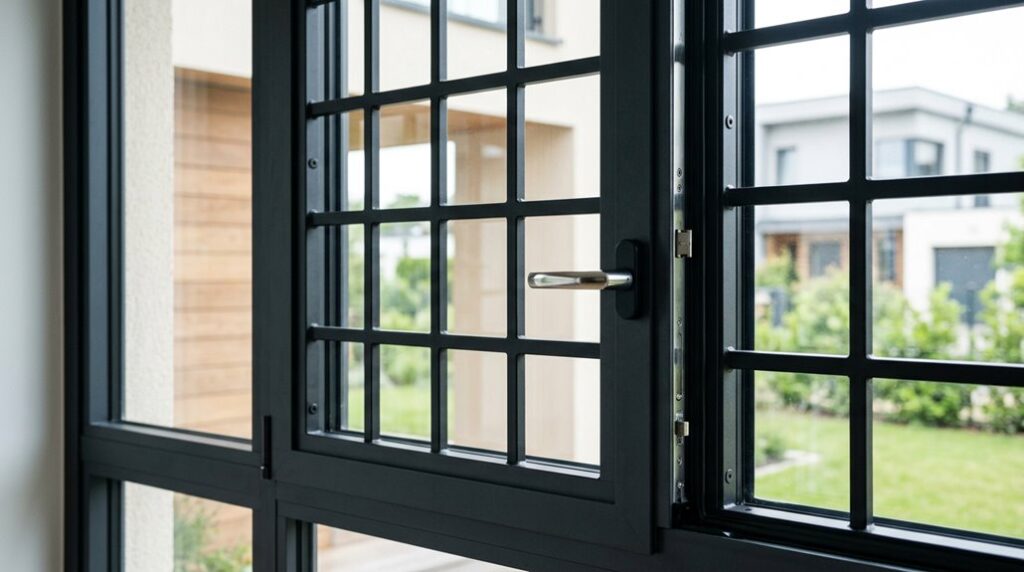
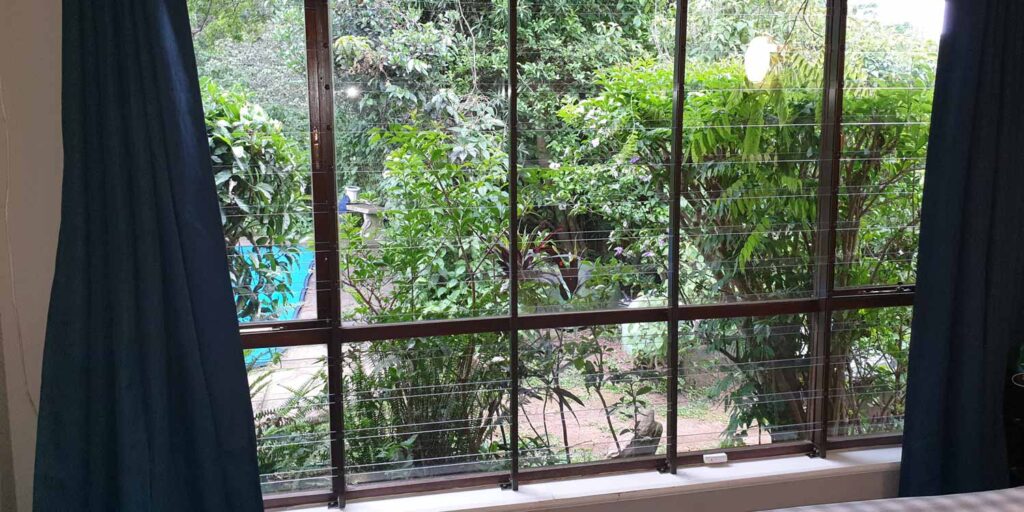


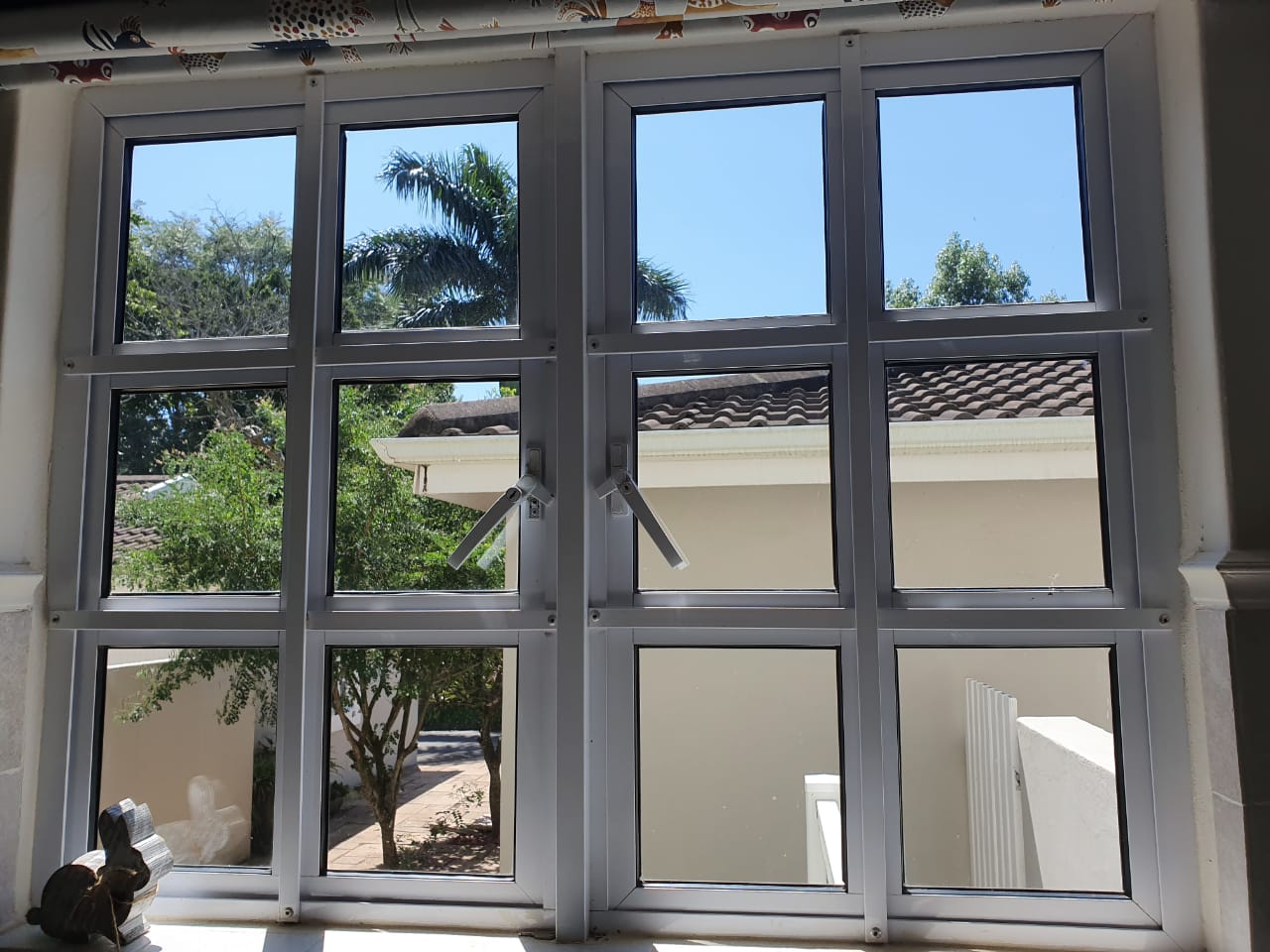
Most KZN homeowners believe aluminium windows are secure enough. They’re wrong. Standard frames and basic latches are quietly inviting forced entry, silent blade attacks, and lever techniques that exploit vulnerabilities you’ve likely never considered. Ground-floor windows are especially exposed—yet the right layered upgrades change everything. Reinforced glass, multi-point locks, and smart detection systems don’t just deter intruders; they create genuine barriers. Before you assume your property is protected, you need to know exactly where the weaknesses are hiding.
Why Aluminium Windows Alone Won’t Stop Break-Ins: Assessing KZN Vulnerabilities
While aluminium windows offer clean lines and modern aesthetics that appeal to many homeowners in KZN, they do not provide adequate security on their own.
Aluminium windows deliver modern aesthetics but lack inherent security—burglars exploit design vulnerabilities regardless of frame quality.
Your aluminium window’s glass sits in tensioned beading and rubber gaskets—not glued or screwed. Burglars can silently clip out entire panes using a blade without triggering alarms.
Once removed, standard burglar bars in KZN become bendable obstacles rather than barriers. Fixed windows remain equally vulnerable despite having bars installed.
Your home security strategy in South Africa fails if you rely solely on frame material. Locking mechanisms mean nothing when glass removal happens first.
Ground-floor windows near doors create indirect entry points. Back and side windows, often overlooked, invite targeted attacks. Exolon polycarbonate materials provide impact resistance 250 times greater than standard glass, offering a more effective barrier against forced entry.
Thorough protection requires multiple layers: reinforced glass, proper installation, deadbolts, and consistent vulnerability assessments across all access points. A free home security assessment from a qualified security advisor can identify overlooked entry points and recommend customised solutions tailored to your property’s specific architecture.
Window Security Locks: Upgrading From Standard Latches to Multi-Point Systems
Standard latches simply won’t protect your aluminium windows—they’re designed for convenience, not security. Hook latches fail against forced entry and allow windows to lift from their frames. Your ground floor windows are particularly vulnerable without upgrades.
Multi-point locking mechanisms offer superior window security. These systems engage multiple locking points simultaneously along the frame edge, creating a continuous barrier that resists leverage attempts far better than single-point alternatives. They’re the best-rated security option for casement windows. According to SABS lock standards, different locking systems are needed depending on window type and risk level to ensure comprehensive protection.
Installation costs range from R800 to R1,500 per window—a worthwhile investment to protect modern properties. For sliding windows, combine a keyed lock with a security bar for excellent protection for under R600. High-risk ground floor areas benefit from layering multi-point locks with burglar bars, ensuring complete defence against break-ins. A professional free home security assessment can identify the specific vulnerabilities in your property and recommend the most effective locking solutions for each window type.
Glass vs. Film: Choosing Your Barrier by Floor Level and Budget
When you’re protecting your KZN home, you’ll face a critical choice between laminated security glass and security film, each offering distinct advantages depending on your property’s layout and budget. Ground-floor windows require maximum protection, so you’re comparing all-encompassing solutions ranging from £2,500–£6,000 per window (glass, locks, and film combined) against more affordable retrofit options using security film at £300–£600 per m². Security film is typically made from thick polyester with special adhesives, which resists impact and helps keep shattered pieces together even if the glass cracks. Your multi-storey strategy should account for different risk levels: high-risk ground floors benefit from laminated glass’s superior durability, while upper floors can achieve adequate protection with security film at a fraction of the cost. For sleeping areas specifically, it’s essential to factor in fire-escape route accessibility when selecting and fitting any window security solution, ensuring occupants can exit safely in an emergency.
Laminated Glass for Ground Floors
Ground-floor windows and doors require fundamentally different security approaches than upper-level openings because they’re directly accessible to potential intruders. Laminated glass is your primary defence at ground level, where break-in risk remains highest.
Laminated glass consists of glass panes bonded with a polyvinyl butyral interlayer that holds the shards together when broken, significantly slowing down penetration attempts. This permanent solution provides greater structural resistance than film-based alternatives during prolonged attacks. The embedded interlayer acts as a “set it and forget it” barrier that requires no maintenance. Unlike security film, which can yellow, peel or scratch over time with a typical lifespan of 10–15 years, laminated glass retains its appearance and performance for decades.
For ground-floor protection, laminated glass is non-negotiable for doors and windows near climbing points such as decks or low roofs. Wonder Bars operates from their Brackenhill, Hillcrest location, serving KZN homeowners who need expert guidance on choosing and installing the right laminated glass configuration for their specific property layout. Custom fabricators like Wonder Bars Durban design laminated installations that blend security with your home’s appearance, while providing maximum classification protection for long-term durability.
Security Film Cost-Effectiveness Analysis
While laminated glass provides unrivalled durability for ground-floor installations, security film offers a practical alternative that doesn’t require replacing your entire window system.
You’ll have quality security film installed for R1,280–R2,880 per square metre, compared to R11,200+ per square metre for bulletproof glass replacement.
For a typical 3-bedroom KZN home with around 15 windows, you’re looking at:
- Basic package: R24,000–R40,000
- Mid-range package: R40,000–R56,000
- Premium package with frame anchoring: R56,000–R72,000
Ground-floor windows require a minimum 8-mil thickness for effective burglary deterrence.
Mid-range 8–12 mil film costs R160–R224 per square metre installed.
Your investment typically pays for itself within 3–5 years through energy savings alone, reaching R3,200–R8,000 annually in KZN’s hot climate.
For comprehensive window protection, pairing security film with custom swing gates installed by professionals using SABS and UKAS-approved components adds a critical secondary barrier that film alone cannot provide.
Multi-Floor Protection Strategy Comparison
Your security film investment creates a strong foundation for upper-floor protection, but ground-floor windows call for an entirely different strategy.
Upper floors benefit mainly from security film (R300–R600/m²) to help keep glass in place during seismic activity or windborne debris. Ground floors require layered defence: film combined with multi-point locks and hinged burglar bars for comprehensive resistance against heavy hand tools.
Sliding aluminium windows on any level become more effective when film is paired with wooden dowels or security bars in the track, helping to prevent forced sliding. High-risk ground-floor areas need film plus physical barriers, while budget-conscious upper floors may rely on film and sensors alone. Professional installation is often necessary for higher-thickness systems and to meet certification requirements, ensuring optimal performance.
This tiered approach maximises the value of your protection investment. Ground-floor laminated glass installation costs range from R25–R50 per square foot, while film retrofits cost R8–R20 per square foot—offering cost-effective scalability across your property’s different risk levels. Homeowners looking for bespoke security installations can benefit from a tailored consultation that assesses each window’s vulnerability based on floor level, orientation, and surrounding risk factors.
Physical Barriers That Block Forced Entry: Bars, Mesh, and Real Installation Costs
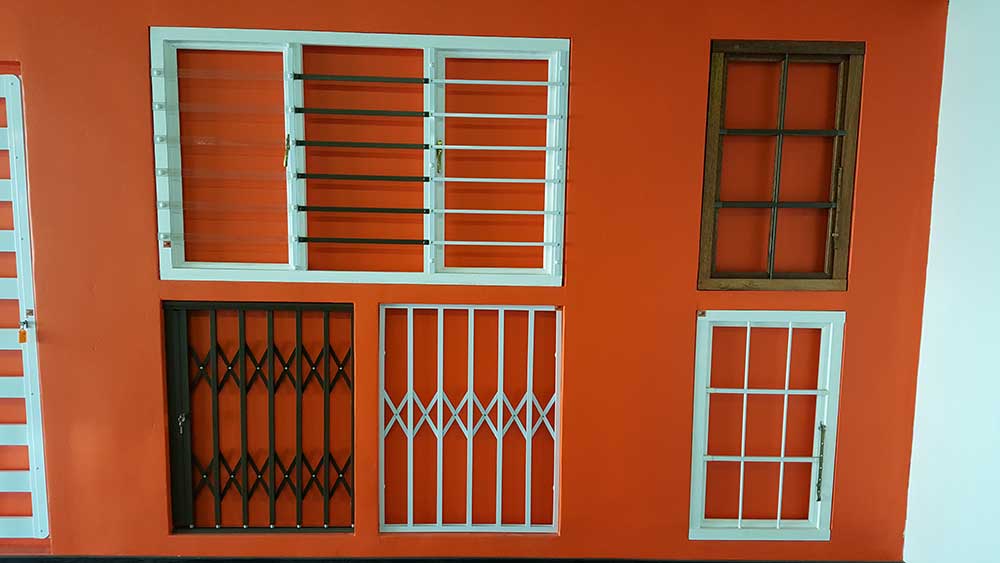
When you’re protecting ground floor windows in KwaZulu-Natal (KZN), you’ll choose between two primary physical barriers: burglar bars and security mesh, each offering distinct advantages for preventing forced entry.
Fixed steel bars start at R550 per square metre and provide permanent, welded security, while hinged or removable systems at R1100–R1980 per square metre allow emergency egress without sacrificing protection. Security measures like these may sometimes trigger security service protections when discussing technical specifications online, so documentation of your installation details is important for future reference.
Security mesh alternatives such as trellis designs prevent hands from reaching through glass and cost between R1650–R2200 per square metre, making them ideal when you prioritise visibility alongside barrier strength. For properties with unique architectural features, bespoke security solutions can be fabricated to precise measurements, ensuring a flush fit that standard off-the-shelf products cannot achieve.
Burglar bars for ground floor
Ground floor burglar bars provide the primary physical defence against forced entry, safeguarding your home’s most vulnerable access points with permanent or removable metal barriers.
You’ll find several effective options suited to KZN’s coastal environment:
- Fixed steel bars (R500–R1,500 per m²) offer maximum strength with lower initial cost
- Aluminium barriers (R600–R2,000 per m²) resist salt-air corrosion, which is critical for ground-level exposure
- Removable systems (R1,100–R1,980 per m²) balance security with ventilation access using internal locking pins
- Professional installation includes mounting and labour costs of around R1,500 for standard windows
Ground floor windows face greater exposure to attempted break-ins, making permanent barriers a practical investment.
Steel requires regular rust prevention maintenance in humid conditions.
Aluminium provides superior durability without ongoing upkeep.
For properties with traditional window designs, cottage pane burglar bars offer bespoke craftsmanship that matches the exact window grid patterns while maintaining the property’s architectural integrity.
Your choice depends on balancing security requirements, aesthetic preferences, and your long-term maintenance commitment for your property’s specific location. If you experience access issues when researching security providers online, a security service may be blocking your connection to protect against potential threats.
Security mesh as alternative protection
Security mesh offers a practical alternative to traditional burglar bars, providing protection without sacrificing visibility or ventilation. You maintain clear sightlines while keeping intruders out. The ultra-strong stainless steel or aluminium mesh resists cutting, drilling and impact forces. Impact-resistant frames bolster structural integrity with powder-coated finishes that withstand coastal KZN corrosion.
| Feature | Burglar Bars | Security Mesh |
|---|---|---|
| Visibility | Obstructed | Clear |
| Airflow | Restricted | Unrestricted |
| Aesthetics | Industrial | Modern |
| Cost per Window | ZAR 1,200–2,500 | ZAR 800–2,000 |
| Installation Complexity | High | Moderate |
You’ll appreciate the flexibility. Security mesh works with sliding, fixed and casement windows. Installation costs range from ZAR 800 to ZAR 2,500 per window, depending on dimensions and frame material. Your property gains tested forced-entry resistance aligned with SANS 10400-XA standards while still maintaining contemporary design preferences. For broader perimeter protection, swing gates with advanced locking mechanisms complement window security by controlling access at entry points before intruders reach the building envelope.
Sliding Windows and Doors: Anti-Lift Blocks, Dowels, and Keyed Locks
Because sliding windows and doors are the most common entry points in modern KZN homes, you’ll want to understand three proven mechanical upgrades that work together to prevent forced entry: anti-lift blocks, dowels, and keyed locks.
Sliding windows and doors need three proven mechanical upgrades: anti-lift blocks, dowels, and keyed locks to prevent forced entry.
These components work as follows:
- Anti-lift blocks prevent panels from being lifted vertically out of tracks, installed in the top header using self-tapping screws.
- Dowels and track stoppers act as rigid inserts that block sliding movement beyond a set point, providing a secondary mechanical stop.
- Keyed locks require physical keys to operate the handles, featuring anti-drill cylinders resistant to tampering.
- Steel keeps are screwed into frame reinforcement, resisting levering forces when paired with mushroom cams.
For coastal KZN properties, specify SS304 stainless steel components.
Ensure the lift resistance meets at least 250 N force requirements and is compatible with standard 28–35 mm track widths.
Window Sensors: Detecting Break-Ins Your Locks Can’t Stop Alone
While mechanical locks and dowels create formidable resistance against forced entry, they can’t alert you if someone attempts to break glass or override your defences while you’re away. Window sensors fill this critical gap by detecting unauthorised opening and triggering immediate alerts to your smart devices or alarm system.
Contact sensors mount on your window frame with a magnet on the sash. When forced open, the contact loop breaks and sends a switched signal directly to your security system. You’ll receive immediate notification, allowing you to contact the authorities before full entry occurs.
Window sensors cost R200–R500 per unit and work best alongside physical barriers. Ground floor windows benefit most from this three-layer defence strategy: locks, security film, and detection. Sensors don’t prevent entry—they report attempts, giving you vital response time.
What Real Protection Costs: Complete Security Systems From R2,500 to R6,000
Protecting your ground-floor windows effectively means combining multiple layers of defence—and understanding what that investment genuinely costs.
A comprehensive security system typically ranges from R2,500 to R6,000 per window, depending on your property’s risk level and the components you choose.
Here’s what builds real protection:
- Multi-point locks (R800–R1,500) secure casement frames at multiple points.
- Hinged burglar bars (R1,500–R4,000) provide physical deterrence that you can’t easily bypass.
- Security film (R300–R600/m²) helps prevent glass from shattering during forced entry.
- Window sensors (R200–R500) trigger alarms when a breach occurs.
This layered approach addresses every vulnerability.
Steel materials cost R500–R1,500 per square metre, offering strong security at a reasonable expense.
Your ground floor deserves this level of protection. The complete system leaves homeowners delighted, sleeping soundly knowing their windows won’t fail.
Think your windows are safe just because they are shut tight? Think again. Discover exactly how to fortify your glass with our guide to the ultimate window security solutions designed to keep uninvited guests firmly outside.