





Most homeowners trust standard locks and glass to keep intruders out — they’re wrong. Ground-floor windows can be compromised in seconds, and no single layer of protection stops a determined break-in. The real defence combines physical barriers like retractable doors and burglar bars with electronic sensors that catch entry attempts before they succeed. But here’s what nobody tells you: coastal climates silently destroy sensor effectiveness, leaving your home exposed without warning. The strategy that actually works might surprise you.
Ground-Floor Windows: Your Home’s Most Vulnerable Entry Points
Ground-floor windows are your home’s most vulnerable entry points, and securing them requires a multi-layered approach that combines physical barriers, robust hardware, and environmental controls.
Ground-floor windows require multi-layered security: physical barriers, sturdy hardware, and environmental controls working together.
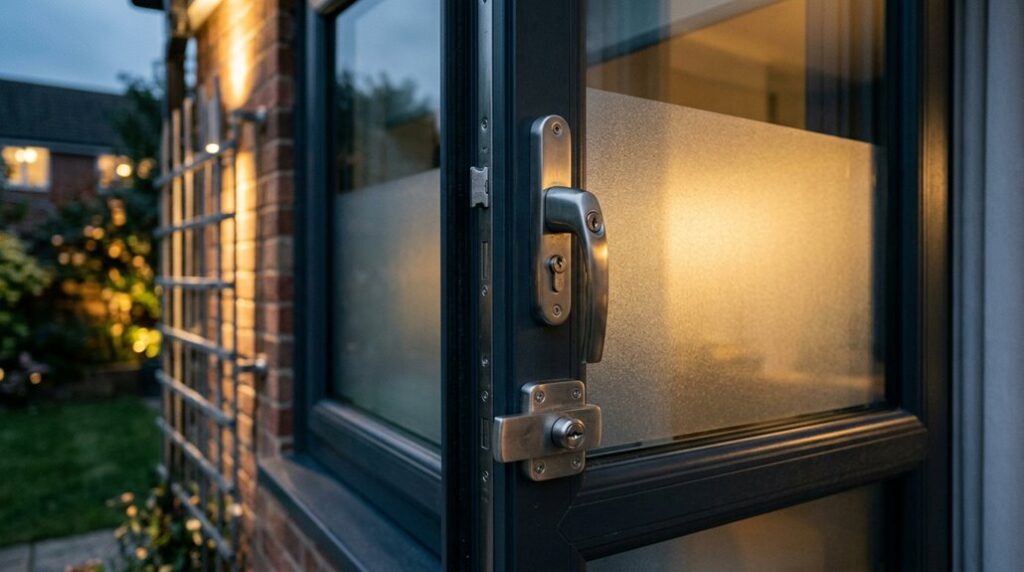
You’ll find that burglar bars offer one of the most reliable methods for protecting ground-level windows. Key-operated locks are essential for all ground-floor units, preventing unauthorised access even if the glass is broken. Consider fitting high-quality security film to existing panes to make the glass more resistant to shattering. Laminated glass holds together after impact, forcing intruders to spend more time and create more noise during entry attempts.
Motion-activated lights eliminate dark hiding spots around your property’s perimeter. Trim back bushes away from windows to remove visual cover for potential intruders. Professionally installed trellis doors and bars can further reinforce vulnerable entry points while complementing your home’s existing architectural style.
A flexible window security strategy brings these elements together—physical reinforcement, locking mechanisms, and environmental deterrents—creating a thorough defence system tailored to your home’s specific needs and architectural style.
Magnetic Sensors vs. Glass Break: Choosing the Right Window System
When you’re protecting your ground-floor windows, you’ll choose between two proven technologies: magnetic sensors that detect when a window slides open, and glass break detectors that sense the acoustic signature of shattering glass.
Magnetic sensors work by maintaining a magnetic connection between your window sash and frame, triggering an alarm the moment that connection breaks during a forced opening attempt. Glass break sensors, meanwhile, listen for the specific frequency of breaking glass—a capability that catches intruders who smash rather than pry, making each technology worthwhile for different threat scenarios you may face. For comprehensive protection, security experts recommend installing both sensor types to overcome the individual limitations of each system and guard against multiple entry methods.
Pairing these electronic systems with SABS and UKAS approved materials in your physical window security creates a layered defence that addresses vulnerabilities from both a detection and prevention standpoint.
How Magnetic Sensors Work
Magnetic sensors form the foundation of most window security systems, operating through a straightforward two-part mechanism that is both reliable and affordable.
You’ll find a magnet mounted on your moving window pane and a sensor (reed switch) attached to the stationary frame. When your window closes, the magnet aligns with the sensor, creating a closed electrical circuit that keeps your alarm inactive.
Opening the window separates the magnet from the sensor, breaking the circuit and triggering an alarm signal instantly.
The reed switch contains two thin metal reeds inside a glass tube that attract and touch when exposed to the magnetic field. Your alarm system then transmits notifications to your keypad, home security app, or smartphone via a wired or wireless connection, giving you immediate awareness of unauthorised entry attempts. However, magnetic sensors only alert when windows open and do not detect glass breakage, so you may want to consider glass-break sensors as an additional layer of protection for comprehensive coverage.
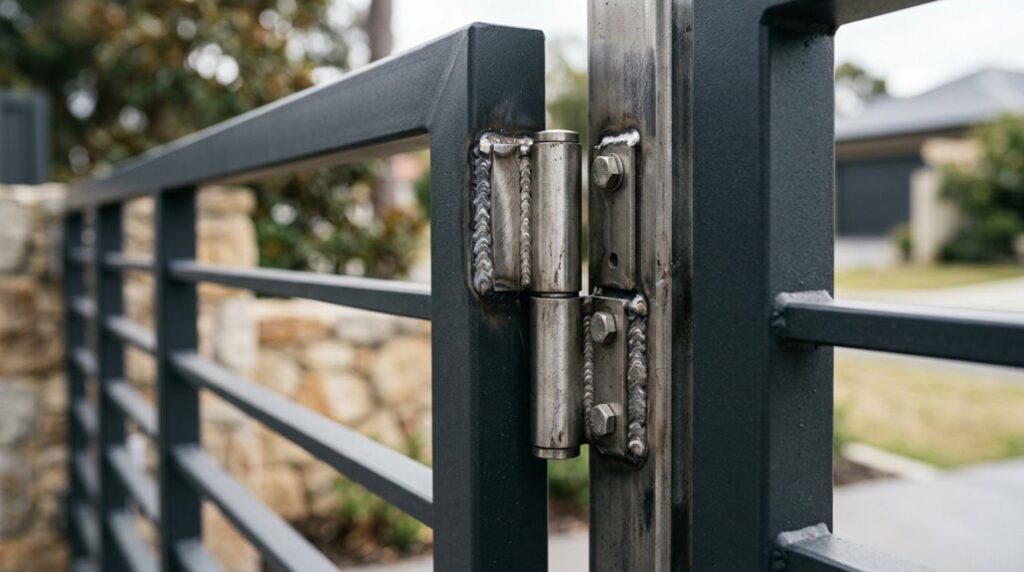
For complete home protection, pair window sensors with custom door security solutions such as swing gates and retractable trellis doors to ensure intruders face multiple barriers before gaining entry.
Glass break detection benefits
While contact sensors excel at detecting when a window frame separates, glass break sensors offer a critical advantage by alerting you the moment glass fractures. This immediate detection markedly reduces the window of opportunity for intruders, providing your home security South Africa system with faster response capabilities.
Glass break sensors deliver distinct benefits for all-encompassing window protection:
- Instant notification before an intruder fully enters your home
- Acoustic technology covers multiple windows from a single ceiling unit
- Shock sensors detect vibrations within milliseconds of impact
- Reduced false alarms in noisy environments when paired with quality installation
- Cost efficiency through multi-window coverage without individual wiring
You’ll find that glass break detection creates layered security. When combined with magnetic contact sensors, you establish redundant protection that catches attempted breaches at multiple stages. Acoustic sensors typically operate within 20 to 25 feet and respond in a 360-degree radius, allowing comprehensive coverage of multiple windows in smaller rooms. For homeowners seeking to further strengthen their defences, pairing glass break sensors with retractable window fixtures provides a physical barrier that complements electronic detection systems.
Selecting Your Window Type
The right sensor for your windows depends on whether they open or remain fixed in place.
Operable windows—single-hung, double-hung, sliding, or casement types—work excellently with magnetic contact sensors. These sensors detect when your window opens by breaking a magnetic circuit, triggering an alarm immediately.
Fixed glazing requires a different approach. Acoustic or shock sensors detect glass breaks regardless of window movement. You’ll install the magnetic sensor transmitter on the frame and magnet on the pane within one inch of each other.
For custom window grilles and architectural features, shock sensors offer flexibility. They detect mechanical stress waves through glass at impact, working reliably with laminated surfaces. Acoustic detectors cover 15–30 feet radius, replacing multiple individual sensors in larger spaces. Most security experts recommend installing both glass break and window sensors for comprehensive protection against varied intrusion methods.
Your choice balances window type, room layout, and environmental conditions for peak protection. Homeowners in wildlife-prone areas may also benefit from transparent barrier solutions that deter vervet monkeys while preserving natural light and uninterrupted views alongside their window security systems.
Installing Window Sensors in Harsh Climates: Best Practices for Coastal Areas
When you’re installing window sensors in Durban’s coastal environment, you’ll face two primary challenges: salt spray corrosion and moisture ingress, which can degrade standard adhesives and metal components.
You’ll need to choose moisture-resistant adhesives specifically formulated for high-humidity zones and pair them with corrosion-resistant metals such as galvanized steel or aluminium to ensure your security system remains functional year after year. BLE sensor technology provides real-time notifications and wireless connectivity that remove the need for complex wiring in challenging coastal installations, enabling you to monitor window status remotely regardless of harsh environmental conditions.
Your success with the sensor installation depends on these material choices, as inferior adhesives will fail within months when exposed to salt-laden air and coastal humidity levels exceeding 70%. For comprehensive protection, pairing your sensors with professionally installed retractable windows and fittings creates a layered security solution that addresses both intrusion detection and physical deterrence for coastal properties.
Salt Spray Corrosion Prevention
For homes and businesses in South Africa’s coastal regions, salt spray corrosion poses a serious threat to window sensors and security hardware. You’ll protect your investment by choosing corrosion-resistant materials and putting proven prevention strategies in place.
Your coastal security system requires these essential components:
- Marine-grade stainless steel (Grade 316) fixings and sensor housings resist salt-induced corrosion effectively
- Marine-grade powder coating at 80–120+ microns thickness shields aluminium frames and sensor mounts
- EPDM or silicone weatherseals prevent salt air from entering internal cavities where sensors are mounted
- Weekly freshwater rinsing removes salt deposits before they build up and accelerate damage
- Retractable windows with windproof screens block direct sea-breeze impact on sensor surfaces
You’ll maintain peak performance through regular maintenance. Monthly detergent cleaning followed by quarterly deep cleanings using vinegar solutions keeps your system operating reliably. Mixed metals in sensor assemblies should be isolated with corrosion-resistant insulators to prevent galvanic corrosion and premature failure. For enhanced coastal protection, retractable trellis doors fitted with marine-grade finishes provide an additional barrier that shields entry points from salt-laden air while maintaining smooth operation. This proactive approach protects your security investment for years.
Moisture-Resistant Adhesive Selection
Beyond protecting your hardware from salt spray damage, you’ll need to secure your window sensors themselves with adhesives that won’t fail in coastal humidity. You’ll find that acrylic tape offers a 5–8 years lifespan with excellent UV resistance, making it ideal for KZN installations alongside burglar bars KZN systems. Polyurethane adhesives provide 6+ years durability with superior flexibility for extreme temperature swings. Avoid rubber-based options, which degrade within 2–4 years under coastal conditions.
Select water-resistant formulations that maintain approximately 0.8 MPa strength in seawater for extended periods. Apply adhesives between 60°F and 80°F in low humidity. Press sensors firmly for 30 seconds, then allow 24–72 hours curing before full operational stress. Thoroughly clean the mounting surface with an alcohol-based cleaning product to remove dust, dirt, and salt deposits that reduce adhesive effectiveness. For broader perimeter security alongside your sensors, swing gates for doors offer robust locking mechanisms and durable materials that complement coastal security installations. This foundation ensures your security sensors remain reliably bonded throughout their service life.
How humidity and salt air degrade standard sensors (and what replaces them)
Coastal environments in the greater Durban area present a unique challenge for window security systems: salt particles and humidity don’t just ruin the appearance—they actively degrade the sensors that detect intruders.
Standard sensors fail because:
- Salt deposits on metal contacts, attracting moisture and triggering electrochemical reactions that destroy conductivity
- High humidity causes water vapour exchange in sensors, producing false temperature readings and reducing reliability
- Moisture absorption warps uncoated frames, misaligning sensors and compromising detection accuracy
- Salt build-up creates a cloudy film on hardware, increasing circuit resistance and causing complete failure within two years
- Corrosion attacks hinges and locks, breaking the electrical connections that are critical for intruder detection
Wonder Bars Durban replaces these vulnerable components with marine-grade materials: 316 stainless steel fixings, fibreglass frames, silicone weatherstripping, and corrosion-resistant coatings.
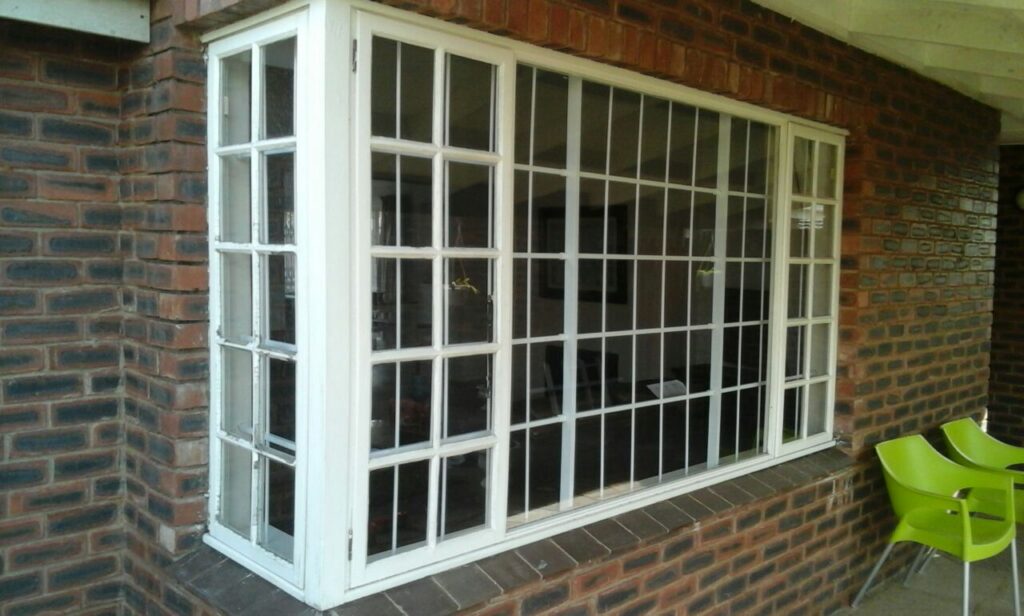
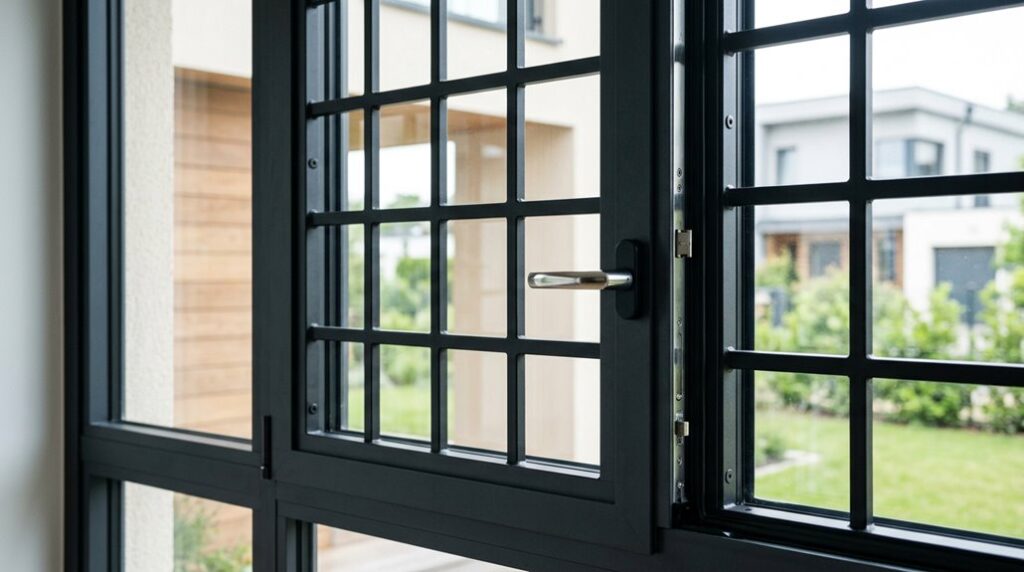
These substitutions ensure your security system performs reliably for 8–15 years in coastal areas. For homeowners looking to maintain both protection and period character, cottage pane burglar bars are custom-fabricated to match existing window grid patterns while using high-grade materials that resist the degrading effects of coastal conditions.
Test your window sensors before an intruder does
Installing marine-grade sensors and corrosion-resistant hardware stops salt air and humidity from degrading your window security—but only if you verify those components work before an intruder tests them. You’ll perform three critical checks: alignment verification, chime confirmation, and sensitivity calibration.
Start by opening and closing each window slowly three times. Listen for the chime every cycle. Confirm the control panel registers the zone fault within a split second. Check that sensor arrows align correctly with a gap between 5–10 mm (thumb’s width). Make certain both pieces sit flush on the same plane.
Next, test glass-break sensors by activating the built-in test button and clapping sharply within the 20 ft detection zone. Adjust sensitivity downwards if false alarms occur. Document all results. Schedule full-system tests every 6–12 months to maintain consistent performance and stop intruders effectively.
Combining Sensors With Bars, Locks, and Film for Complete Protection
A single layer of security—whether bars, locks, sensors, or film—leaves gaps that determined intruders can exploit. You achieve complete physical security by layering multiple protection methods. Each component strengthens the others, creating redundancy that stops intruders quickly and safely.
Your layered approach combines:
- Window bars integrated with magnetic sensors to detect tampering at junction points
- Keyed sash locks paired with contact sensors for dual verification
- Security film reinforced with glass-break detectors positioned 15–20 feet away
- Upgraded cam locks and anti-lift blocks working alongside alarm systems
- Strategic sensor placement using recessed mounting brackets to shield wiring
This combination delays entry while triggering immediate alarms. Intruders face physical barriers, electronic detection, and time constraints simultaneously.
You’re delighted to find that proper installation of combined systems costs under ZAR 3,500 for most windows, delivering all-encompassing protection without compromise.
Think your windows are safe just because they are shut tight? Think again. Discover exactly how to fortify your glass with our guide to the ultimate window security solutions designed to keep uninvited guests firmly outside.