




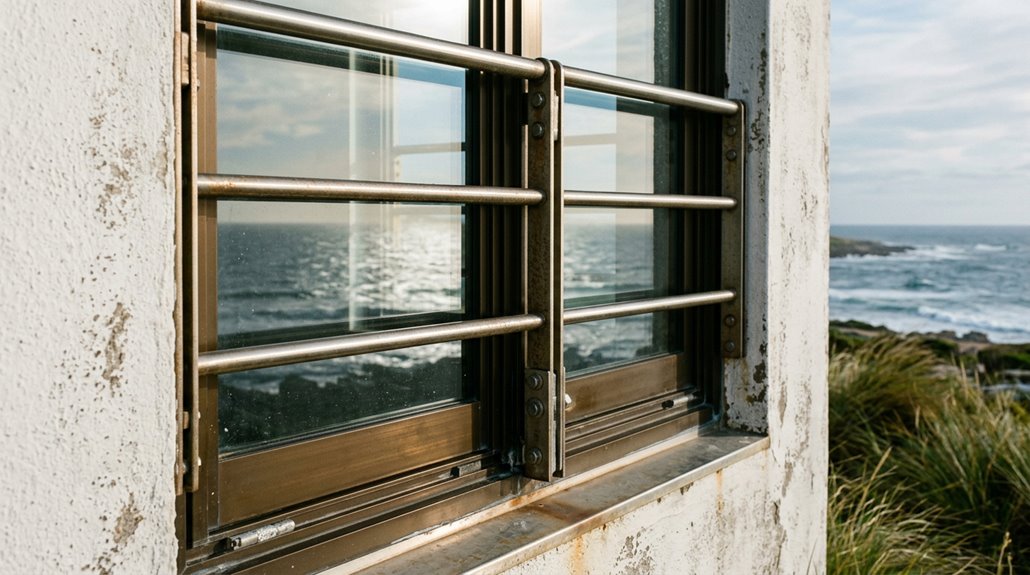
Most coastal homeowners spend thousands on window upgrades that still fail when a major storm hits. The problem isn’t budget—it’s specification. Grade 316 stainless fasteners, AA6xxx aluminium frames, and marine-grade sealants must work together as a system, or saltwater and windborne debris will find every weakness. Standard windows simply weren’t engineered for what coastal conditions demand. Getting the details right is the difference between a barrier that holds and an expensive mistake.
Why Coastal Windows Fail During Hurricanes
Coastal windows break down under hurricane conditions because they face multiple, simultaneous threats that standard residential glass simply can’t withstand. Flying debris strikes unprotected glass at velocities of 34–50 feet per second, causing 56% of window failures during hurricanes. Tree limbs, roofing materials and timber act as projectiles that penetrate standard glass, which is unable to withstand high kinetic energy impacts.
Flying debris at 34–50 feet per second causes 56% of hurricane window failures, penetrating standard glass that is unable to withstand high kinetic energy impacts.
Your windows also fail under extreme pressure. Design Pressure ratings below 40–50 pounds per square foot indicate insufficient resistance for hurricane conditions. Windows installed before 1996 in coastal areas typically lack pressure ratings altogether, making them vulnerable to structural failure. Reinforcing vulnerable openings with SABS and UKAS approved materials helps ensure structural integrity under extreme pressure differentials.
Water ingress compounds these problems. A single shattered window can compromise an entire structure by allowing extensive water damage and dangerous pressure differentials. Standard construction sealant becomes brittle within 1–2 years under coastal UV exposure, leading to seal failure. Laminated glass with interlayers such as polyvinyl butyral (PVB) may crack but remains largely intact, maintaining a protective barrier that prevents catastrophic structural failure.
Quality coastal security requires impact-resistant systems with proper anchoring and marine-grade materials.
Impact-Resistant Glass vs. Laminated Windows: Which Protects Better?
When you’re choosing window protection for your coastal home, the difference between impact-resistant glass and laminated windows isn’t just about terminology—it’s about how each system actually performs when your property faces real threats.
Impact-resistant windows use laminated glass construction as their foundation. This design keeps glass fragments bonded together after impact, maintaining your building’s envelope integrity during storms. Laminated glass requires 10–20 repeated blows to penetrate, taking 30–90 seconds and generating substantial noise that deters intruders. The plastic interlayer in laminated glass also provides enhanced security by resisting forced entry due to its containment properties.
Tempered glass, by contrast, shatters completely into small pieces when it fails, losing all structural strength. While tempered glass is 4–5 times stronger than standard glass, it fails catastrophically under hurricane conditions. For sleeping areas in particular, fire-escape considerations should inform your choice of window security system, ensuring occupants can exit safely in an emergency.
For coastal homes, laminated glass outperforms tempered alternatives because it remains intact as a single cracked sheet, protecting both your security and weather resistance at the same time.
Coastal window security hardware for saltwater environments
If you’re fitting bespoke window security in a coastal property, you’ll need hardware that can withstand salt-laden air and high humidity without corroding or failing.
The materials you choose—particularly 316/316L marine-grade stainless steel for hinges, handles and locks—directly affect how long your security investment protects your home. Micro gaps and mechanical joints in window hardware can trap moisture and salt, accelerating galvanic and crevice corrosion unless components are properly isolated from dissimilar metals.
You’ll find that selecting corrosion-resistant components now helps prevent costly replacements and keeps both the appearance and functionality that custom security barriers require. Working with specialists who provide bespoke security installations ensures that every component is chosen and fitted to suit your property’s specific coastal conditions and architectural style.
Marine-Grade Hardware Selection
Exposed to salt spray and humid air, window hardware in coastal properties needs materials engineered specifically for saltwater environments. You’ll find that choosing the right components protects your investment and ensures long-term performance.
- Grade 316 stainless steel contains molybdenum, which resists chlorides far better than standard Grade 304 options.
- Marine-grade aluminium alloys such as AA6063 and AA6082 offer denser grain structures that slow corrosion progression.
- All fixings and fasteners must be stainless steel to prevent galvanic mismatch corrosion.
- Hardware must comply with BS EN 1670 Grade 5 standards for marine environments.
You’ll appreciate that these materials work together seamlessly. Independent testing under BS EN 12206 and Qualicoat specifications validates durability. With around 5.3 million residents living in coastal towns across the UK, corrosion protection has become essential for preserving both property value and functionality.
SABS certification confirms suitability for use along South African coastlines. Specification sheets must explicitly show coating thickness and AAMA ratings to verify marine-grade suitability. Where security hardware is sourced from manufacturers using UKAS-approved quality components, you gain additional assurance that materials meet independently verified performance benchmarks suited to demanding coastal conditions.
Corrosion Resistance and Longevity
Selecting the right marine-grade hardware is only half the battle—what you do after installation determines how long your coastal window security will truly last. Grade 316 stainless steel hardware resists saltwater corrosion far better than standard alternatives, yet even superior materials require proper maintenance.
You’ll extend your window security lifespan dramatically through consistent care. Rinse exterior hardware with fresh water every few weeks to remove salt deposits that initiate rust within weeks of exposure. Lubricate moving parts monthly using marine-grade grease to prevent buildup on hinges and locks. The molybdenum addition in Grade 316 steel further enhances resistance to pitting and corrosion in extreme coastal weather conditions.
Annual professional inspections identify developing corrosion before it spreads. Standard coastal windows without marine specifications corrode within 2 to 5 years. With proper maintenance protocols and Grade 316 components, your investment delivers lasting protection and aesthetic appeal for decades. Beyond windows, secure locking mechanisms and robust hinges used in exterior security installations also benefit from marine-grade specifications to ensure long-term performance in saltwater environments.
How to Install Hurricane-Resistant Windows to Code
You’ll need to calculate your property’s wind-load requirements based on local Design Pressure (DP) ratings before selecting hurricane-rated windows for coastal installation.
Certified installers must follow precise techniques for flashing, sealing, and fastening—using corrosion-resistant stainless-steel fasteners and shim placement at specific intervals to ensure your windows withstand the demanding conditions that South African coastal environments present. Windows must be certified by impact testing that simulates real windborne debris and cyclic pressure conditions to guarantee post-impact integrity throughout a storm.
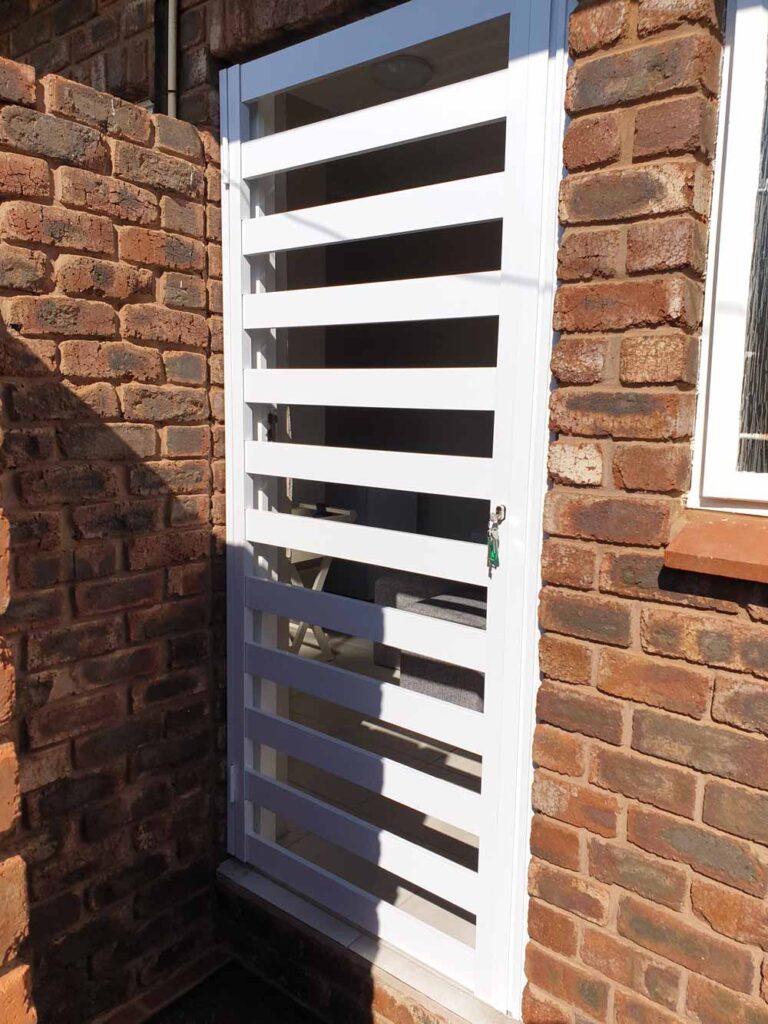
Proper installation protects your investment by preventing water ingress and structural failure, which is why adherence to code standards and professional inspection matter greatly for coastal security barriers. Complementing your windows with retractable trellis doors adds another layer of flexible, weather-resistant protection to vulnerable coastal access points.
Wind-Load Calculation Requirements
When designing window security systems for coastal homes in South Africa’s high-wind regions, calculating the correct wind-load rating is essential to ensure your installation meets building regulations and protects your property effectively. You can determine your requirements through these key steps:
- Identify your basic wind speed from regional wind maps and classify your exposure category (B for urban, C for open terrain, or D for coastal zones).
- Apply location multipliers—use 0.89 for low-risk areas and 1.11 for high-risk coastal zones to adjust pressure requirements.
- Calculate design pressure using P = qh[(GCpf)-(GCpi)] to determine the exact wind-load demands.
- Check window corner positioning, as areas within 4 feet of corners experience higher pull forces.
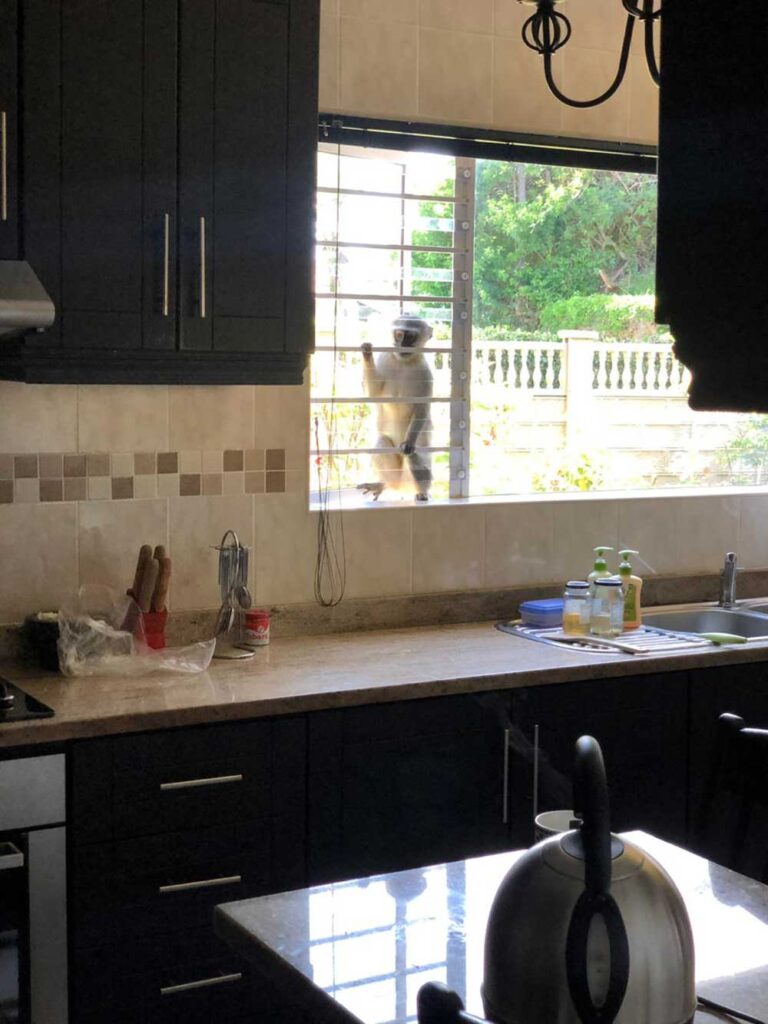
Your home security South Africa installation will be successful when your window’s DP rating equals or exceeds the calculated design pressure. Contractors should calculate required DP per opening based on site wind speed maps rather than estimating from experience to ensure compliance with local building codes. For coastal homeowners who also face wildlife intrusion risks, combining wind-rated installations with transparent durable barriers offers protection against both environmental forces and vervet monkey entry without compromising natural light or views.
Certified Installation Techniques
Proper installation separates a window security system that merely looks good from one that actually protects your coastal home when extreme weather arrives.
You will work with anchors positioned at exact spacing intervals specified in your product approval documentation.
Substrate material verification guarantees that fixings support the required design pressures throughout the installation.
Your contractor schedules both rough and final inspections with the local authority, confirming the installation matches the approved structural plans.
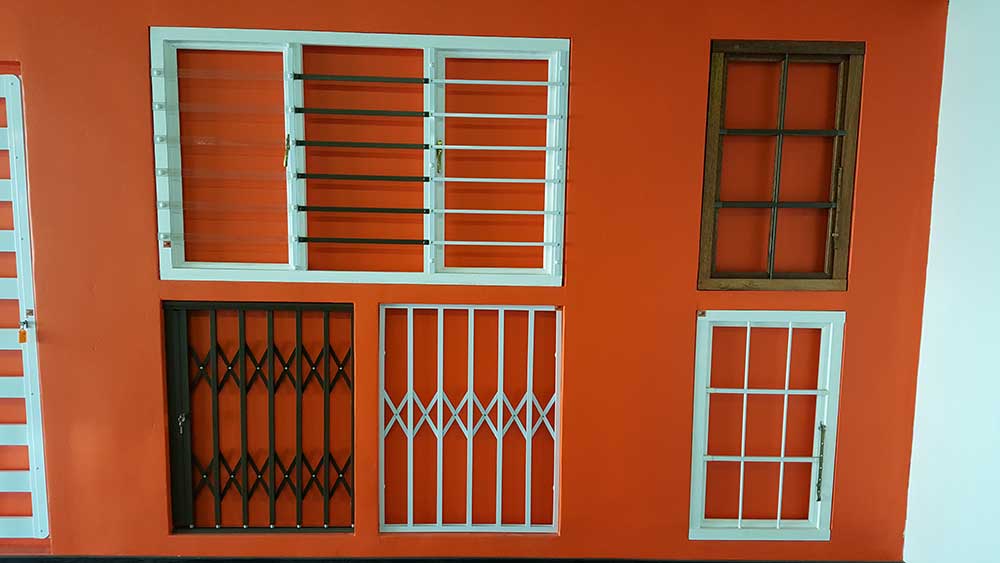
Custom window bars and impact-resistant frames require proper attachment to your home’s structure—this integration determines overall performance during high-wind events. Installation by experienced professionals familiar with testing requirements and building codes ensures your windows withstand both positive pressure and negative pressure forces during hurricanes. Bespoke craftsmanship that matches your exact window design rather than relying on standard options ensures structural compatibility and a secure, precise fit during the fabrication stage.
You keep access to product approval documents and installed labels for inspector verification.
Licensed professionals experienced in hurricane-rated windows carry out the work, ensuring your coastal security investment meets all code requirements and delivers genuine protection.
Flashing and sealing methods
Correctly installing flashing and sealing methods transforms your window installation from merely code-compliant to genuinely protective against coastal weather. You’ll create a complete water barrier that keeps your home dry through the harshest storms.
- Apply 3/8-inch sealant beads to window mounting fins prior to installation, leaving the bottom flange free for drainage
- Extend sill pan flashing at least 6 inches up the jamb framing studs with positive slope directing water outwards
- Overlap jamb flashing onto sill flashing by 2–3 inches in shingle-fashion patterns for effective water-shedding
- Use No. 10, 3-inch screws to anchor windows 1.5 inches deep into framing members with silicone washers
Window grilles integrated with proper flashing provide exceptional strength. You’ll achieve excellent protection when the installation follows these precise specifications. Wonder Bars delivers this know-how throughout the greater Durban area. For coastal homes needing an additional layer of defence, retractable windows and fixtures can be paired with sealed installations to reinforce weather resistance and security at the same time.
When and How to Inspect Coastal Windows Long-Term?
Because coastal environments expose windows to salt spray, moisture, and intense weather, you’ll need a structured inspection schedule to catch problems early and prevent costly damage.
Conduct visual inspections every three months. Check for broken glass, missing weatherstripping, and water stains. Test window operation, locks, and rollers during spring and autumn.
Clear weep holes and tracks monthly to prevent water build-up. Use an incense stick along closed sashes to detect air leakage. Inspect for paint bridging that blocks proper locking.
Carry out annual deep inspections with moisture meter readings at sills. Check for corrosion on hardware—accelerated markedly in coastal zones. Verify the correct sill pitch using a spirit level.
Schedule professional diagnostic inspections every 3–5 years. Arrange immediate inspections after storms with sustained winds above 50 mph. Rinse windows weekly with fresh water to remove salt build-up that accelerates corrosion on coastal homes.
Material Durability: What Lasts 20+ Years in Salt Air?
When selecting materials for coastal window security, you’ll want to prioritise alloys and finishes engineered to withstand salt air’s corrosive effects for 20+ years.
- Marine-grade aluminium resists corrosion through passivation layer formation, providing 20–30+ years of reliable performance in salt-exposed environments.
- 316 stainless steel outperforms standard 304 stainless, which pits readily in waterfront conditions and compromises structural integrity.
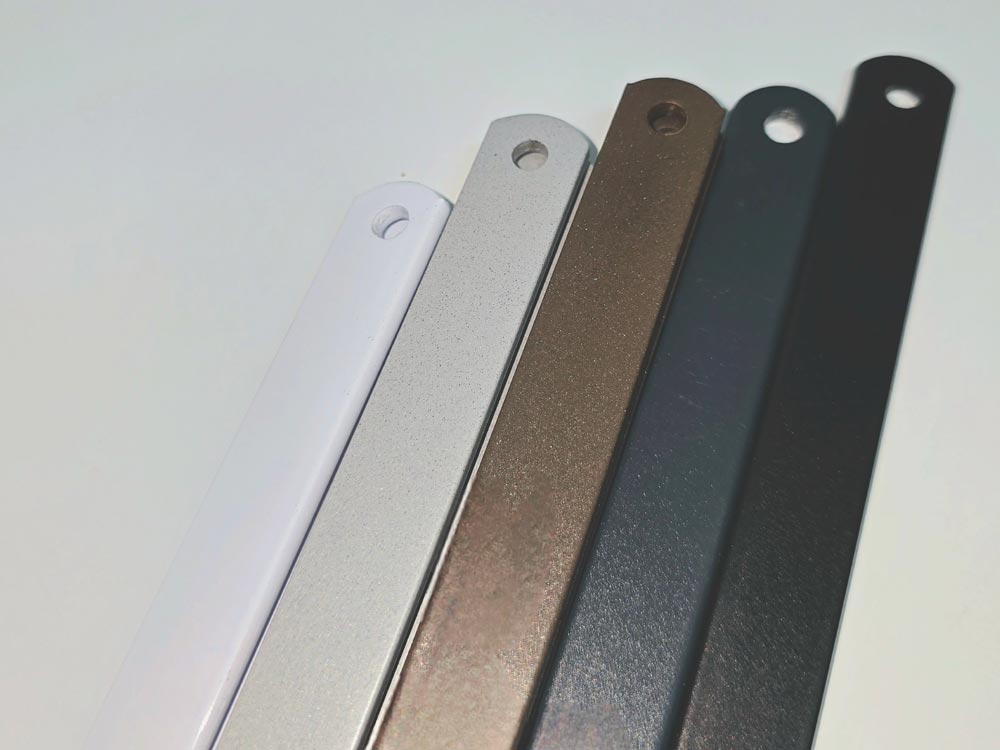
- Kynar 500 (PVDF) coatings provide 40+ years of colour retention and withstand over 10,000 hours of salt spray exposure.
- Fibre-cement lap systems resist salt, rot, and UV damage with 25–50+ year lifespans when properly detailed with rainscreen cavities.
Marine-grade aluminium paired with premium coatings creates durable barriers meeting your security standards.
Avoid bare steel entirely—it rusts immediately in salt air.
Wonder Bars fabricates custom solutions using these proven materials, ensuring your coastal home receives long-lasting protection alongside aesthetic appeal.
How Hurricane-Rated Windows Actually Save You Over Time?
Hurricane-rated windows deliver substantial financial returns across multiple categories—insurance savings, energy efficiency, storm damage prevention, and property value improvement.
Property values increase by 7–10%, recovering 75–85% of installation costs at resale.
Over 15 years, you recoup 70–90% of your initial investment through combined savings.
Positive ROI timelines occur within 4–12 years, making hurricane-rated windows a financially sound decision for coastal homeowners.
Think your windows are safe just because they are shut tight? Think again. Discover exactly how to fortify your glass with our guide to the ultimate window security solutions designed to keep uninvited guests firmly outside.