





Vervet monkeys aren’t just a nuisance in Durban — they’re winning. They’ve mapped your home, memorised your routines, and outsmarted every deterrent you’ve tried. The frustrating truth? Most monkey-proofing advice fails because these primates adapt faster than homeowners realise. Legal restrictions make the problem even harder to solve. But a layered strategy targeting their behaviour at every entry point changes everything. Here’s exactly why they keep coming back — and what finally stops them.
Why Vervet Monkeys Keep Returning to Durban Homes
Vervet monkeys keep coming back to Durban homes because the city offers them everything they need to survive and thrive.
Your unsecured waste bins provide easy access to human food, while garden landscaping supplies abundant, accessible nutrition year-round. Urban vervet populations reach six to twelve times their natural ecological capacity due to these food subsidies.
Your swimming pools and garden taps provide reliable water sources that reduce their dependence on natural habitats. The removal of natural predators such as leopards has eliminated the ecological checks that once helped keep vervet numbers balanced.
Your Durban monkey problem persists because the urban environment has become more attractive than fragmented natural areas. Dispersing adult males investigate residential gardens as temporary stopovers before joining established troops. Once monkeys find that your property has what they need, they return repeatedly. Bespoke monkey proofing solutions designed specifically for your property’s entry points can break this cycle by removing access without harming the animals. The rescue project responds to more than 1,000 call-outs every year as residents struggle with repeated monkey incursions on their properties.
What You Can’t Do: Legal Restrictions and Humane Boundaries
You can’t harm monkeys in South Africa—doing so violates the Animals Protection Act No. 71 of 1962, which carries penalties of up to R120,000 in fines and three years’ imprisonment.
Instead, you must use humane deterrents such as water spraying from a hosepipe or spray bottle, which the Durban & Coast SPCA approves for safely discouraging primates from your property. Remember that monkeys are sentient beings capable of pain and distress, deserving of compassionate treatment even when they venture into human spaces.
Understanding these legal limits and choosing ethical alternatives protects both the animals and you from serious legal consequences. For property owners looking for a longer-term physical solution, vervet monkey proofing is available as a professional service to help secure your home against repeated primate intrusions.
Legal Penalties For Harm
South African law firmly protects all animals, including monkeys, through the Animals Protection Act (APA) No. 71 of 1962, which classifies them as sentient beings capable of experiencing pain and distress. Harming monkeys or using methods that cause suffering is explicitly prohibited by this Act.
Violations carry severe consequences. You may face fines of up to R120,000 and imprisonment for up to three years. The Durban & Coast SPCA opposes snares, traps, and harmful substances entirely. Similar to regulatory frameworks governing primate breeding facilities, South African authorities require transparency and public participation in decisions affecting community safety and animal welfare.
Beyond the APA, the Biodiversity Protection By-law, 2025 restricts certain exclusion methods. You cannot erect barred or razor-wire barriers within watercourses without municipality consent. Repeat offenders face imprisonment of up to five years or fines of R200,000.
Effective monkey-proofing is achieved through humane structural exclusion. Specialised mesh screens and custom barriers provide the solution that protects both your property and complies with South African law. Reputable providers offering SABS and UKAS-approved materials ensure that exclusion solutions meet nationally recognised durability and strength standards, giving homeowners confidence in both compliance and long-term performance.
Humane deterrent alternatives only
Regarding monkey-proofing your Durban property, certain methods fall strictly outside legal and ethical limits. South Africa’s Animals Protection Act No. 71 of 1962 protects all animals as sentient beings. You can’t use snares, traps, pellet guns, or air guns—these cause serious injury and violate the law.
Violations carry penalties of up to R120,000 and three years’ imprisonment. The Durban & Coast SPCA actively opposes harmful deterrents.
Instead, you’ll find effective animal-proofing Durban solutions through humane alternatives:
- Physical barriers such as netting, burglar bars, and wire fencing
- Water spray and realistic rubber snakes for behavioural deterrence
- Motion-activated systems with ultrasonic sound and flashing lights (see ultrasonic sound and flashing lights) that create a hostile environment for monkeys without causing harm
These methods protect your property without causing suffering. Wonder Bars specialises in custom security barriers that blend aesthetics with functionality, delivering excellent results while respecting animal welfare. With over 4,000 bespoke installations completed across the region, Wonder Bars brings proven expertise to every unique property challenge.
Remove Attractants: Eliminate Food, Waste, and Shelter First
Your trash bins and food sources are the primary magnets that draw monkeys repeatedly to your property, making them your first line of defence in any exclusion strategy.
You’ll need to secure all rubbish with tight-fitting lids, store bins in dedicated monkey-proof enclosures, and remove pet food, ripening fruit, and kitchen scraps from accessible areas every day. Professional custom design and manufacturing can also enhance your barriers to ensure comprehensive protection alongside these preventative measures.
This removal of rewards is far more effective than trying to block every possible entry point, as monkeys won’t return to properties that offer no food incentive. Complement these habits with high-strength materials in your fixtures and barriers to provide a reliable physical deterrent that even persistent primates cannot overcome.
Secure Your Bin Lids
Unsecured waste containers are one of the most common attractants drawing vervet monkeys and baboons into residential and commercial properties across KwaZulu-Natal. Your trash bins need immediate attention to prevent repeated raids and damage to property.
Implement these baboon deterrents:
- Fit mechanical barriers such as spinning flapper lids that stop primates from accessing waste.
- Use contained waste management solutions such as BiobiN composting units that remove both visual and odour cues.
- Keep bins in enclosed areas, away from open sight lines and accessible pathways.
Standard bins and bags containing organic waste attract foraging primates from nearby areas. Unsealed containers build up strong odours that trigger feeding behaviour. Reinforced lids with integrated locking mechanisms physically block entry attempts by strong animals.
Contained systems reduce baboon presence by removing their access to food sources entirely. Specialists offering vervet monkey proofing in the Durban area can assess your property and recommend bespoke security solutions tailored to your specific vulnerabilities.
Remove food sources daily
Removing accessible food sources is the single most effective strategy for discouraging vervet monkeys and baboons from targeting your Durban property. You’ll want to eliminate dining opportunities that attract these intelligent primates to your home and garden.
Store all food in opaque containers or your microwave rather than visible plastic bags, which monkeys recognise as food signals. Remove leftovers immediately from tables and counters. Pick fruit as it ripens, disposing of rotting produce promptly.
Outside, avoid leaving pet food accessible during daylight hours. Discard all edible waste at designated stations only. Keep vegetation cleared five feet around garden perimeters to eliminate climbing launch points.
These foundational steps work alongside physical barriers from specialists like Wonder Bars Durban, creating all-encompassing protection for your property. Wonder Bars also offers dedicated vervet monkey proofing solutions through a free consultation and property assessment to help identify and address specific vulnerabilities unique to your home.
Install Physical Barriers: Netting, Fencing, and Burglar Bars
Physical barriers form the foundation of effective monkey-proofing for Durban properties. You’ll protect your home with three essential barrier types:
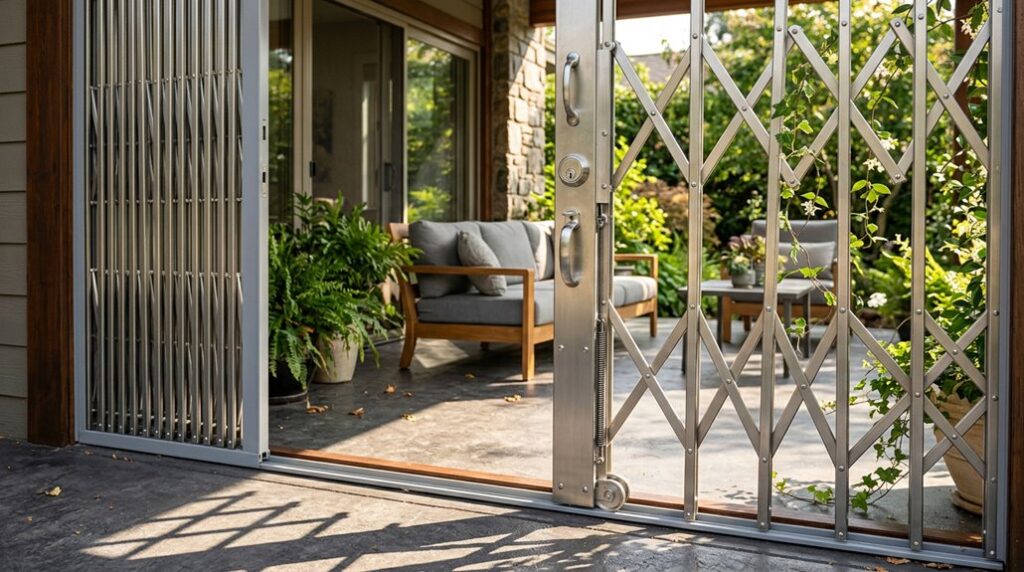
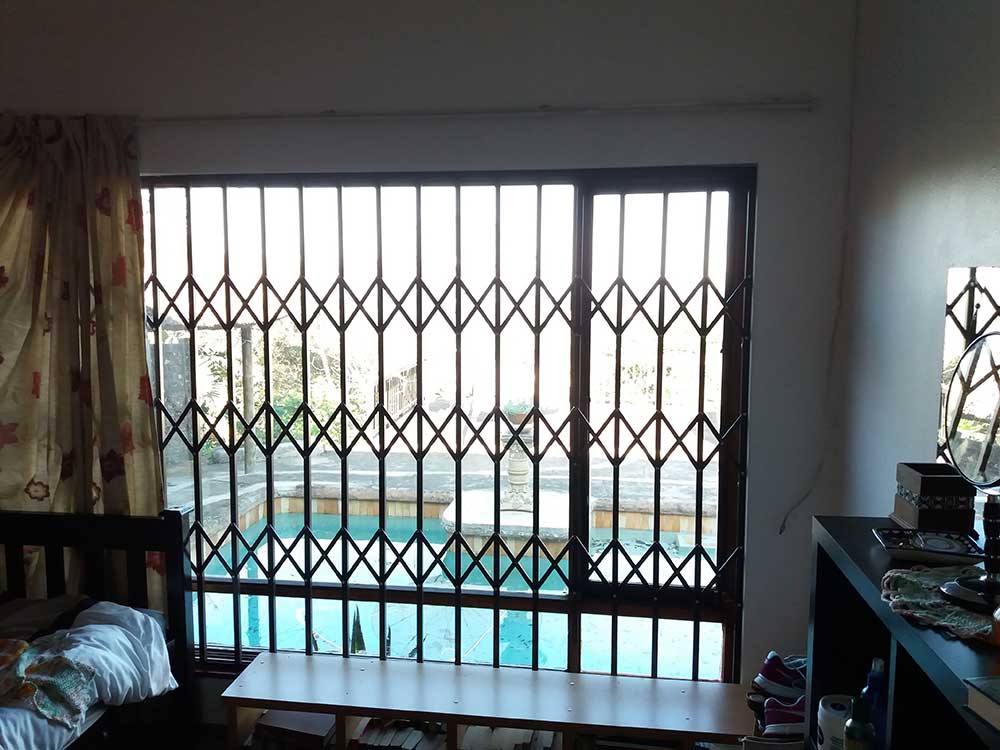
- High-tensile stainless steel mesh screens on windows and doors prevent entry while maintaining ventilation.
- Wire fencing with overhead roofing structures create complete garden enclosures that stop climbing attempts.
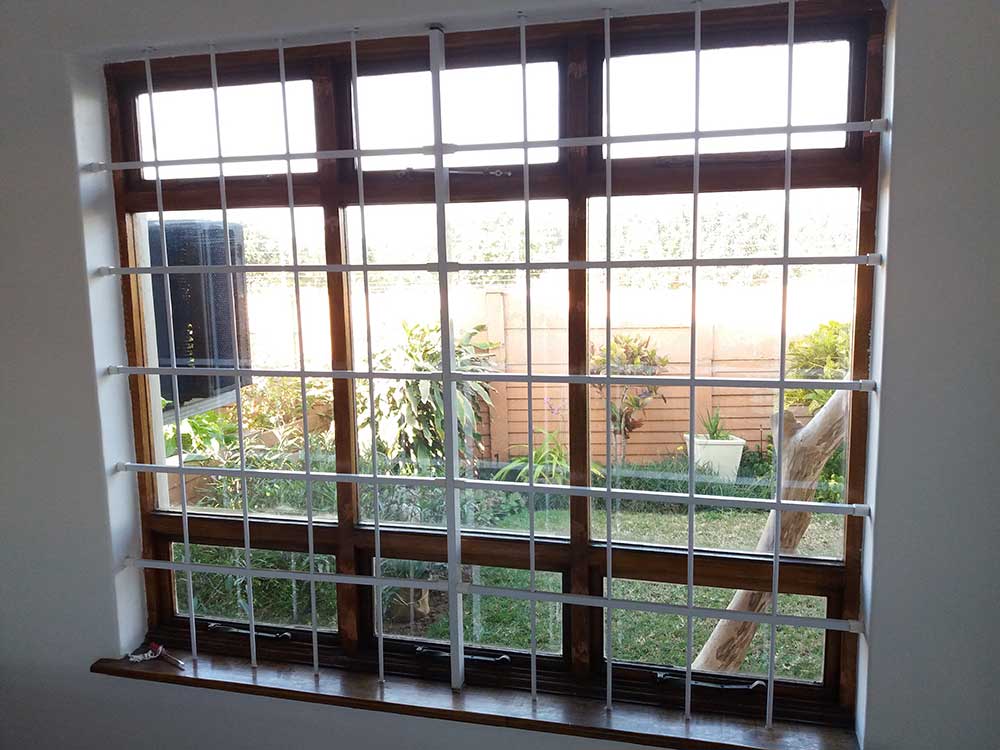
- Transparent polycarbonate burglar bars provide security without obstructing visibility or architectural aesthetics.
Your mesh screens require fine density to prevent vervet monkeys from squeezing through gaps. Installation demands full framing of units rather than individual screws, ensuring the bars withstand primate clawing and biting forces. Wire fencing must be continuous without gaps around garden perimeters and bins.
A professional assessment determines which barrier combinations suit your home’s specific design. These physical systems function independently of power sources, remaining effective during loadshedding events. Wonder Bars designs custom solutions combining multiple barrier types for layered defence against persistent primate intrusion. Wonder Bars offers a free home security assessment to identify your property’s most vulnerable access points before recommending the right combination of barriers.
Secure entry points: Windows, doors, and vulnerable openings
While layered fencing and mesh screens create your property’s outer defence, the real battle in monkey-proofing happens at your home’s actual entry points.
Windows and doors need reinforced stainless steel or heavy-duty aluminium frames with tight-weave mesh that resists fingers, claws, and teeth. You must anchor screens directly into the structure itself, not just surface-mount them.
A professional assessment identifies vulnerable openings that are unique to your architecture. Seal gaps around frames where claws can penetrate weak points. Fit self-closing mechanisms to doors so they cannot be left ajar. Ensure gate gaps are too narrow for primate grip.
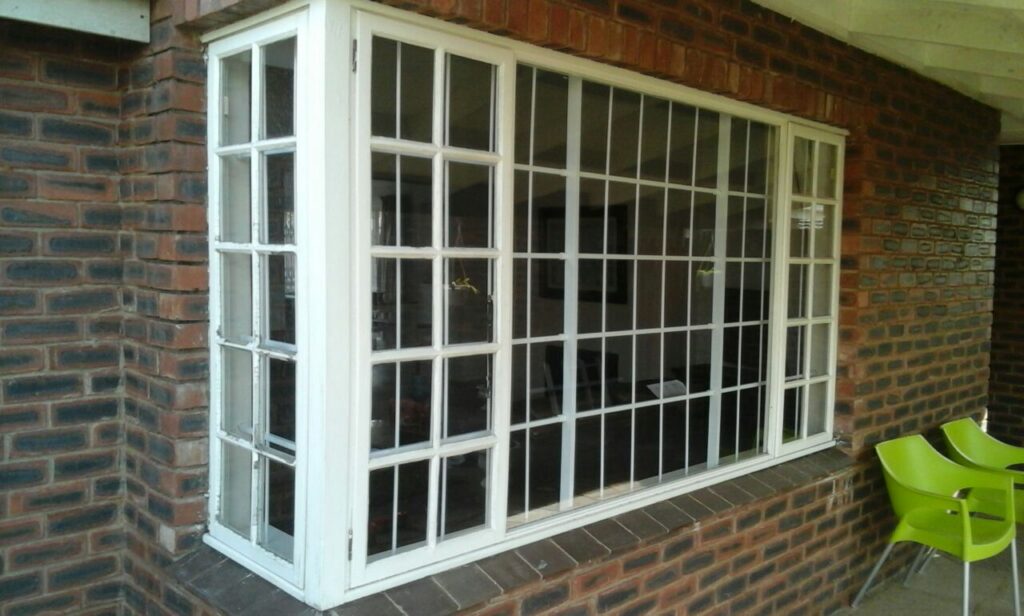
Stop clever intruders by checking corrosion resistance—essential for KwaZulu-Natal’s coastal and high-rainfall environments. This delivers a thorough barrier system that combines aesthetic appeal with real security. Wonder Bars designs custom solutions tailored to your specific property needs. For windows that need both security and visual character, cottage pane burglar bars offer bespoke fabrication that matches your existing window grid patterns while reinforcing vulnerable entry points against intrusion.
Rotate Deterrents to Stay Effective
Primates adjust remarkably fast to static deterrents, which means your monkey-proofing strategy must evolve continuously to remain effective. Research shows initial success rates of 60 percent drop to 25 percent within weeks as animals acclimatise. You’ll proofing stop clever behaviour through deliberate rotation protocols.
Implement these three essential shifts:
- Frequency rotation – Modify ultrasonic frequencies and acoustic settings every 2–3 weeks to prevent habituation to specific sound ranges.
- Mechanical repositioning – Relocate solar repellers, flashing LEDs, and reflective surfaces periodically so monkeys don’t recognise fixed device locations.
- Sensor height optimisation – Change placement heights and coverage angles to unsettle learned avoidance routes.
Combine rotating visual deterrents with unpredictable activation patterns. Integration with physical barriers amplifies long-term efficacy. Wonder Bars designs systems incorporating these rotation strategies, ensuring your Durban property remains protected year-round.
Lock down rubbish and food storage at night
Your rotation strategy keeps monkeys guessing, but you’ll need reinforced containment once night falls. Clever primates quickly learn to exploit poorly secured rubbish containers, so heavy-duty hardware becomes essential.
Install padlock-style door latches with double hinges on each side of large bins. Drill holes and attach hasps using bolts to create secure, non-removable lock points. Use carabiners or additional hasps spaced nine inches apart for multi-point security. Add a fourth and fifth hasp to the rear for improved structural integrity.
Anchor containers to fixed structures using chains or wire. Install U-bolts on the side as single docking points where all latches snap together. Use ratchet straps looped through lids and secured to nearby poles or trees.
Position anchored containers away from accessible walls or fences to reduce mechanical advantage.