





Most homeowners believe a reinforced deadbolt makes their home secure. It doesn’t. Glass doors, sliding windows, and ground-level entry points remain wide open invitations for determined burglars—and the way you’ve combined your existing security measures may be making things worse. Polycarbonate glazing, Grade 2 locks, and motion sensors only work when layered correctly, and one critical installation mistake unravels everything. Your home is either genuinely protected or it just feels that way.
Why Glass Doors Encourage Break-Ins (And How to Fix Them)
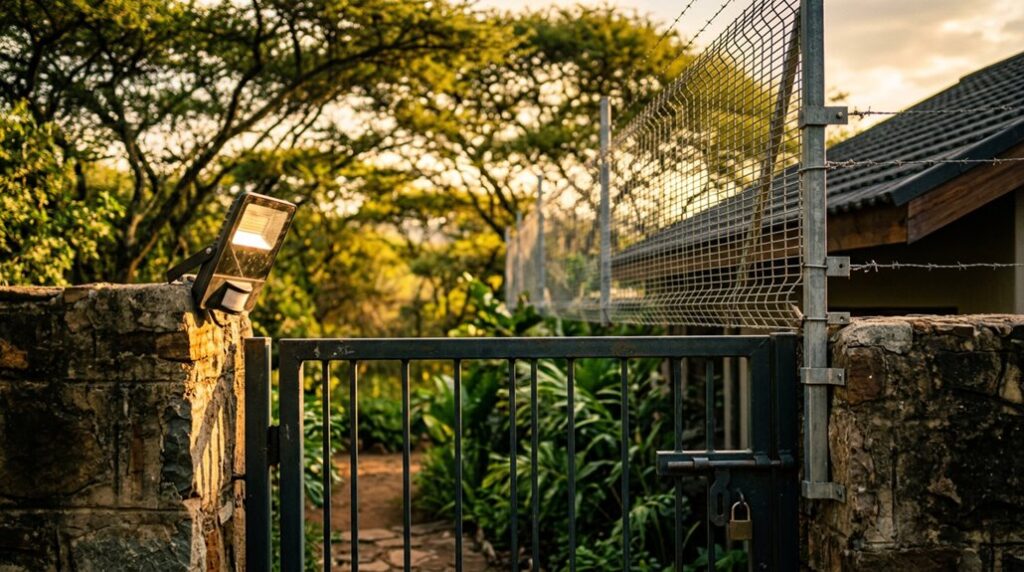
Glass doors create security vulnerabilities that standard construction methods do not adequately address. Intruders can shatter ordinary glass with basic tools such as bats or rocks, creating immediate entry points. Once broken, they can reach through and disengage the doors from the inside. Motion-activated lighting around glass doors deters burglars by removing dark approach angles and increasing visibility of suspicious activity.
You’ll find several effective solutions available. Security film solutions use transparent 8-mil rated layers that hold broken glass together, delaying forced entry. Polycarbonate bars offer additional impact resistance alongside crystal-clear burglar bars, which blend seamlessly with your architecture while preventing the door from moving. Products made from SABS and UKAS approved materials ensure long-lasting durability and strength without requiring structural modifications to your existing door frames.
For sliding glass doors, anti-lift screws fitted in the upper tracks prevent the panels from being lifted out. Secondary track locks add extra protection. These combined approaches—security film, reinforced glazing, and physical barriers—create layered defence that protects your home without compromising aesthetics or natural light.
Securing Weak Entry Points: Hinges, Frames, and Locking Mechanisms
While your doors and windows might look secure from the outside, the hinges, frames, and locking mechanisms hidden within them often represent your home’s most exploitable vulnerabilities. You can strengthen these weak entry points through strategic reinforcement and upgrades.
| Component | Upgrade | Benefit |
|---|---|---|
| Strike plates | Heavy-duty steel with a 4-inch lip | Maximum bolt coverage |
| Hinges | 3-inch security screws into studs | Helps prevent door removal |
| Frames | Metal reinforcement bars | Invisible structural strength |
| Locks | Multi-point systems | Improved engagement |
Install reinforced strike plates using 3-inch or 4-inch screws driven into wall studs. Replace weak hinges with heavy-duty models featuring non-removable pins. Add hinge bolts to outward-opening doors. Combine deadbolts with secondary locking points for peak security. For inward-opening doors, use longer hinge screws that penetrate into solid frame structure to maximise resistance against forced entry. A personalised security consultation can help identify which specific components in your home require the most urgent reinforcement. This layered approach to burglar-proofing, including clear burglar bars where appropriate, creates thorough protection that deters forced entry effectively.
Grade 1 vs. Grade 2 Deadbolts: Which Actually Stops Burglaries?
Your deadbolt’s certification grade directly determines how well it resists forced entry and how long it will function reliably. Grade 1 deadbolts survive 250,000 open-and-close cycles and withstand 10 door strikes at 75 pounds of force each, plus a 250-pound kick test. Grade 2 deadbolts handle 150,000 cycles and only 5 strikes at the same force level.
For most residential properties in Durban, Grade 2 offers practical security at a reasonable cost—approximately ZAR 400 to ZAR 1,200 per lock. Grade 1 is for commercial applications and high-security environments. However, your deadbolt’s effectiveness depends just as much on the strike plate being fitted using 3-inch screws. Testing for ANSI/BHMA certification is carried out by independent laboratories rather than self-reported, ensuring genuine compliance standards across all product categories.
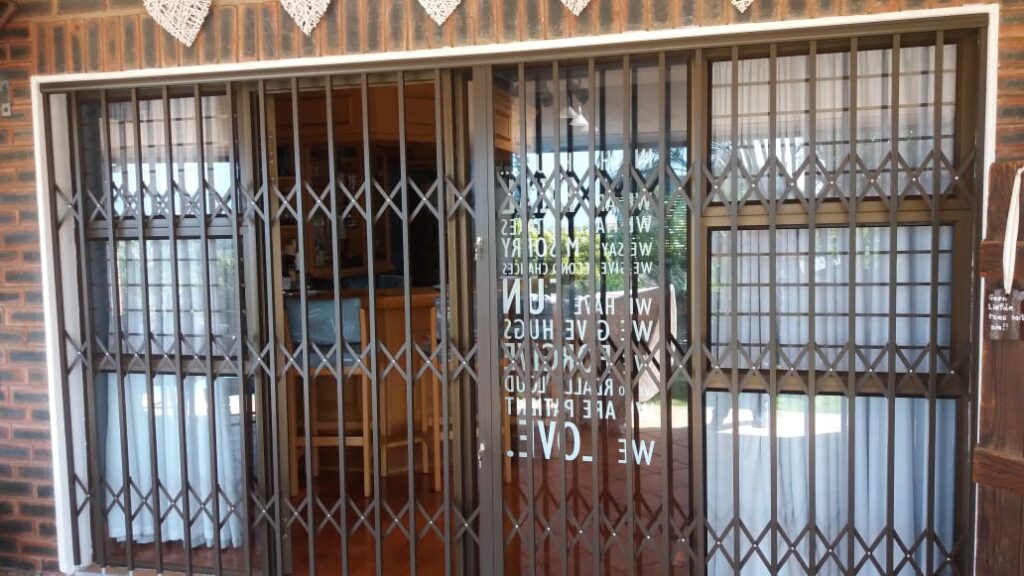
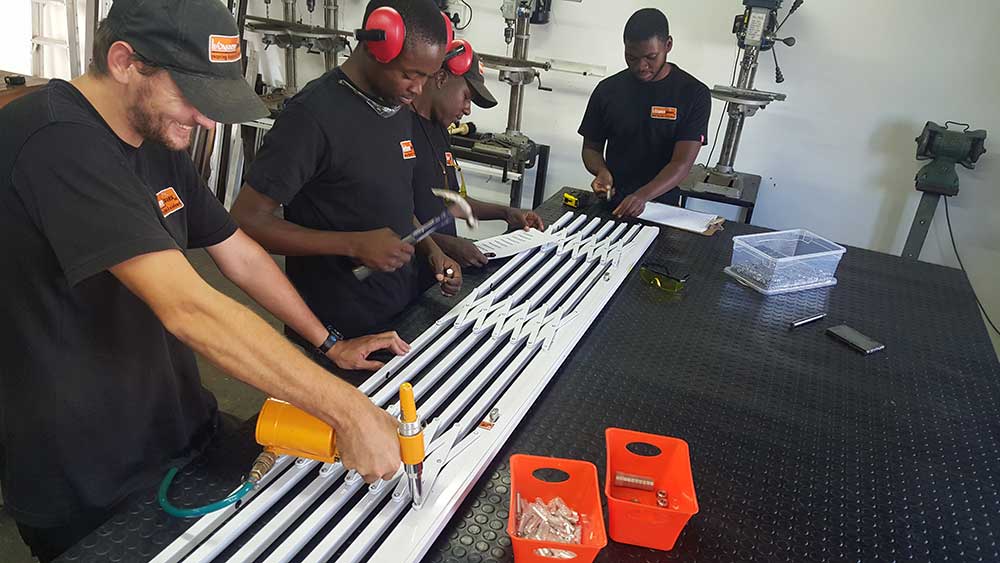
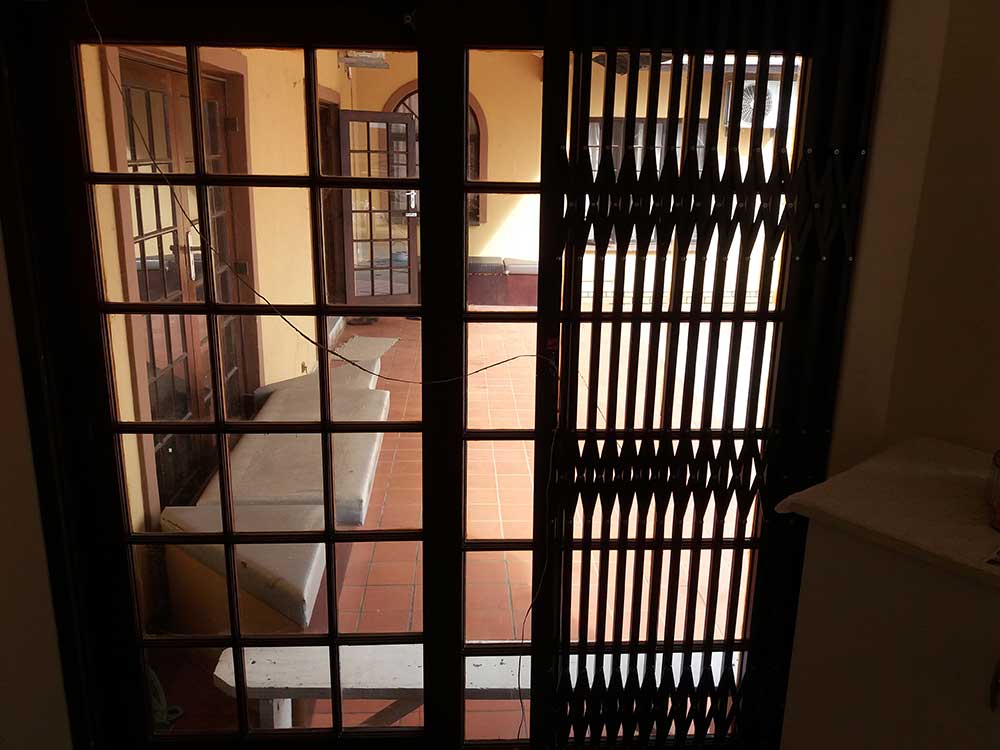
Wonder Bars Durban specialises in crystal-clear burglar-proofing premier solutions, integrating premium locks with reinforced frames for complete entry point security that combines aesthetic appeal with genuine protection. For property owners seeking comprehensive entry point coverage, retractable trellis doors and burglar bars can be paired with high-grade deadbolts to create layered security that addresses multiple vulnerabilities at the same time.
Burglar bars vs. security alarms: which stops break-ins?
When securing your Durban home, you’ll face a fundamental choice: rely on physical barriers or electronic detection systems.
Burglar bars deliver immediate, tangible protection. They create visible physical obstacles that stop intruders during critical break-in moments. In surveys, 83% of convicted burglars identified bars as the measure most likely to stop them. Transparent window security options, like crystal-clear burglar bars KZN, combine aesthetic appeal with proven deterrence.
Burglar bars create visible physical obstacles that stop intruders—83% of convicted burglars identified them as the most effective deterrent.
Security alarms function differently. They deter approximately 53% of burglars before attempts occur, yet offer no physical impediment once entry begins. When alarms activate, 95% of burglars flee immediately.
The distinction matters: burglar bars prevent entry altogether. Alarms alert you after intrusion starts. Security screens also work effectively with or without additional safety systems, offering durable long-term protection through strong metal mesh that resists cutting and prying. For all-encompassing home security South Africa, physical barriers address the critical first minute when intruders are most vulnerable to defeat. Cottage pane burglar bars go further by combining robust physical security with bespoke craftsmanship that matches your exact window design, preserving your home’s architectural integrity without compromise.
Outdoor lighting: your cheapest first line of defence
Outdoor lighting is one of the most cost-effective security investments available to South African homeowners. Strategic placement at entry points—front doors, first-floor windows, back doors, and driveways—creates invisible security that deters intruders before they approach your property.
The right lumen output delivers clear impact. Use 800–1000 lumens for entrances, 2000–3000 lumens for large areas, and 300–700 lumens for pathways. Motion sensors provide sudden illumination that alerts neighbours to suspicious activity. Pairing outdoor lighting with custom door security solutions such as swing gates and retractable trellis doors creates a multi-layered barrier that significantly reduces the number of entry points for intruders.
Our security guides recommend programming lights at irregular intervals to mimic occupancy. Avoid leaving exterior lights on continuously, as this signals an empty home. Instead, alternate lighting patterns between rooms using smart controls that you can manage remotely. Lighting alone should be integrated with broader security measures such as alarms and cameras for comprehensive protection.
This layered approach supports your burglar-proofing strategy effectively.
Where to Place Motion Sensors for Maximum Coverage?
Motion sensors form the invisible backbone of your indoor security system, detecting movement where burglars enter and move through your home. Strategic placement turns your security into crystal-clear burglar-detection barriers that work seamlessly with physical barriers like those we craft at Wonder Bars. Bespoke security systems can be designed to integrate with your existing architecture, ensuring motion sensors and physical barriers work together as a unified line of defence.
| Zone | Prime Height |
|---|---|
| Interior walls | 1.8–2.4 metres |
| Hallways | 2.1–2.4 metres |
| Staircases | 2.1–2.4 metres |
Mount sensors in room corners facing entry points to maximise coverage. Position detectors along entrance walls so they trigger immediately upon intrusion. Install units in high-traffic areas—hallways, foyers and staircases—where intruders typically move. Cover rooms containing valuable items and keep garage areas in view. Avoid direct sunlight, radiators and obstructions that can cause false alarms. Angle sensors downwards by 5–10 degrees for ideal human-level detection. PIR sensors require clear lines of sight to work effectively, so make sure furniture and walls do not block the infrared detection rays between the sensor and potential movement routes.
Security Film vs. Burglar-Resistant Glass: Trade-Offs
Your window and door protection strategy extends beyond motion detection into the physical barriers themselves. You’ll find two primary approaches: security film and burglar-resistant glass, each offering distinct advantages.
Security film is applied directly to existing glass and typically costs significantly less than replacing it. The 8 mil thickness provides excellent deterrence, delaying forced entry for up to 3 minutes—often enough to discourage intruders and push them towards easier targets. However, film only holds shattered glass together; it doesn’t prevent the glass from breaking. For maximum effectiveness, attachment systems with silicone beads should be applied around the frame trim to ensure broken glass doesn’t fall inward and create an entry point.
Burglar-resistant glazing such as polycarbonate prevents breaking entirely under blunt force. This superior strength is well suited to ground-level doors and windows where smash-and-grab theft is a greater risk. Installation requires full window replacement, which increases costs considerably. For homeowners seeking an alternative to full replacement, retractable window fixtures provide high-strength protection while blending in with your existing home design.
Your choice will depend on your vulnerability level, budget, and the location of your windows. Higher, older windows tend to be well suited to film applications. Ground-level entry points benefit from polycarbonate glazing for thorough protection across your property.
Safes, Hiding Places, and Cash Management: Multi-Layered Storage
Physical security barriers like crystal-clear burglar-proofing work best when paired with interior protection—securing what burglars actually seek inside your home.
You’ll want to invest in a quality safe rated for your specific threats. UL 30 certification handles routine break-ins, while TL-30 or TL-30×6 ratings provide 30-minute tool resistance against serious theft attempts.
For high-value assets, TRTL 60×6 (torch and tool resistant) delivers superior fire and tool protection.
Strategic placement matters markedly. Avoid placement in bedrooms—burglars search there first. Install safes in unusual rooms with no guest traffic, bolted into the floor or into closet walls. This concealment extends response time beyond 20–120 minutes, creating vital delays. The strongest motorised deadbolt systems can resist forced entry for 30 minutes or longer, significantly increasing burglar abandonment rates.
Consider multi-layered protection combining fire, water, and burglary resistance. Dual-lock systems with digital keypads and tubular keys bolster security considerably. Budget approximately 10% of your item’s total value towards the safe purchase for peak protection. Complementing your interior safeguarding with retractable trellis doors on external access points adds a critical first line of defence that discourages intruders before they ever reach your valuables.
Key Management: Preventing Internal Theft in Your Business
While quality safes and strategic storage protect your assets from external threats, the reality of business security extends beyond burglars at your door—internal theft costs South African businesses millions of rand every year. Your key management system forms the critical foundation for preventing unauthorised access to valuables.
Implement role-based access controls (RBAC) to restrict permissions to authorised personnel only. Document all lifecycle stages, from key creation through to destruction. Enforce dual control principles that require two individuals for critical operations such as access or deletion. Track every access event through accountability systems that maintain complete audit logs.
Rotate shared secrets periodically to minimise exposure in the event of compromised credentials. Destroy keys immediately once they are no longer required. Store sensitive materials in Hardware Security Modules (HSMs), which provide validated physical protection. These layered protocols create robust barriers against internal threats while maintaining operational effectiveness. Complement your internal controls with advanced locking mechanisms on entry points such as swing gates to add an essential physical layer that limits unauthorised personnel from reaching sensitive areas in the first place.
Steel Bar Diameter and Bolting Standards That Actually Work
When you’re selecting burglar proofing for your property, you need to understand that steel bar diameter and bolting depth aren’t arbitrary choices—they’re the foundation of whether your security installation actually stops a determined intruder.
You’ll find that bars must meet minimum specifications (at least 20mm diameter for mild steel) and be anchored into brickwork to a depth of no less than 100mm to prevent pull-out under force.
The bolting method you choose—whether grouting, epoxy anchoring, or wedge anchors—directly determines how effectively your entire security system performs under physical attack.
Steel Bar Minimum Specifications
The effectiveness of your burglar-proofing system depends entirely on the steel bar specifications you choose—and this isn’t a place to cut corners. You’ll want bars that meet or exceed Grade 60 steel, which delivers a yield strength of 415 MPa. This standard ensures your bars resist bending under forced-entry attempts.
| Bar Diameter | Minimum Bolt Size | Maximum Spacing | Application |
|---|---|---|---|
| 12 mm | 12 mm | 300 mm | Standard residential |
| 16 mm | 12 mm | 280 mm | Enhanced security |
| 20 mm | 16 mm | 280 mm | High-risk areas |
| 10 mm | Not recommended | N/A | Insufficient |
| 25 mm | 16 mm | 250 mm | Commercial heavy-duty |
Your 12 mm bars represent the minimum effective diameter for primary security reinforcement. Anything smaller compromises structural integrity. You’ll achieve superior results by matching the specifications to local building regulations, ensuring your installation meets regulatory requirements and provides genuine protection.
Bolt Anchoring Techniques
Your bolt anchoring system determines whether your burglar-proofing bars hold firm under extreme stress or fail when you need them most.
Anchor bolts ranging from 1/2 inch to 3/4 inch in diameter serve general security applications effectively. Structural bolts require a minimum diameter of 0.625 inches for adequate load-bearing capacity. Hole drilling must follow structural specifications precisely, with embedment length requiring at least 4 bolt diameters—never less than 2 inches (51 mm).
Before adhesive injection, clean the drilled holes thoroughly using a brush and an air blower to remove all dust and debris. Approved epoxy must completely fill the hole before inserting the bar. Push and rotate the steel bar to ensure proper bonding. Follow the manufacturer’s curing instructions strictly.
Vertical deviation tolerances must be kept within ±1/2 inch of the specified elevation. Horizontal deviation for 3/4-inch bolts is restricted to ±1/4 inch. After the adhesive has cured, inspect embedment depth, alignment, and curing status immediately.
False Alarm Prevention: Common Sensor Placement Mistakes
Improper sensor placement is one of the most common reasons burglar-proofing systems trigger false alarms, and it’s also one of the easiest problems to prevent.
Improper sensor placement causes most false alarms in burglar-proofing systems, yet it’s easily preventable with proper installation techniques.
You’ll achieve peak performance through these critical placement guidelines:
- Mount motion sensors between 6 and 8 feet high to eliminate blind spots
- Keep sensors away from heat sources, air vents, and direct sunlight
- Use pet-friendly sensors designed to ignore animals under 40 lb
You should also make sure contact sensors align tightly with door and window frames, maintaining gaps of less than half an inch.
Avoid positioning motion sensors near furniture, in non-climate-controlled spaces, or directly across doorways.
Test your system monthly in test mode and check battery status every 6 to 12 months.
Regularly cleaning the lens removes dust and debris that can trigger false activations.
Dual-technology sensors combining motion and heat detection provide great results in reducing unnecessary alarms.
Bars or Alarms: Where Your Budget Makes the Biggest Impact
When you’re investing in home security, should you prioritise bars and physical barriers or electronic alarm systems? Your budget allocation determines your actual protection level.
| Security Layer | Protection Type | Effectiveness | Budget % |
|---|---|---|---|
| Physical Barriers | Doors, bars, locks | 60% reduction in break-ins | 80% |
| Electronic Systems | Cameras, motion sensors | Alerts only | 20% |
| Combined Approach | Layered defence | 32x greater protection | Optimised |
Convicted burglars selected bars and metal screens as primary deterrents over alarms in 83% of cases. Physical barriers stop intruders during the critical first minute of entry. Alarms only provide alerts after breaches occur. Reinforced doors, window security screens, and tamper-proof locks make entry physically impossible. You’ll achieve delicate results when combining external lights, locks, and burglar alarms into one layered system rather than relying on electronic solutions alone.
Monthly Security Checks: Testing Locks, Sensors, and Hinges
You’ll want to establish a monthly maintenance routine that covers three critical areas: testing your lock mechanisms to guarantee smooth operation, verifying that all sensors communicate properly with your control panel, and inspecting hinges for signs of wear or misalignment.
These checks catch problems before they compromise your security system’s effectiveness.
Testing lock mechanisms monthly
Regular monthly testing of your lock mechanisms is essential to maintaining the security integrity of your property. You’ll protect your investment by catching wear before it compromises protection.
Test your locks systematically:
- Turn the keys smoothly in both directions to verify that the cylinder rotates without resistance.
- Test the door handle mechanisms to ensure the lever returns correctly and there is the right tension during operation.
- Make sure that the deadbolts extend fully into the strike plate without binding or sticking.
Check that any automatic locking features engage correctly after the door closes. Operate each lock through its full range of motion. You’re detecting potential problems early, which saves money on emergency repairs and prevents security gaps.
This maintenance routine keeps your Wonder Bars security solutions working at peak performance. Consistent testing demonstrates your commitment to protecting your property systematically and professionally.
Sensor Alignment and Calibration
Ensuring your sensor systems function correctly requires precise alignment and calibration checks performed monthly. You’ll measure mounting distances from the centre line on both sides, confirming they match the manufacturer’s tolerance specifications. Verify vertical angles reach exactly 90° using a digital gauge, and check horizontal angles against your system manual (typically 15° outward).
Inspect mounting brackets for looseness, cracks, or shifts that could cause misalignment. Remove dust, cobwebs, and vegetation blocking the field of view. Carry out walk tests monthly across each zone, observing LED indicators during activation. Record response times to identify performance degradation.
Review system logs for false alarms or missed detections. Adjust sensitivity settings if issues persist. Test backup battery voltage with a multimeter against the manufacturer’s guidelines, replacing batteries immediately if voltage falls below the recommended levels. Update firmware carefully to preserve calibration integrity.
Hinge Inspection and Maintenance
Hinge failures account for a significant portion of security vulnerabilities in burglar-proofing installations, yet they’re easily preventable through consistent inspection and maintenance. You’ll maintain peak security by establishing a structured inspection routine tailored to your property’s needs.
Your monthly checks should include:
- Visual examination of each hinge for rust, corrosion, loose screws, and unusual wear patterns
- Assessment of the hinge pin and bearing condition, listening for squeaking or grinding noises
- Verification that door alignment remains true without sagging or sticking between the frame and barrier
You should tighten loose screws clockwise until snug, avoiding over-tightening that strips the holes. Apply white lithium grease to external hinges for weather resistance.
In high-traffic areas, increase inspections to monthly intervals. This preventative approach guarantees your security barriers function reliably while maintaining their aesthetic integrity throughout the year.
Your 30-Day Security Hardening Checklist
Physical security improvements form the foundation of effective burglary prevention, and they are actions you can implement immediately without specialist technical knowledge.
Your 30-day hardening checklist prioritises essential upgrades across all entry points.
Week One: Fit deadbolts with at least a 1-inch throw on all exterior doors. Replace standard hinges with non-removable security hinges. Apply window security film to resist impact and help prevent shattering.
Week Two: Reinforce strike plates on door frames. Install door jammers on sliding glass doors. Position motion-sensor exterior lighting at all entry points.
Week Three: Carry out a thorough perimeter inspection. Identify vulnerabilities in your current setup. Document all completed upgrades.
Week Four: Test all security devices. Arrange professional installation for complex systems. Review your security layout with Wonder Bars specialists to ensure full protection across your property.