


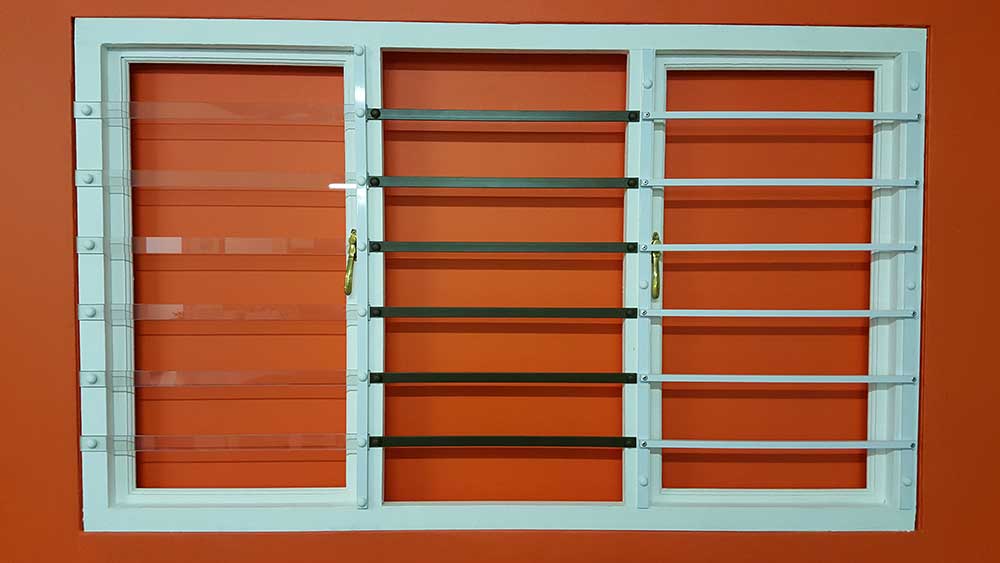


Most burglars don’t pick locks — they walk straight through your ground floor windows. Within minutes, a forced entry can turn your home into a crime scene, yet millions of homeowners remain dangerously unprotected. Impact-resistant glazing, key-operated locks, and motion-activated detection systems can transform these vulnerabilities into formidable barriers. The right combination makes all the difference between a failed attempt and a successful break-in.
Upgrade to impact-resistant glass
Consider upgrading your ground floor windows to impact-resistant glass—a proven security improvement that combines physical protection with structural durability. This specialised glazing consists of multiple glass layers bonded with polyvinyl butyral (PVB) interlayers that absorb impact energy effectively.
When struck, burglar-resistant windows crack into a spider-web pattern while maintaining their fixed shape. This design prevents glass shards from scattering and delays forced entry attempts for several critical minutes. Attackers face continuous striking requirements at the same spot to breach the barrier—a significant deterrent against brute force methods including sledgehammers and crowbars. The interlayer that holds the glass together also reduces noise distractions from external threats and street activity.
Impact-resistant glass achieves recognised security ratings. Level P6B withstands 30 to 50 strikes, while Level P7B resists 50 to 70 strikes during forced entry testing. Ground floor installations require a minimum A1 classification (3-metre drop height), with A3 classification recommended for improved performance in crime-prone areas. For homeowners seeking layered protection, pairing impact-resistant glass with SABS-approved burglar bars provides an additional physical barrier that further delays and deters forced entry attempts.
Strengthen Your Locks and Window Restrictors
While impact-resistant glass provides excellent protection, your window’s security depends just as much on sturdy locks and restrictors that prevent forced entry at the point of access.
| Security Feature | Installation Method | Maintenance |
|---|---|---|
| Key-operated locks | Replace standard latches on all ground-floor windows | Test monthly for smooth operation |
| Sash stops | Fit blocking devices restricting opening to a few inches | Inspect for damage quarterly |
| Tamper-proof screws | Use head-cap or Allen-head screws on hardware | Check tightness every six months |
Replace standard latches with key-operated locks on accessible windows. Install pin locks on sliding tracks. Fit tamper-proof screws to prevent hardware removal. Apply lubricant every three months, ensuring smooth operation. Complement your locks with burglar bars, which provides an additional physical barrier that significantly increases the difficulty of forced window entry.
Install sash stops that restrict window openings while still allowing ventilation. Use wooden dowels in side-sliding tracks. Add thumb-screw track locks for cost-effective window security. Install a second lock if openings exceed 600mm. Routine maintenance of your locking mechanisms preserves their security performance and prevents deterioration over time.
Remove hiding spots and improve sightlines
Eliminating hiding spots around your property creates a critical security advantage by removing the cover that burglars rely on to approach windows undetected. You’ll secure your ground floor effectively by trimming shrubs and hedges to 3 feet or lower, eliminating concealment near vulnerable entry points. Remove disused structures such as sheds or lean-tos positioned against fences that could shield intruders. Clear dense vegetation and overhanging branches from the exterior of your home. In areas where vervet monkey intrusions are also a concern, bespoke transparent barrier systems can be integrated with existing security measures to provide dual protection against both wildlife and human intruders.
Strategic lighting reshapes your property’s visibility at night. Install wall-mounted mirrors or reflective surfaces to eliminate blind spots around windows and doors. Position outdoor cameras with unobstructed views of driveways, gates, and entry points, ensuring real-time alerts for suspicious movement. Maintain clear sightlines from the street and neighbouring properties. Motion sensor floodlights mounted approximately 10 feet high provide additional deterrence and help prevent tampering at vulnerable areas. This integrated approach markedly reduces opportunities for criminal reconnaissance and approach.
Deter intruders with motion-activated lighting
You’ll eliminate dark hiding spots around your ground-floor windows by strategically positioning motion-activated lights at entry points, driveways, and along your perimeter.
Install these units 6–10 feet above ground with 150° detection technology that captures movement up to 30 feet away, ensuring thorough coverage without blind spots. For comprehensive protection, pairing motion-activated lighting with retractable windows and fixtures creates a multi-layered defence system that addresses both visibility and physical security simultaneously.
This layered approach—combining ideal sensor placement with bright 60-watt illumination—creates visibility zones that immediately expose potential intruders while reducing your electricity costs through activation-only operation. Motion detector lights deter burglars by eliminating the cover of darkness, creating visual cues, and potentially triggering noise that draws attention to attempted intrusions.
Strategic Light Placement Techniques
Strategic placement of lighting forms the foundation of an effective perimeter security system, particularly when combined with motion-activated technology. You should position lights directly beside the front and back doors to eliminate hiding spots. Install motion-activated fixtures along your property’s side, targeting ground-floor windows where intruders typically approach. Mount lights at gates, along walkways, and around your backyard perimeter to cover every access route.
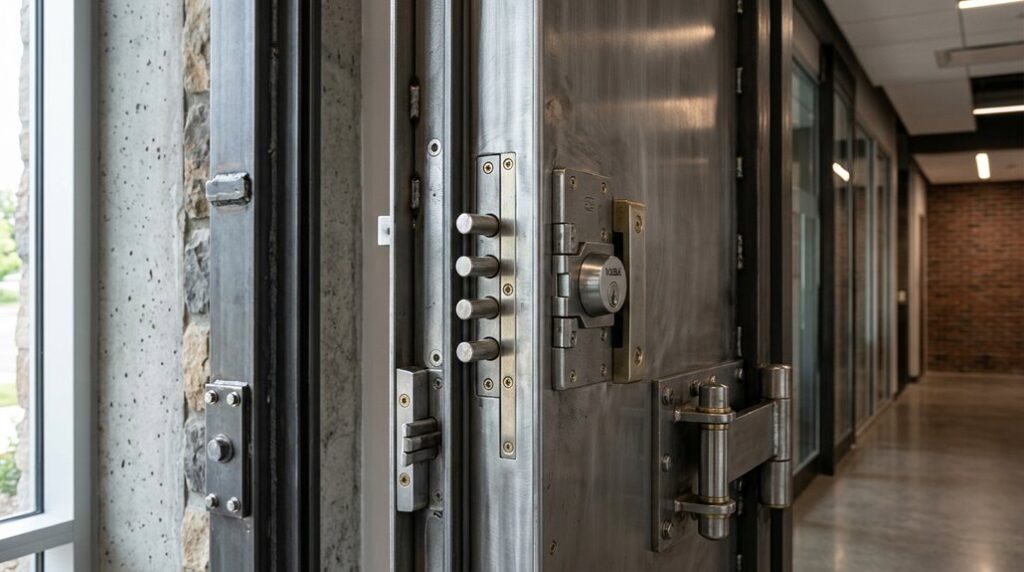
For home security South Africa installations, angle sensors towards approach paths rather than areas with heavy foot traffic to prevent constant false triggering. Point sensors away from windows and glass doors. Install lights with overlapping detection zones in corner areas where intruders try to avoid detection. Each fixture should cover the area where the previous one ends, removing blind spots entirely. Pair your lighting system with custom door security solutions to add another crucial layer of protection at your property’s most vulnerable entry points. Integrate cameras alongside your motion-activated lights to enhance detection and response capabilities when potential threats are illuminated.
This strategic layering creates seamless illumination across your property’s vulnerable points.
Eliminating Dark Hiding Spots
Motion-activated lighting works hand-in-hand with strategic placement to create a thorough perimeter defence system. You’ll deter break-ins by illuminating your ground floor entry points, pathways, and dark corners where intruders might hide. Well-lit exteriors greatly reduce the risk of attempted burglaries under darkness, as burglars thrive on concealment.
Motion-sensor spotlights automatically activate when movement is detected at night, startling would-be intruders while alerting you to suspicious activity. Strategic placement near windows, doors, and perimeter areas removes hiding spots criminals exploit. Improved visibility also increases the chance your neighbours notice unusual movement. Installing lights specifically around basement and side yards provides targeted security for the most vulnerable entry points on your property.
When you integrate motion-activated lighting with surveillance cameras, you’ll create a complete deterrent system. Video captures real-time footage during suspicious movement, providing useful evidence while lights eliminate shadowy zones where criminals operate. Pairing this approach with retractable window fixtures adds a further layer of physical security that works alongside lighting to resist intrusion attempts at ground floor openings.
Motion Sensor Coverage Optimisation
Effective motion sensor placement transforms your ground floor defence from a generic perimeter system into a precision security network that catches intruders at critical moments.
You’ll mount detectors at 6–8 feet above the floor, positioning them in room corners to cover two walls at once. Angle the lens slightly downward, parallel to expected movement paths, to eliminate blind spots.
For burglar-proof windows, place outdoor sensors under eaves facing ground floor window expanses. Install indoor detectors in living room corners aimed at the paths intruders would likely take after entry.
Cover hallways that connect to entry points to intercept movement towards valuables. Avoid direct sunlight, heat sources, and air vents that can trigger false alarms.
Deploy a grid of four sensors in large spaces, ensuring overlapping coverage zones. Motion sensors complement entry sensors by detecting interior movement rather than openings. Conduct walk tests in test mode to refine final positioning for peak detection.
For patio and garden access points, pairing motion sensors with retractable trellis doors provides a layered security approach that combines physical deterrence with active detection.
Install Entry Sensors and Glass-Break Alarms
Entry sensors and glass-break alarms form the foundation of a thorough ground-floor window security system. You’ll install contact sensors to detect window opening, while glass-break sensors identify shattered glass. These complementary layers protect non-opening windows such as panorama windows where contact sensors prove ineffective. Combined with burglar bars KZN installations, this layered approach creates all-encompassing protection. Modern sensors are wireless and battery-powered, enabling DIY installation without running wires to a main control panel.
| Sensor Type | Detection Method | Best Placement |
|---|---|---|
| Contact Sensor | Window opening via magnet | All ground-floor windows |
| Glass-Break Sensor | Vibration from shattering | Room centre for coverage |
| Vibration Sensor | Surface vibration detection | Large glass surfaces |
| Magnetic Contact | Physical separation monitoring | Fixed frame and moving sash |
| Complementary Layer | Multiple detection points | Basement windows |
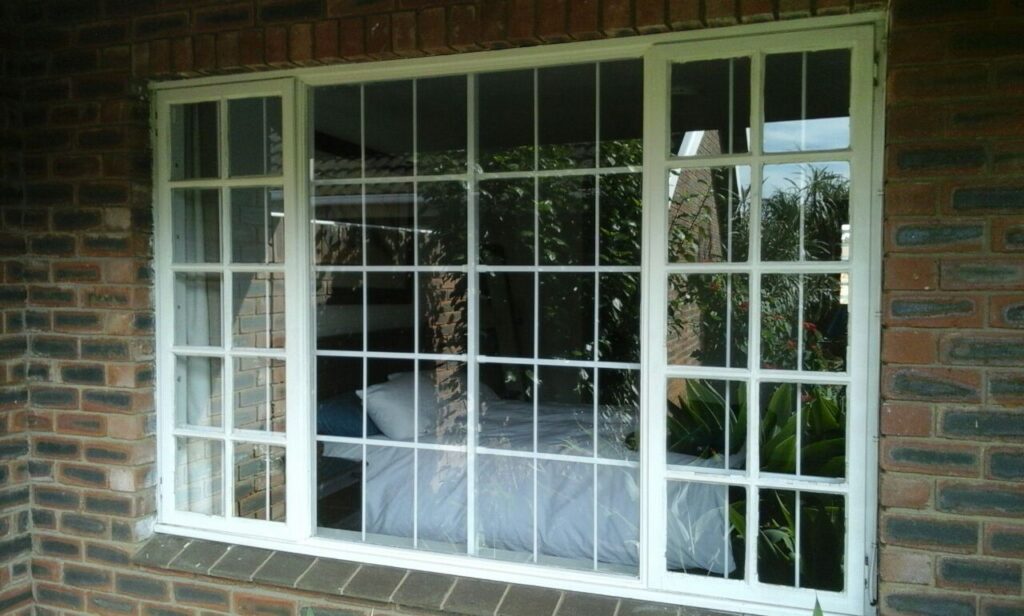
You’ll maintain less than one inch of separation between the sensor and magnet components. Clean installation areas with rubbing alcohol before applying to maximise adhesive bond strength by over 50%. Test sensors by opening and closing windows several times before permanent installation. For windows with decorative grid patterns, pairing sensors with bespoke cottage pane bars ensures both aesthetic integrity and physical deterrence are addressed simultaneously.
When to hire a professional for installation vs DIY
Fitting burglar-proof windows correctly determines whether your investment protects your ground-floor spaces or creates costly problems later on. Custom window bars require precise installation—improper flashing or sealants can trigger structural rot and mould-remediation costs reaching ZAR 86,250. DIY installation saves around ZAR 4,500 in labour but risks fully invalidating the manufacturer’s warranty.
Professional installers provide written labour warranties guaranteeing the quality of workmanship for years beyond the product’s coverage. They are factory-trained, background-checked, and follow documented safety procedures. Larger windows present significant handling risks; second-story installations require specialist know-how.
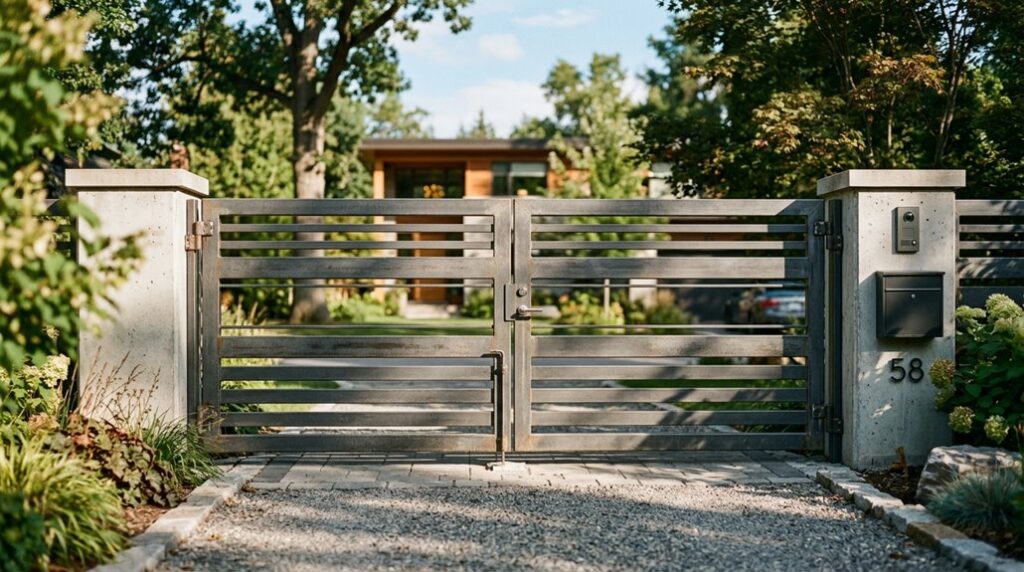
You’ll encounter multiple installation steps: measuring, removing old trim, preparing openings, and sealing using flashing tape. Without specialised tools and materials, it’s common to end up with poor air sealing and draughts. Professional installation ensures compliance with building regulations, protecting your home insurance validity and your investment. For broader perimeter security, pairing your window security with swing gates for doors delivers robust protection through advanced locking mechanisms and sturdy hinges at all access points.
Check and Maintain Your Defences Seasonally
Your ground-floor windows face constant exposure to temperature fluctuations, moisture, and physical stress that wear down locks and hardware over time.
You’ll want to carry out seasonal lock inspections and assess weather-related damage before vulnerabilities compromise your security, particularly during high-risk periods such as the pre-winter months, when seals fail due to thermal expansion.
Regular testing of lock engagement, hinge function, and frame integrity ensures your defences remain reliable year-round.
Seasonal Lock Inspections
Just as seasonal weather changes affect your home’s structure, they also impact the performance of your locks and security hardware. You’ll benefit from scheduling professional inspections twice yearly to maintain peak security alongside your window grilles and other defenses.
During spring, test each key in its corresponding lock and check deadbolt alignment. Summer demands verification that all windows have working locks before peak season arrives. Fall requires thorough cleaning to remove debris, then application of weatherproof lubricant for cold temperatures ahead.
Winter presents unique challenges. You should use de-icing lubricant rather than oil-heavy sprays that attract moisture. Store spare keys indoors to prevent freezing. Check door frames regularly since cold air contracts metal, potentially compromising your security systems’ effectiveness.
Lubricate locks every three months in coastal or high-rain areas. Inspect padlocks quarterly for rust or corrosion. This maintenance routine protects your investment substantially.
Weather-Related Wear Assessment
Protecting your investment in burglary-proof windows requires more than initial installation—it demands regular assessment of how weather exposure affects your security barriers.
South African climate conditions create unique challenges for your physical security systems. Seasonal temperature shifts and moisture exposure degrade materials over time, potentially compromising both aesthetics and protection.
You should monitor these key areas:
- Frame integrity: Check PVC-u and vinyl frames for discolouration, deformation, fading, or cracking caused by thermal expansion
- Sealant performance: Inspect weather seals, clean weep holes annually, and replace units showing internal condensation
- Corrosion resistance: Check metal components for rust or oxidation, particularly in coastal environments
Carry out detailed condition assessments every year. Address any defects you identify immediately to maintain your windows’ security effectiveness and visual appeal, as well as their protective function.
Think your windows are safe just because they are shut tight? Think again. Discover exactly how to fortify your glass with our guide to the ultimate window security solutions designed to keep uninvited guests firmly outside.