





Steel bars on windows feel safe. Clear ones feel like a gamble. But what if everything you assumed about transparent polycarbonate security was completely wrong? These see-through barriers aren’t just aesthetically clever—they’re engineered to absorb, deflect, and resist in ways most people never consider. The real question isn’t whether they look strong enough. It’s whether the numbers behind them prove it.
How Clear Bars Stack Up Against Steel: The Real Strength Comparison
When you’re considering window security options, the comparison between clear polycarbonate bars and traditional steel often comes down to a fundamental question: which material actually delivers stronger protection?
When choosing window security, the fundamental question remains: which material—clear polycarbonate or traditional steel—truly delivers stronger protection?
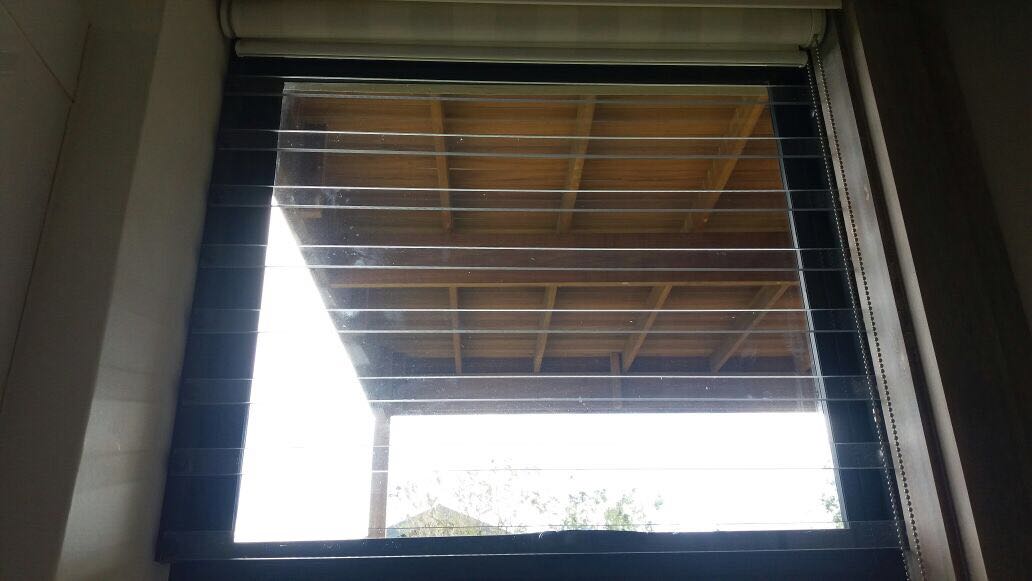
Clear bars use 10mm thick polycarbonate slats fitted into sturdy steel frames, incorporating internal reinforcing elements such as tensile cabling. This engineering approach creates near-impossible-to-break systems. Steel bars offer superior raw structural rigidity and a higher perceived resistance to brute-force attack.
Here’s the critical detail: both materials deliver equally strong protection when installed correctly. High-grade polycarbonate exhibits flexibility under force, making it extremely difficult to shatter during impact attacks, while still maintaining high tensile strength. Steel resists bending effectively. Fire safety considerations can be addressed through quick-release mechanisms depending on your specific installation requirements.
The genuine distinction isn’t material strength—it’s your priorities. You’ll appreciate clear bars for preserving visibility and property aesthetics. You’ll prefer steel for maximum visual deterrence and lower upfront costs of around ZAR 3,500–8,000 depending on specifications. Whichever option you choose, look for products manufactured using SABS and UKAS approved materials to ensure long-term durability and reliable performance.
Why Flexibility Wins: How Polycarbonate Defeats Crowbar and Impact Attacks
Flexing under force rather than breaking is polycarbonate’s greatest advantage against forced-entry attacks. Your polycarbonate bars absorb impact energy through plastic deformation instead of shattering like glass or acrylic. This flexibility prevents break-ins during sustained crowbar attacks lasting over 30 minutes. When properly engineered with anchored frames and standoff cushions, polycarbonate bars resist prying and pushing without becoming dislodged. Polycarbonate’s laminated construction includes soft layers that catch and dissipate force across multiple material interfaces, further enhancing resistance to repeated strikes.
Why polycarbonate bars outperform rigid alternatives:
- Endure violent crowbar strikes without frame failure or material separation
- Maintain structural integrity against blunt trauma and extreme environmental conditions
- Offer 250× greater fracture toughness than glass, making forced entry markedly harder
- Tolerate 800% more deflection cycles before showing stress marks
Custom anchoring systems prevent attackers from leveraging material flexibility against your security installation. This engineering approach shifts protection focus from individual material properties to certified system performance meeting industry standards. Beyond impact resistance, polycarbonate bars are manufactured using high-strength durable materials that maintain their structural and optical properties under prolonged UV exposure and harsh weather conditions.
Combat-Tested Standards: What Fighter Jets Teach Us About Home Protection
Your polycarbonate security bars benefit from engineering principles perfected through decades of military aircraft design. Fighter jet cockpits prioritise targeted protection in critical zones rather than total impermeability. This modular approach—balancing lightweight materials with impact resistance—directly applies to your transparent security installation.
Military-grade engineering principles from fighter jet design now protect your home through strategic polycarbonate reinforcement.
Modern aircraft use composite materials that absorb and distribute force across wider areas. Your clear bars employ identical stress-distribution technology. When crowbars or projectiles strike polycarbonate, the material flexes rather than shatters, transferring energy throughout the entire structure. The F-22 Raptor’s integrated avionics demonstrate how layered defensive systems work together to maximise protection while preserving visibility and function.
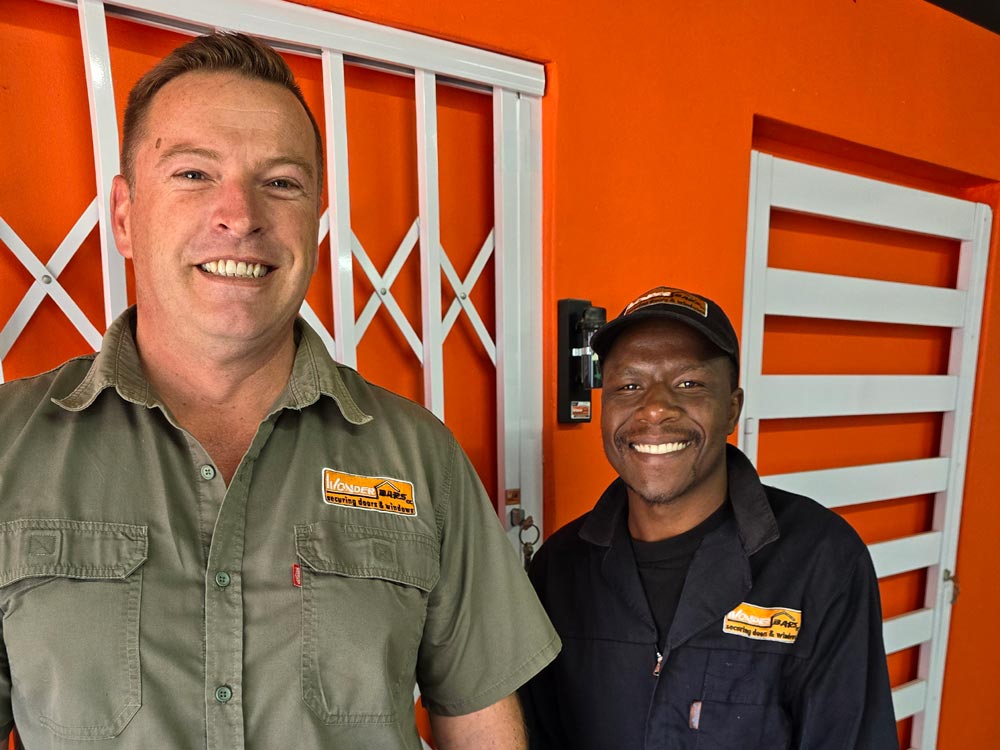
Fighter designers learned that strategic reinforcement outperforms uniform thickness. Wonder Bars applies this principle to your windows. Specific high-stress points receive engineered reinforcement while maintaining optical clarity. Beyond physical security, this bespoke approach also addresses vervet monkey intrusion prevention, ensuring the same transparent barriers that deter human intruders simultaneously protect your home from persistent wildlife entry.
This combat-tested philosophy means your home receives protection meeting standards developed under extreme operational demands. The result: transparent security that performs under genuine threat conditions.
The 1-Metre Rule: Why Wide Windows Need Cross-Bracing
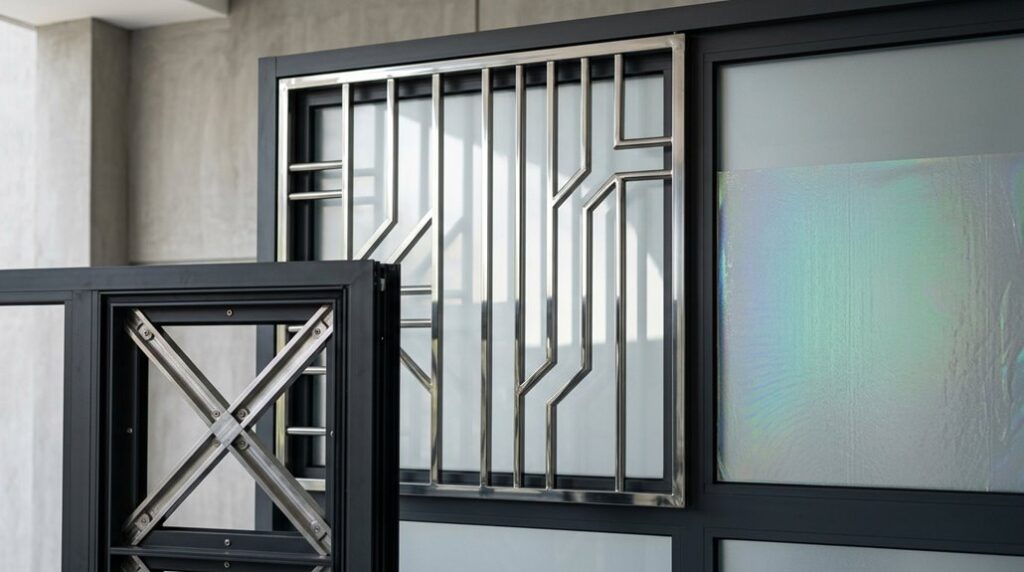
A single vertical polycarbonate bar loses its structural integrity once your window span exceeds 1 metre without lateral support. This critical threshold defines when your transparent window security requires cross-bracing reinforcement.
Wide windows create disproportionate deflection forces that overwhelm unsupported bars. You’ll need strategic bracing to maintain structural stability and safety. Load accumulation along the window span compounds these forces, requiring careful force-path analysis from the point of impact through to the foundation.
- Diagonal bracing angles between 30° and 60° provide ideal tension and compression resistance
- Wide bays require multiple cross-bracings and central struts to distribute load evenly
- Solid round bars used in cross-bracing need pre-tensioning with turnbuckles to be effective
- Unbraced spans exceeding 1 metre risk catastrophic failure under impact stress
Your transparent window design becomes genuinely secure when engineered with proper cross-bracing geometry. Wonder Bars implements these proven calculations to deliver aesthetically seamless protection that meets South Africa’s rigorous security standards. With over 21 years of experience, Wonder Bars brings industry-tested knowledge to every custom security installation, ensuring your cross-bracing solutions are both structurally sound and visually refined.
Clear Bars vs. Steel: True Cost Breakdown
When comparing transparent polycarbonate bars with traditional steel security solutions, the true cost difference extends far beyond the initial purchase price. Clear armed bars start at approximately R2,400 for small windows, while steel alternatives begin at around R1,600. However, steel requires a substantial maintenance investment due to rust and corrosion vulnerability.
Over a 50-year lifecycle, transparent systems provide significant advantages. They eliminate costly repair operations, reducing annualised life-cycle costs by 25–40% compared with steel. Non-corrosive clear bars achieve a lower Net Present Cost in moderate to severe environments, particularly in KwaZulu-Natal’s coastal climate. Clear bar production also emits up to 70% less CO2 per unit of delivered strength than blast-furnace steel, supporting environmental compliance goals (see: https://www.wellcoindustries.com/cost-comparison-gfrp-fiberglass-rebar-vs-traditional-steel/).
Installation labour averages R1,504 per window. The real financial benefit becomes clear over decades of minimal maintenance. Wonder Bars serves clients from their Hillcrest, KZN location (see: https://wonderbars.co.za/quote/), offering professional assessments that help homeowners determine the most cost-effective security solution for their specific property. Your home also gains improved resale appeal—clear armed bars maintain aesthetics while providing resilient protection, setting your investment apart from outdated security approaches.
How Clear Bars Stay Transparent for 10 Years (While Steel Rusts)
Your clear polycarbonate bars remain transparent thanks to UV-protective coatings applied to both sides, which prevent yellowing and fading for a manufacturer-guaranteed 10 years in direct sunlight.
Unlike steel bars that rust and require constant repainting—especially in coastal areas where salty air accelerates corrosion—polycarbonate never rusts and needs only simple maintenance with lukewarm water and mild soap to retain its clarity. ViewProtect’s transparent polycarbonate construction removes the need for the protective coatings that traditional metal guards require to prevent oxidation.
This combination of advanced material engineering and protective technology means you’re protecting your home with security barriers that stay both strong and visually clear, while steel alternatives deteriorate and lose their aesthetic appeal over the same timeframe. For homeowners looking for bespoke security installations that balance durability with aesthetics, clear bars offer a compelling long-term alternative to traditional metal options.
UV Protection Technology
Most homeowners don’t realise that clear polycarbonate security bars stay transparent for a full decade, while traditional steel rusts within years—and UV protection technology is why.
Manufacturers apply specialised UV protection coatings to both sides of polycarbonate to block harmful solar rays in the 300–380 nm range. This dual-sided approach helps prevent staining and degradation under normal environmental exposure.
The material maintains exceptional clarity and impact strength despite its transparency, backed by a 10-year warranty covering resistance to discolouration. ViewProtect LEXAN polycarbonate features UV protection on both sides that ensures resistance to harmful sun rays and prevents fading and yellowing.
For homeowners who prioritise both security and aesthetics, bespoke craftsmanship solutions ensure that window security installations complement the existing architectural character of a property rather than detract from it.
You’ll benefit from these key protection features:
- UV coatings block harmful solar radiation on both surfaces
- Polycarbonate resists yellowing and opacity issues indefinitely
- Rust-free performance contrasts sharply with steel corrosion
- Proper maintenance preserves optical clarity throughout the warranty period
Material Corrosion Resistance
Steel security bars corrode and weaken over time, but clear polycarbonate bars don’t—and there’s a fundamental reason why. Steel contains metallic iron that oxidises when exposed to moisture, creating rust that gradually degrades structural integrity. Clear bars, by contrast, are thermoplastics lacking the metallic composition required for corrosion.
You’ll find polycarbonate resists moisture, solvents and chemical exposure without deterioration. In KwaZulu-Natal’s humid coastal climate, this distinction matters greatly. Steel bars require constant maintenance to combat rust formation, while clear bars maintain their transparency and 3-ton tensile strength for decades. The galvanised steel tubes used to frame and secure the polycarbonate bars are treated to prevent rusting and maintain long-term integrity of the entire assembly.
UV-coated polycarbonate guarantees your clear bars stay transparent for over 10 years. The coating protects against loss of clarity while the material’s inherent non-corrosive nature preserves structural integrity. You’re investing in security that doesn’t compromise aesthetics or durability. For homeowners seeking flexible security solutions that endure KwaZulu-Natal’s demanding climate without sacrificing appearance, clear bars represent a compelling long-term investment.
Long-Term Clarity Maintenance
While steel security bars deteriorate through rust formation and require constant maintenance to preserve their function, clear polycarbonate bars maintain their transparency and structural integrity with straightforward cleaning routines. You’ll find that polycarbonate resists environmental degradation in ways traditional materials simply can’t match. Regular maintenance ensures your bars stay clear and visually appealing for over a decade.
Your maintenance routine involves:
- Cleaning with mild soap and lukewarm water using soft microfibre cloths
- Applying specialist plastic cleaners for embedded contaminants every few months
- Using clay bars to remove organic and metallic deposits that dull the surface
- Scheduling professional annual inspections in coastal or industrial environments
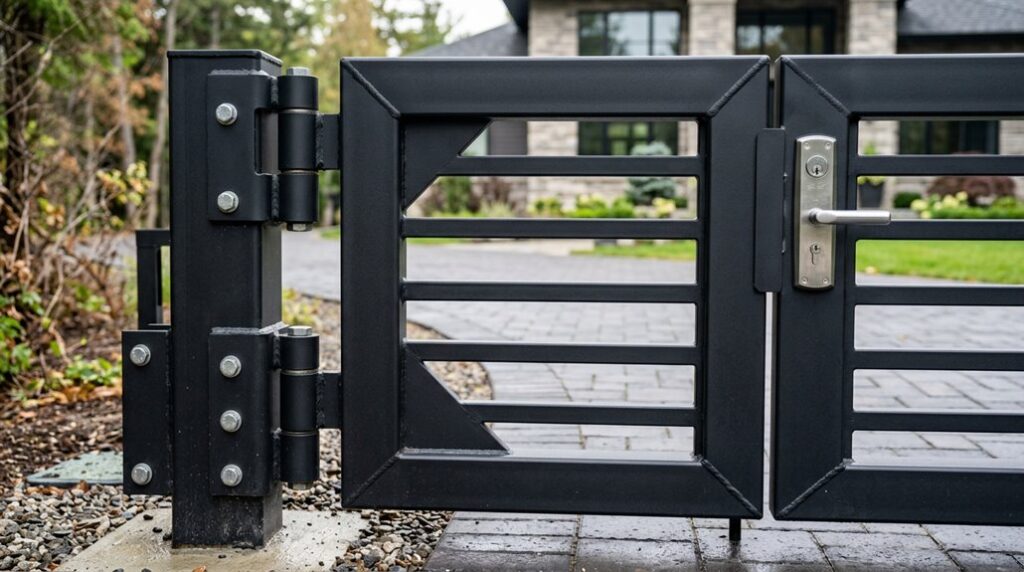
These protocols preserve optical clarity while helping prevent yellowing and streaking. Wonder Bars’ bespoke designs deliver both aesthetic appeal and long-term performance, eliminating the corrosion battles that affect conventional steel installations across South Africa’s diverse climates. For property owners seeking additional perimeter protection, custom-made swing gates combine the same approach to functional durability with architectural style to secure driveways and garden entrances.
Does Clear Bar Security Pay for Itself? A 10-Year Breakdown
When you’re evaluating transparent bar security for your property, the upfront cost often raises immediate concerns—but spreading that investment across a decade reveals a surprisingly different financial picture.
Clear bar security systems require higher initial capital expenditure than standard steel alternatives. However, your annual costs decrease markedly when amortised over the product’s full service life. Years one through three dominate the cost curve with a substantial upfront outlay. By years four and five, your system approaches the break-even point, where cumulative maintenance savings equal the price premium.
Years six through ten deliver the great result: annual expenses drop sharply as your clear bars operate without replacement or major repairs. Standard steel requires repainting every five to seven years.
Your transparent system eliminates rust removal, painting, and repurchase expenses entirely. Avoiding replacement alone offsets 30–40% of the initial installation costs over ten years, generating continuous financial benefit.