




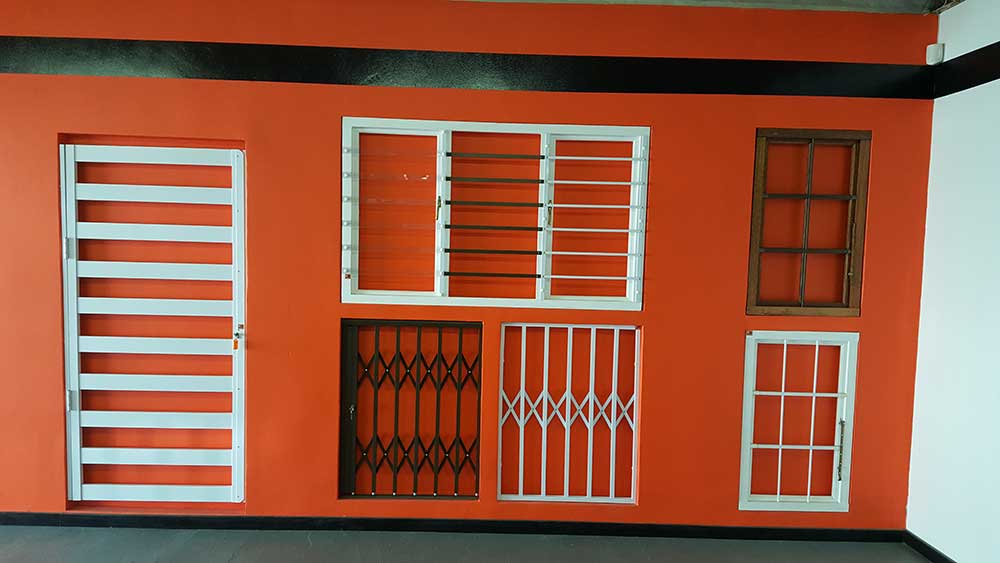
Most security barriers demand a permanent trade-off: sacrifice your building’s appearance or leave it vulnerable. Sliding window trellis systems reject that compromise entirely—motorised tracks deploy mesh or ballistic panels exactly when needed, then disappear completely. But not every system delivers what it promises. Ballistic ratings, material composition, and installation precision separate genuinely protective barriers from expensive liabilities.
What are motorised retractable trellis barriers and how do they work?
When you’re looking to protect your outdoor spaces without sacrificing views or airflow, motorised retractable trellis barriers offer a smart solution that combines security with flexibility. You can control these automated systems using remote controls, wall switches, smartphone apps, or voice commands for seamless operation.
A retractable trellis launches mesh or vinyl barriers along side tracks that keep the material taut and properly aligned. The compact tubular motor housed inside the screen cassette raises or lowers your barrier with precision at the touch of a button. Premium motorised systems deliver quiet motor performance of under 45 decibels, ensuring peaceful outdoor enjoyment.
Installation requires setting the top and bottom limits by pressing the stop button until the motor beeps three times. You’ll then run the mechanism up and down three times to verify it’s operating correctly. These systems are also made with superior quality materials that provide long-term resistance to tampering and harsh weather conditions.
Sizes range from three to thirty feet wide and up to sixteen feet tall, fitting various opening configurations across patios, porches, and garage doors.
Why Deployable Trellis Systems Beat Fixed Window Guards
When you’re evaluating window security options, you’ll find that deployable trellis systems offer three critical advantages over fixed guards: they unfurl rapidly when you need protection, adjust to your changing security priorities without permanent installation costs, and scale affordably as your budget allows.
Unlike fixed bars that demand a full upfront investment across all windows, retractable barriers let you secure high-risk areas first—typically your safe zones—then expand protection strategically to lower-priority spaces. A free home security assessment from experienced advisors can help you identify which entry points pose the greatest risk and prioritise your investment accordingly.
You’re not locked into a permanent solution; instead, you’re building a flexible defence strategy that grows with your needs and your ZAR budget. Security screens like those offered by professional installers provide durable long-lasting protection designed to resist cutting, kicking, and prying while maintaining airflow and light through your windows.
Rapid Deployment Speed Advantage
While fixed window guards provide permanent security through structural installation, deployable trellis systems offer a fundamentally different approach to protecting your property.
You’ll find that retractable trellis designs prioritise flexibility alongside protection. A retractable trellis can be extended when needed and retracted during daylight hours, adjusting to your property’s changing security requirements throughout the day.
This adaptability distinguishes deployable systems from their fixed counterparts. You’re not locked into permanent aesthetics or installation commitments. The retractable mechanism operates smoothly, allowing you to secure your property quickly without sacrificing architectural appeal.
Wonder Bars’ custom retractable trellis solutions integrate seamlessly with your home’s design while maintaining robust security functionality. You gain the advantage of security that works on your schedule, not against your property’s appearance. This balance represents intelligent property protection tailored for the South African market. With over 4,000 bespoke installations completed, Wonder Bars brings proven craftsmanship and measurable experience to every retractable trellis system fitted across homes in KwaZulu-Natal.
Flexibility Over Permanent Installation
Beyond the speed of rapid deployment, the real advantage of deployable trellis systems lies in their flexibility. You aren’t locked into permanent architectural changes that could compromise your property’s integrity. Unlike fixed window guards that require precise measurements, retractable window solutions can adapt to irregular dimensions and changing frame sizes without the need for custom fabrication for each opening.
Your security adapts to your life, not the other way around. You install trellis systems during high-risk seasons and remove them when threat levels decrease. Freestanding configurations allow for quick relocation between windows as your needs evolve. Non-permanent mounting methods—adhesive hooks, brick anchors, ground stakes—leave no residue or damage when removed. Like wire height repositioning on agricultural trellises, your window protection systems can be adjusted to suit different architectural requirements and seasonal demands.
This flexibility delivers excellent results for homeowners with variable security requirements. You can reconfigure protection for seasonal changes, events, or shifts in occupancy without any structural modification. Providers offering free home security assessments can help you identify which windows and entry points need the most attention before committing to any configuration. Your investment remains versatile across different applications throughout your property.
Cost-Effective Protective Scaling
Most property owners face a difficult choice: invest in expensive fixed window guards that permanently alter their home’s appearance, or settle for inadequate security that leaves vulnerabilities.
Deployable trellis systems offer an excellent result by scaling protection to match your actual security needs. You only pay for the coverage you deploy, reducing upfront costs significantly compared with permanent installations. Retractable windows paired with sliding trellis mechanisms provide flexible defence without compromising aesthetics. Similar to fire-and-forget missile systems, these deployable barriers allow operators to position protection quickly at multiple locations without investing in permanent infrastructure.
Your cost advantages include:
- Lower initial investment through selective deployment rather than full-perimeter fixed guards
- Reduced installation complexity and labour costs with modular retractable components
- Maintenance savings because you protect only high-risk entry points seasonally or as required
You gain proportional security scaling. Reputable providers back their installations with a 5-year workmanship guarantee, ensuring your investment remains protected well beyond the initial deployment. Property owners who are delighted with this approach report 40–60% cost reductions compared with traditional fixed barriers, while retaining all-encompassing protection flexibility throughout their home.
Ballistic Ratings and Materials: What Actually Stops a Threat
When you’re assessing security solutions for your property, it’s important to understand ballistic ratings in order to make informed decisions about the level of protection you need. The UL 752 standard categorises ten protection levels, each setting out specific firearm types and ammunition specifications.
| Rating | Threat Type | Resistance |
|---|---|---|
| Level 1 | 9mm handgun | 3 shots, 124-grain |
| Level 4 | .30 rifle | 1 shot, 150-grain |
| Level 8 | 7.62mm rifle | 5 shots, high-velocity |
Material composition determines stopping power. Armalloy 650 steel plates, polycarbonate, and layered composite materials work together within retractable defence systems to absorb and dissipate projectile energy. The Encapsaloc anti-spalling coating further improves protection by reducing ricochets and damage to surrounding areas caused by bullet fragments. You’ll find that non-orthogonal biaxial fabrics perform better against fragmentation threats than standard Kevlar® configurations.
Understanding these specifications helps you choose protection that matches your actual threat assessment. By combining ballistic-rated systems with robust locking mechanisms and high-strength structural components, you create a comprehensive, layered approach to property security.
Installation Specs for Retractable Trellis Systems
You will need to ensure your mounting structure can support the full weight of the retractable trellis system, which requires precise anchor installation into solid structural surfaces.
Your actuator rollout specifications must account for smooth, controlled extension and retraction cycles, typically requiring 24-volt systems with load ratings between 500–2000 kilograms depending on panel size.
Your structural load capacity calculations should verify that mounting points, cables, and hardware can withstand both static weight and variable forces during operation, with safety factors included to accommodate environmental stress and repeated use cycles. For optimal cable tensioning, use a turnbuckle for adjustment to maintain correct tension and accommodate seasonal changes in cable expansion or contraction. When selecting materials for your retractable system, prioritise high-grade steel fabrication over lower-grade industry alternatives to ensure long-term structural integrity and sustained load performance across repeated operation cycles.
Mounting Framework Requirements
A proper mounting structure forms the foundation for any retractable trellis system’s performance and longevity. Your window trellis installation requires careful attention to framework specifications to ensure both security and aesthetic integration with your home.
Critical mounting framework elements:
- Wooden battens spaced 600mm apart create the necessary growth gaps while maintaining structural integrity behind your trellis system
- Vertical batten orientation prevents restricting plant growth and allows for proper water drainage along wall surfaces
- Fastening intervals of every 6 inches distribute the load evenly across mounting surfaces
The wall material you choose determines the type of fixings. For drywall, timber, concrete, or brick installations, use washer-head anchors in each corner hole.
For aluminium or metal walls, use 3/4 inch truss-head self-tapping screws at regular intervals.
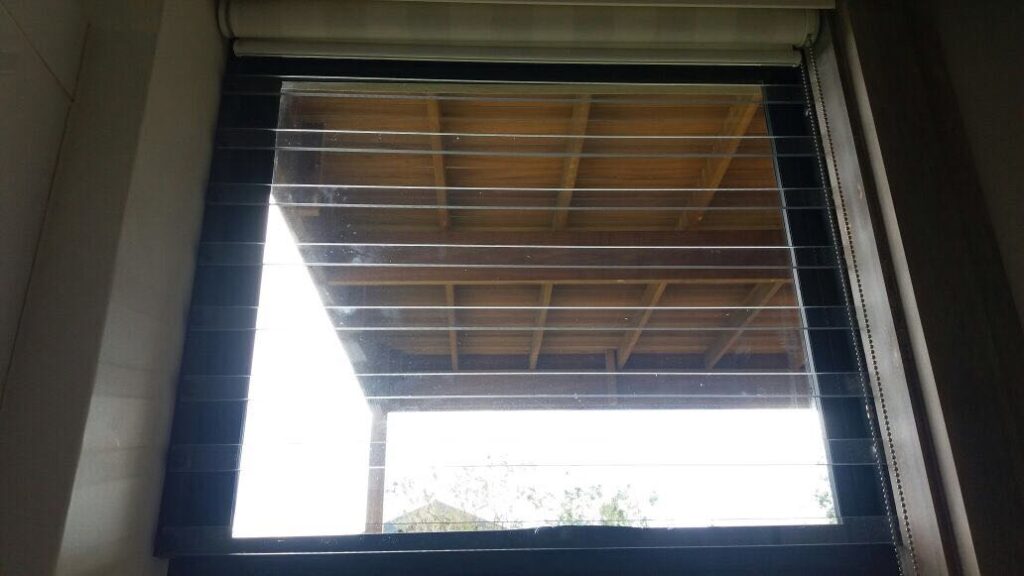
Professional installation of these framework requirements delivers an excellent result. You’ll achieve a secure, attractive window trellis that blends seamlessly with your Durban home’s design. For properties in areas adjacent to wildlife, pairing your trellis framework with transparent barrier systems designed to deter vervet monkeys provides an additional layer of protection without compromising your views or your home’s appearance.
Actuator Deployment Specifications
Actuators form the mechanical heart of any retractable trellis system, converting stored energy into smooth, controlled extension and retraction. You’ll find that correct deployment specifications ensure your sliding window trellis operates reliably for years.
| Specification | Performance Range | Application |
|---|---|---|
| Tip Moment | 22 Nm constant | Deployment force |
| Stroke Length | Full-cycle accommodation | Extension/retraction |
| Response Time | Varies by type | Safety-critical function |
| Latch Engagement | Precision alignment | Motion control |
| Environmental Sealing | Moisture protection | Long-term durability |
You’ll appreciate how fail-safe latches coordinate with actuators during each cycle. Correct mounting alignment prevents binding. Linear orientation parallel to the trellis travel paths reduces angular stress. Backup power systems ensure deployment capability during outages. Sensor feedback confirms full extension or retraction, giving you confidence in your security investment. The PA-TS1’s 3-stage telescoping design provides a compact retracted length while maintaining longer stroke capabilities, making it ideal for space-constrained window trellis installations. For installations requiring a professional assessment and accurate sizing, retractable windows and fixtures specialists can evaluate your specific actuator deployment requirements and provide tailored recommendations.
Structural Load Capacity
Structural integrity forms the foundation of any retractable trellis system, and it is determined by carefully calculated load capacities that take into account the weight of your security installation, environmental forces, and long-term durability requirements. When designing home security South Africa solutions, you’ll need to understand how your system handles real-world stresses.
Your retractable trellis must manage multiple load types:
- Operational loads from the mechanism’s moving components and the manual deployment force
- Environmental loads including wind pressure and seasonal temperature fluctuations specific to KwaZulu-Natal’s climate
- Static loads from the barrier material itself, typically ranging 200–500 pounds per linear foot depending on configuration
High-tensile galvanised wire (12-gauge minimum), paired with properly embedded posts, ensures your system maintains structural performance across decades. Vertical, lateral, and longitudinal loads collectively place significant tension on the wire to prevent sagging and ensure long-term reliability. You’ll appreciate knowing that reinforced end posts set 24 inches deep provide the stability your installation deserves.
Cost vs. protection: budgeting for deployment
When you’re evaluating sliding window trellis systems for your property, the relationship between cost and protection requires careful consideration of both immediate expenses and long-term value. In KZN, burglar bars remain a popular security choice, and retractable systems offer flexible alternatives to fixed installations.
| System Type | Initial Cost (ZAR) | Lifespan | Annual Maintenance |
|---|---|---|---|
| Fixed Barriers | R24,000–R48,000 | 15–25 years | Minimal |
| Motorised Retractable | R24,000–R80,000 | 5–15 years | Regular servicing |
| Manual Retractable | R15,000–R40,000 | 5–15 years | Lubrication needed |
| Screen Enclosures | R24,000–R48,000 | 10 years | Rescreening R32,000–R80,000 |
Fixed barriers provide consistent protection with lower lifecycle costs. Retractable systems suit temporary deployments and flexible access requirements. Your budget determines whether you prioritise durability or flexibility.
Maintenance Essentials That Extend System Lifespan
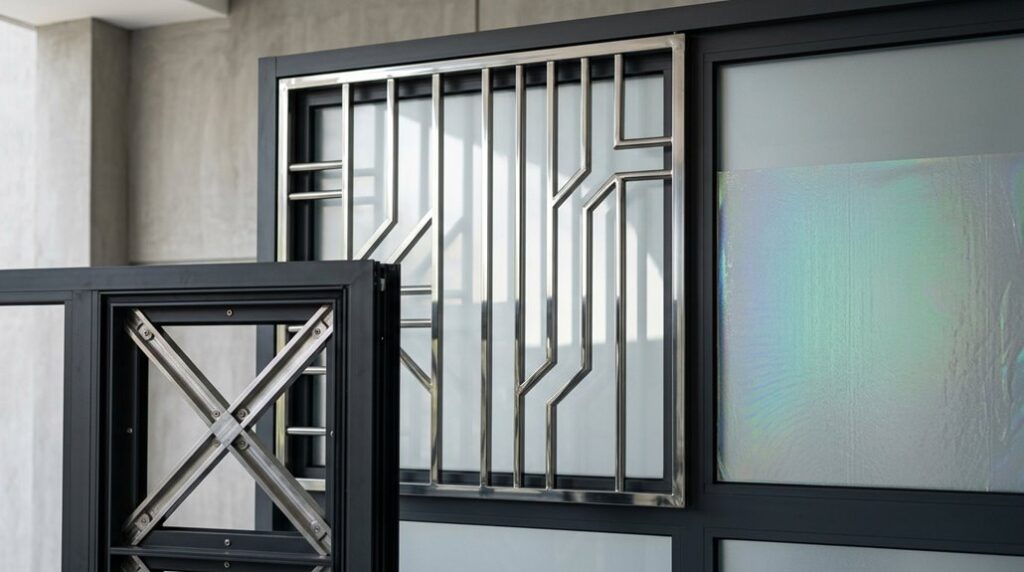
Your sliding window trellis system requires consistent maintenance to deliver reliable security and an appealing look throughout its working life. Your custom window grilles need careful attention to prevent deterioration and ensure long-term durability.
Carry out these essential maintenance practices:
- Monthly cleaning: Remove dirt and debris from all surfaces, tracks, and mechanisms using non-abrasive cleaners formulated for stainless steel to prevent scratching protective finishes.
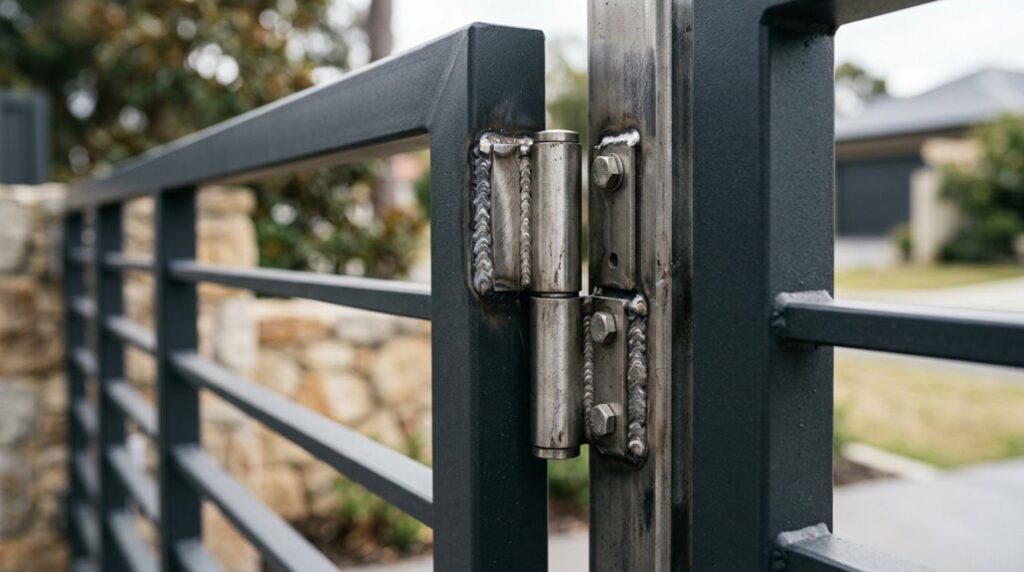
- Quarterly hardware inspection: Tighten all bolts, nuts, and mounting hardware to counter loosening caused by vibration and environmental stress.
- Lubrication every 3–6 months: Apply manufacturer-approved lubricants to hinges, pistons, and friction points. Use dry silicone spray for awning components.
Regular attention helps prevent abrasion, rust, and mechanical failure. You’ll protect your investment while keeping the custom security solution visually integrated with your property’s design.
Annual professional service checks help ensure peak performance and compliance standards.