



Most break-ins in KZN don’t happen the way you’d expect. Burglars rarely force their way through reinforced doors—they simply walk straight through the gaps your current security setup effectively invites them through. Weak perimeter fencing, poor lighting, and non-compliant barriers are doing the heavy lifting for criminals right now. A layered security approach changes everything, but only when the right elements are in place. The difference between a targeted home and a protected one comes down to a few specific, measurable choices.
Perimeter Fencing: Your First Line of Defence
Your home’s perimeter fence is the foundation of residential security—it’s the physical barrier that sets boundaries, deters unauthorised access, and gives you crucial time to detect threats.
In KZN, effective home security in South Africa requires understanding local municipal bylaws. Front yard fences typically cap at 1.2m to 1.8m, while rear boundaries allow up to 2.1m under SANS 10400 standards. Burglar bars in KZN homeowners install must feature anti-climb properties, with extension arms measuring 700mm and concrete anti-burrow sections 600mm deep.
Professional proofing essentials include self-closing gates, reinforced hardware installed on interior surfaces, and panel apertures of approximately 76mm x 12mm. Metal construction conforming to SANS 0162 standards offers superior resistance to unauthorised access, creating a strong result for thorough perimeter protection. For added peace of mind, pairing your perimeter fence with SABS approved materials ensures every layer of your home’s defence meets recognised durability and strength standards. A solid fence design that eliminates visual noise from pedestrians helps reduce stress levels while maintaining continuous surveillance capability around your property boundaries.
Securing Entry Points With Burglar Bars and Fortified Doors
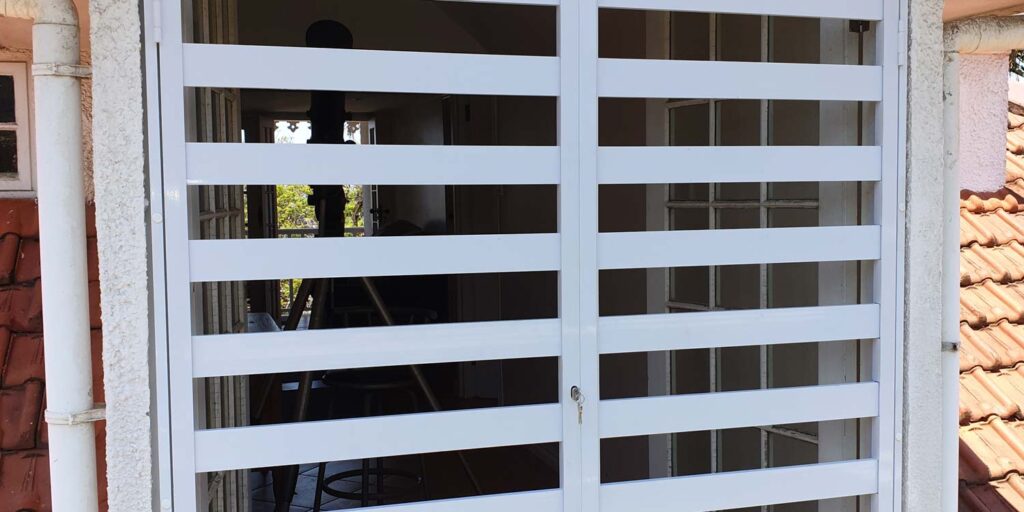
You’ll strengthen your home’s security by installing burglar bars on all windows and upgrading to fortified doors, which form critical barriers against unauthorised entry.
Burglar bars should fit inside your house rather than on the exterior whenever possible, while your doors need solid construction (never hollow) with steel cores and reinforced frames to resist forced entry. Pairing these physical barriers with high-quality deadbolts that extend at least one inch into the door frame creates a formidable defence at your entry points. Since 34% of burglars enter through the front door, prioritising this entry point with enhanced security measures is particularly important.
Wonder Bars offers bespoke security installations across KZN, combining expert craftsmanship with customised designs that integrate seamlessly with your home’s existing architecture.
Burglar Bars Installation Standards
Proper burglar bar installation hinges on adherence to stringent material standards, structural anchoring methods, and spacing guidelines that, together, create a formidable security barrier.
You’ll benefit from understanding these critical specifications when implementing residential burglar proofing for your home in KZN.
Material choices matter greatly.
Use 100% polycarbonate bars such as LEXAN™ for clear-view installations, and always specify stainless-steel rivets—never aluminium alternatives. Professional installations incorporate self-lubricating nylon rollers to ensure smooth operation and reduce wear over time.
Mild steel or wrought iron provides reliable durability against break-in attempts.
Your installation requires precise spacing.
Maximum bar spacing reaches 120mm when fixing points are kept to under 700mm apart, reducing to 100mm for longer spans.
Anchor bolts must be at least 10mm in diameter for wall bolting.
Fixing brackets require long screws that reach structural framing members.
For homeowners with cottage pane windows, bespoke craftsmanship and custom fabrication ensures burglar bars match the exact grid pattern of the window design without compromising the home’s architectural integrity.
Wonder Bars Durban ensures these standards guide every professional installation, protecting your home with security that performs.
Fortified Door Lock Systems
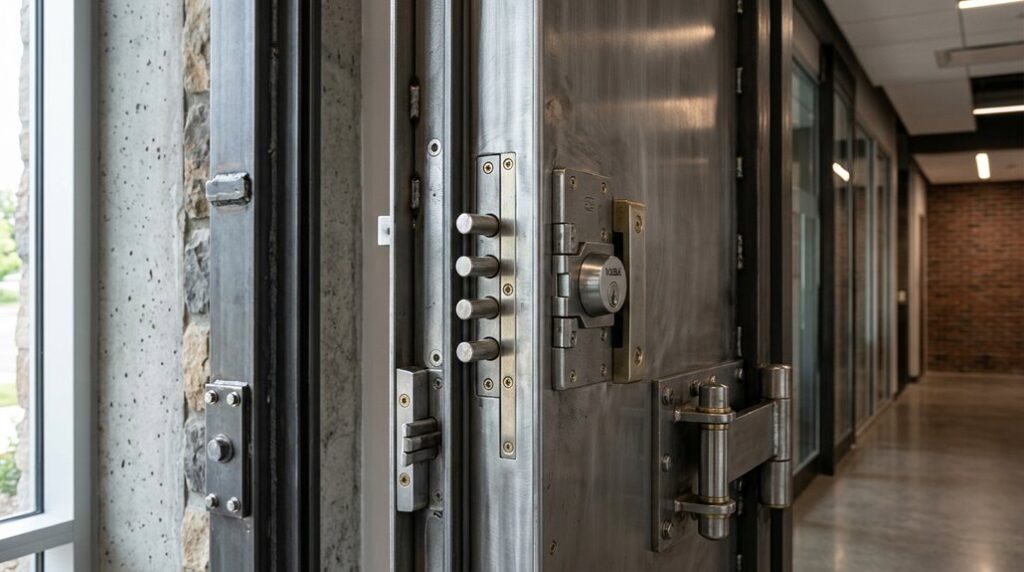
Doors are the primary entry point for most residential break-ins, so fortifying them is essential to any all-encompassing security strategy. You can strengthen your home’s defences by installing 7-lever key locks or high-security combination systems that resist tampering. Modern digital locks remove the vulnerabilities associated with physical keys while also offering remote access control for authorised residents.
For essential tips, upgrade to heavy-duty strike plates anchored with 3-inch screws deeply into the door studs. You should also consider 160mm composite doors engineered to meet SABS Category 2 standards, providing resistance to explosive force and impact attacks. Position metal bars strategically away from the lock and hinges, securing them into structural studs. Reinforcing hinge screws with 3-inch fasteners helps prevent the door from being removed or collapsing during forced-entry attempts.
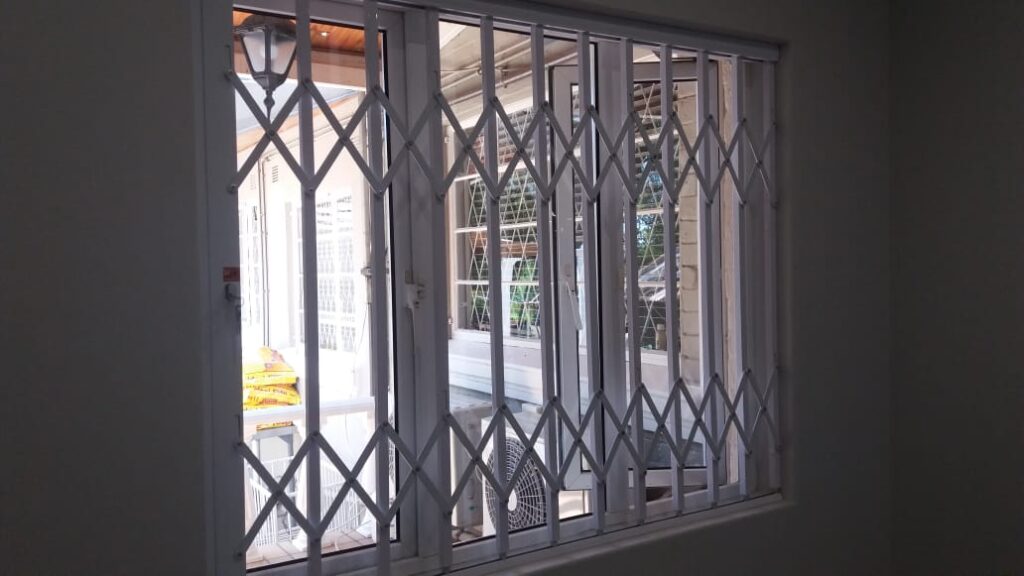
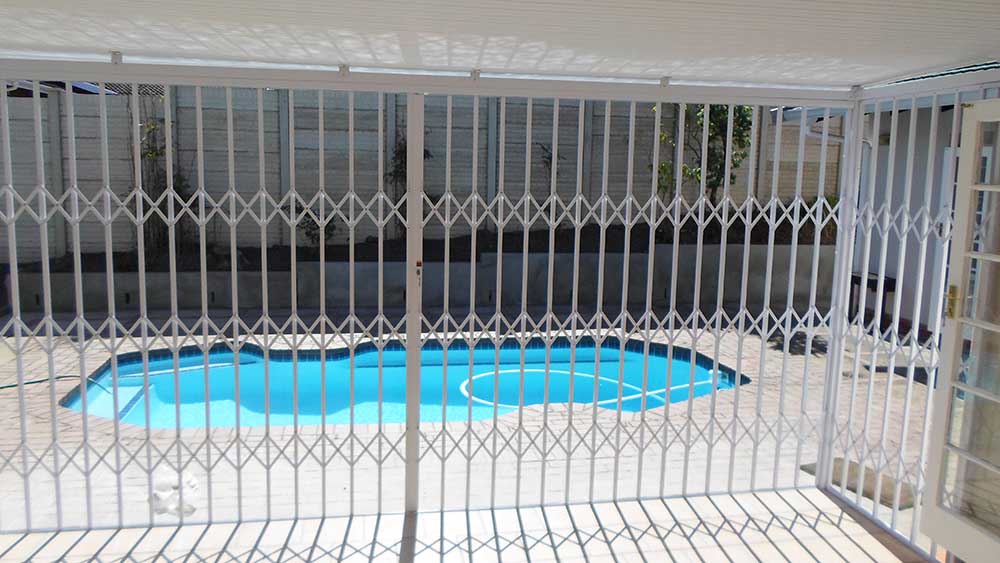
Integrate door sensors with your home monitoring system to detect tampering immediately. For added protection, custom-manufactured swing gates and retractable trellis doors provide an additional physical barrier at entry points, significantly increasing resistance to forced access. This layered approach delivers thorough protection at your primary entry points.
Motion-activated lights: security lighting that deters intruders
You’ll deter intruders most effectively by placing motion-activated lights at your home’s high-risk zones: entrances, driveways, pathways, and side gates where burglars typically approach.
Strategic positioning removes the cover and visibility advantages intruders rely on, triggering sudden illumination that forces them to abandon their approach. For comprehensive home protection, pairing security lighting with burglar bars and retractable trellis doors creates multiple deterrent layers that significantly reduce your vulnerability.
Your motion sensors activate automatically when they detect human movement, ensuring consistent protection without requiring manual operation from you. Modern security lighting options range from budget-friendly models like the Delta 1 10W IP54 Flood Light at $79.90 to premium twin-spot configurations that provide enhanced coverage across multiple zones.
Strategic Positioning for Maximum Coverage
The effectiveness of motion-activated security lighting depends on strategic placement that maximises detection range while minimising false alarms. You’ll achieve the best results by mounting sensors between 6 and 10 feet high, aiming for the 8 to 10-foot sweet spot for superior coverage.
Place lights at all main entry points: front doors, back doors, and garage entrances. Angle the sensors towards walkways and driveways rather than the street to prevent activations triggered by vehicles. Cover dark corners, garden paths, and both sides of fencing to remove hiding spots. Installing LED lights in these strategic locations significantly enhances the deterrent effect on potential intruders.
For detection range, choose units that cover 5 to 12 metres depending on your property layout. Select brightness between 500 and 2000 lumens for effective deterrence. Remove obstacles such as tree branches and downspouts to keep clear sight lines. Carry out night-time walk tests to confirm full coverage of vulnerable areas. Pair your lighting strategy with swing gates for doors at key entry points to add a robust physical barrier that compounds the overall security of your property.
Deterring Intruders Through Visibility
Motion-activated security lights work exceptionally well at deterring intruders because they eliminate the darkness that criminals rely on for concealment.
When you install these systems, you’re creating an immediate detection signal that startles trespassers and forces them to abandon their approach.
Here’s what makes this strategy effective for your KZN property:
- Psychological Impact – A sudden burst of bright light signals immediate detection, causing intruders to leave before attempting entry
- Energy Efficiency – Passive infrared (PIR) sensors activate only when movement is detected, minimising electricity costs while maintaining deterrence
- Strategic Coverage – Driveways require 1,500–2,000 lumens while pathways need 100–300 lumens for peak results
Motion-activated lighting works best as part of your layered security approach. Modern fixtures rated for 10–15 years’ service life per IES methodology ensure long-term reliability and consistent protection.
Combine these fixtures with visible alarm systems and physical security barriers to reinforce that your home isn’t an easy target. Pair your lighting with retractable trellis doors to add a further layer of robust, aesthetically integrated protection that discourages intruders from progressing beyond your entry points.
Alarm System Sensors: Why Switching Them On Matters
Many homeowners invest in all-inclusive alarm systems, then unknowingly leave them disarmed—rendering every sensor useless. Your security infrastructure only activates when you explicitly arm it. Contact sensors, motion detectors, and glass-break sensors remain dormant without activation, leaving your home vulnerable regardless of their presence.
Armed modes define which specific sensors monitor your property. When you activate your system, sensors trigger immediate alerts to monitoring centres or your mobile device upon breach detection. This first line of defence requires deliberate engagement.
Configure your setup strategically. Fit contact sensors to all windows and doors. Position motion detectors to cover internal areas effectively. Designate entry and exit zones with appropriate delay times for authorised access. Use PIN codes to prevent unauthorised deactivation. Professional monitoring centre services stand ready to notify immediately upon detection of any breach, ensuring your KZN residence receives round-the-clock protection. Your commitment to arming turns passive equipment into active protection for your KZN residence. Complementing your alarm system with bespoke burglar proofing on windows and doors adds a critical physical barrier that deters intrusions before sensors are even triggered.
When to Invest in Professional Security vs. DIY Options
Choosing between DIY security systems and professional installations requires an honest assessment of your home’s actual risk level, your technical abilities, and your budget constraints.
Your decision affects how effectively you protect your property and family.
Consider these key factors:
- Budget alignment: DIY wireless setups cost R1,400–R5,600 upfront, while professional installations range from R2,793–R17,493. Professional systems eliminate recurring monitoring contract fees over time.
- Risk environment: Low-risk homes suit DIY options. High-crime areas call for professional 24/7 monitoring and immediate response capabilities that self-monitoring can’t provide.
- Technical accuracy: Professional installers help reduce false alarms and sensor malfunctions. Complex integrations with fire alarms and video surveillance require certified proficiency for dependable protection.
Your home deserves security tailored to its specific threats and your lifestyle demands. Beyond alarm systems, physical deterrents like retractable windows and fixtures offer high-strength, low-maintenance protection that integrates seamlessly with your home’s architecture without compromising its appearance.
Key management habits that deter opportunistic burglars
Protecting your home starts with controlling who can access it, and managing your keys effectively blocks a primary entry method that opportunistic burglars exploit. You’ll want to implement simple practices that notably reduce vulnerability.
Never carry identification on key rings, as this links your keys to your address. Avoid hiding keys outside your home—instead, leave spares with a trusted neighbour. Inside, keep keys out of plain sight from windows and doors.
When you move into a new property, re-key all locks immediately to remove previous owners’ access. Fit single or double-cylinder deadbolt locks on exterior doors with a minimum 1-inch throw, using 3-inch-long screws to secure the strike plates.
Control key distribution carefully. Know exactly who has keys at any time. Verify identities before allowing maintenance or delivery personnel inside. These habits substantially diminish the risk of opportunistic break-ins.
Neighbourhood Watch and Armed Response: KZN’s Community Defence
While individual home security measures form your first line of defence, community-based initiatives amplify protection across entire neighbourhoods. You’ll find that organised neighbourhood watch programmes create powerful deterrents when coordinated effectively with local law enforcement.
Your community defence strategy includes three essential components:
- Formal partnerships with SAPS sectors – You coordinate directly with local police stations for immediate patrol support and crime intelligence sharing.
- Member engagement through regular meetings – You identify committed residents, including “window watchers” who monitor neighbourhood activity and report suspicious incidents to authorities.
- Communication networks – You establish telephone trees and online platforms enabling rapid information dissemination across your neighbourhood, ensuring neighbours function as coordinated “eyes and ears” for police.
This collaborative approach significantly strengthens your neighbourhood’s security posture.