




One lock won’t save you. Burglars don’t force doors at random—they study patterns, exploit blind spots, and move on when resistance layers up. Most homeowners patch one weakness while leaving three others wide open. Real property protection demands physical barriers, smart technology, and behavioural habits working together. The question isn’t whether your home looks secure. It’s whether it actually is.
Identify Your Home’s Security Weak Points
Before investing in burglar guards or any other security upgrade, you’ll need to carry out a thorough assessment of your property’s existing vulnerabilities.
Start by examining your entry points: weak door frames, deadbolts that don’t fully extend into the strike plates, and sliding glass doors with inadequate tracks all present significant risks.
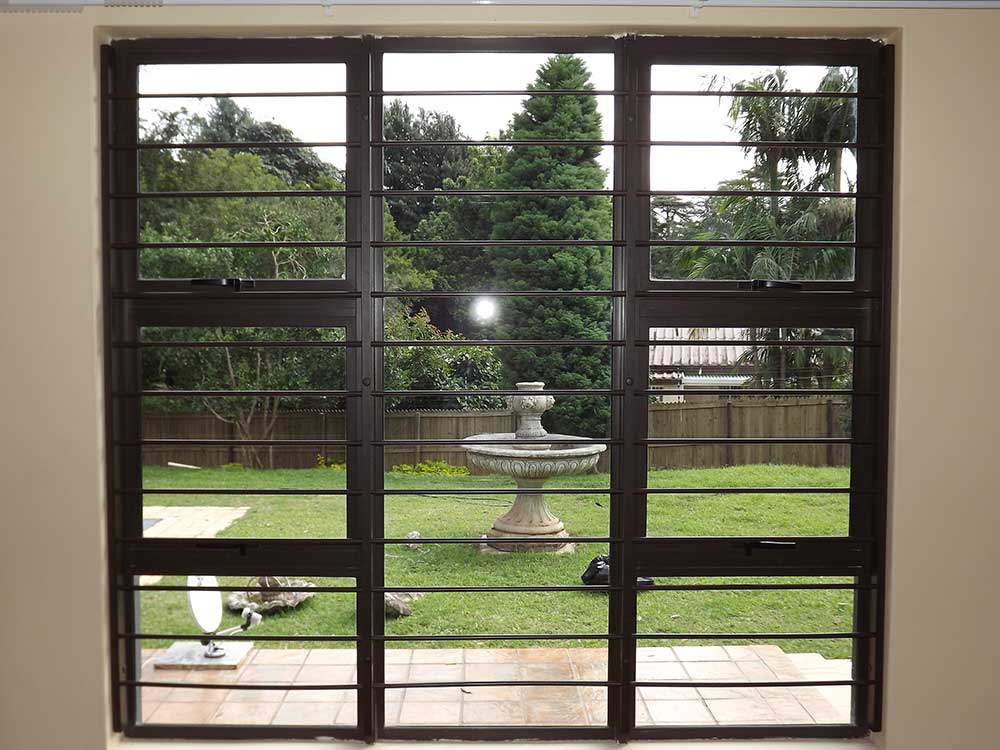
Check your windows for broken locks, poor closure, and non-reinforced glass panes that are susceptible to impact. A professional security advisor can provide a free home assessment to identify specific window vulnerabilities and recommend custom-designed burglar bars that require no structural modifications.
Evaluate your perimeter lighting and landscaping—overgrown vegetation creates hiding spots, while dark areas around driveways allow intruders to approach unseen.
Inspect secondary access points such as garage doors, side gates, and sheds for poor deadlocks and anti-lift hinges. Hidden keys left outside, such as under doormats or flower pots, represent easy access points that burglars routinely check during initial reconnaissance.
Finally, assess your digital systems for outdated firmware and compromised smart devices.
This all-encompassing home security South Africa evaluation highlights where custom burglar guards and additional protections will deliver the greatest benefit for your property’s overall protection.
How Visible Deterrents Stop Burglars Before They Try
Once you’ve identified your home’s security weak points, the next step is to make those vulnerabilities visible to potential intruders—but to your advantage. Strategic deterrents turn your property into a fortified space that discourages criminal activity before it even starts.
Strategic deterrents transform identified vulnerabilities into visible protection, discouraging criminal activity before it ever begins.
Visible security measures work because burglars assess risk quickly. They’ll move to easier targets when they see:
- High-visibility security cameras positioned at entry points
- Audible alarm systems with mounted units at the front and rear
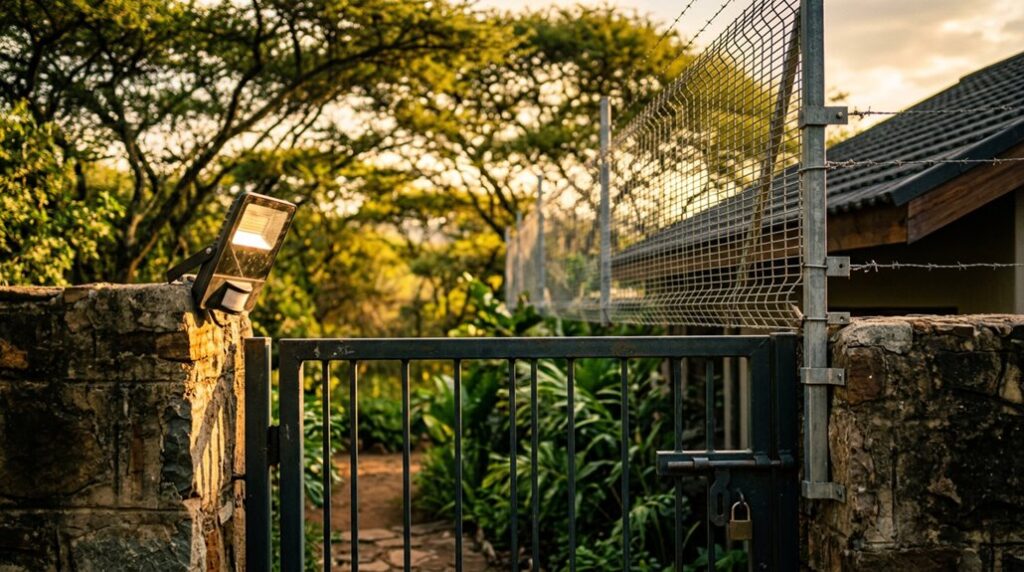
- Strategic exterior lighting illuminating potential approach routes
- Security signage indicating active monitoring
- Motion-sensor devices that activate unexpectedly
These deterrents send a clear message: your home isn’t an easy target. Professional burglars avoid properties where the risk of detection is high. Homes without security systems are 300% more likely to be broken into, making the investment in visible deterrents a critical safeguard.
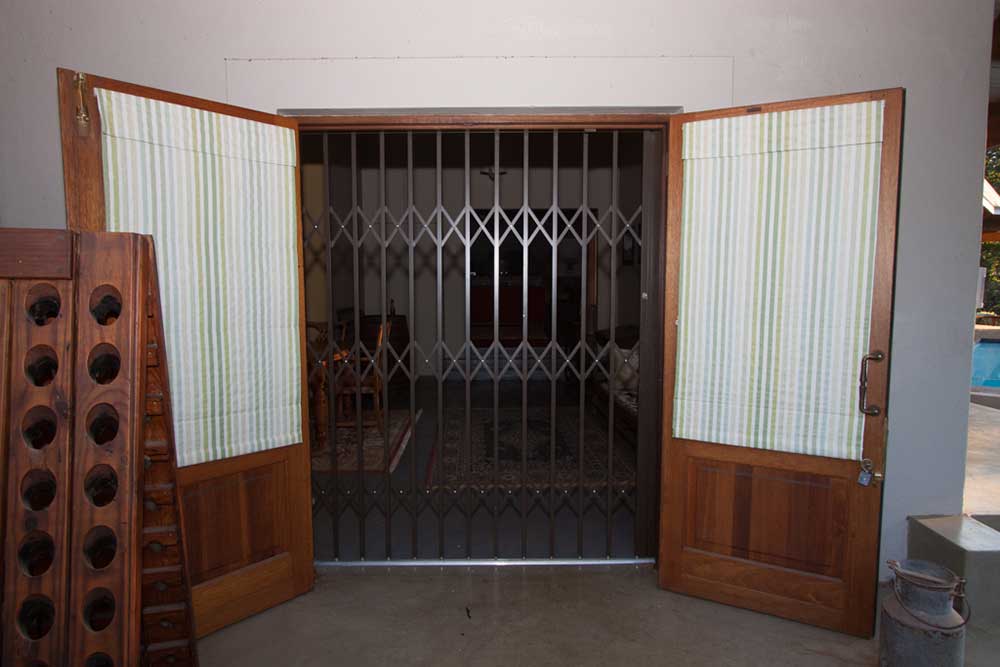
When you display multiple security layers clearly, you create the great result of protection through prevention. Your property becomes the home they’ll skip entirely. Retractable trellis doors further reinforce this deterrence at key entry points such as patios and gardens, while maintaining a sleek, aesthetically integrated appearance that signals serious security commitment without compromising your home’s visual appeal.
Physical Barriers That Actually Help Prevent Break-Ins
Physical barriers form the foundation of effective home security by creating tangible obstacles that slow down or stop forced entry attempts.
You’ll find that reinforced doors with deadbolts extending 1 inch into the frame resist kick-ins effectively. Strike plates secured with 3-inch screws anchored into the door frame prevent splitting under pressure.
Window security requires pin locks drilled through double-hung frames and security bars that resist forced opening. You can fit external roller shutters that lock over entire window frames, combining insulation with maximum protection. Ensure door hinges are positioned on the inside to prevent them being removed from the outside, adding another layer of protection against forced entry.
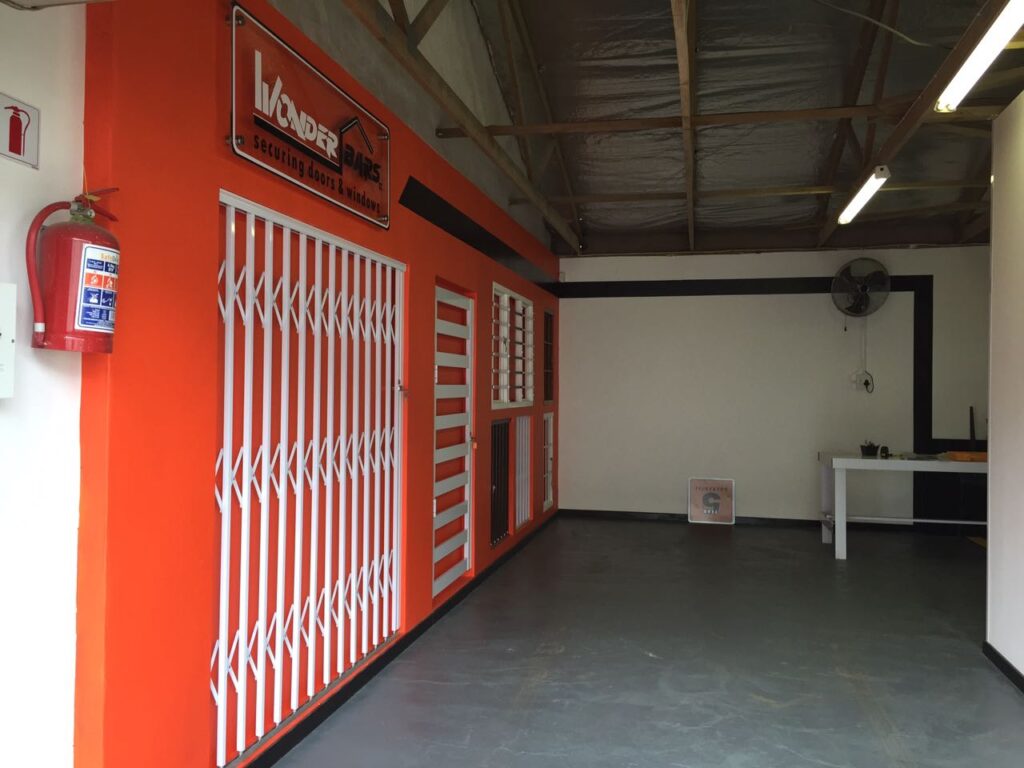
Wonder Bars Durban specialises in bespoke burglar bars that KZN residents trust for attractive security solutions. Their guards assess your property and create personalised protection plans. Reinforced window wells with lockable covers and glass-break sensors provide layered defence. These physical barriers distribute force across multiple points, making intrusion attempts time-consuming and costly for would-be thieves.
Wonder Bars offers specialist services including Vervet Monkey Proofing and wildlife-safe options, addressing region-specific vulnerabilities that standard security installations often overlook.
Security Fencing: Height, Material, and Cost Trade-Offs
You’ll find that front fencing typically requires different material choices and heights than rear barriers, since burglars often target less-visible back areas while front fences communicate a security presence to the street. Your material selection—whether chain link (ZAR 115–290 per linear metre installed), palisade (ZAR 345–690 per linear metre), or anti-climb rigid mesh (ZAR 630–920 per linear metre)—directly affects both upfront costs and long-term maintenance expenses over a 10-year lifespan. Adding security lighting systems or razor wire to your perimeter further enhances deterrence but increases total installation costs significantly. Complementing your perimeter fencing with SABS approved components for gates and entry points ensures that every layer of your security system meets recognised quality standards.
Understanding these trade-offs between initial investment, durability characteristics, and visual appeal helps you design a fencing system that protects your property without compromising your home’s aesthetic.
Front Versus Rear Fencing
Because burglars target rear yards 60% more often than front yards, the height and material choices for front and rear fencing serve distinctly different security purposes. You’re evaluating total property protection when you grasp these distinctions.
Front fencing prioritises curb appeal and neighbourhood compliance:
- 3–4 foot heights maintain visual openness and meet zoning limits
- Decorative wrought iron costs £20–£35 per foot for aesthetic value
- Compliance with local sightline ordinances is essential
Rear fencing emphasises maximum security and concealment:
- 6–8 foot heights deter rear-entry burglaries effectively
- Heavy-duty chain link or mesh costs £5–£40 per foot
- Vinyl privacy fences at £20–£40 per foot eliminate visible gaps
- Site preparation needs like clearing and grading can add several hundred pounds to your total project expenses.
This strategic approach creates layered protection. Your front yard welcomes neighbours while your rear yard provides the concealment and height burglars actively avoid. Pairing your rear fencing with swing gates for doors that feature advanced locking mechanisms adds a critical access-control barrier at entry points most vulnerable to forced intrusion.
Material selection and durability
When selecting security fencing for your home, the interplay between height, material, and cost determines both your property’s protection level and your long-term maintenance burden.
Ornamental steel delivers exceptional durability, lasting 20 to 40 years while providing superior strength. Aluminium resists rust effectively and lasts 25 to 30 years, though it dents more easily than steel. Vinyl and composite options resist rot and UV damage for 20 to 30 years but crack under impact. Chain-link fencing proves reliable for 15 to 20 years at lower cost. Timber requires regular maintenance and lasts only 10 to 20 years.
Your material choice directly affects installation costs. Steel-based fences like palisade fencing provide maximum deterrence through their pointed or curved tops that discourage climbing and unauthorised access.
Steel palisade fencing ranges from R4,200 to R7,200 per metre for 1.2-metre heights, climbing to R24,000 to R36,000 per metre for 2.4-metre installations. Aluminium averages R240 to R360 per linear metre. PVC-coated options cost 20 to 30 percent more than galvanised versions, offering improved protection and colour flexibility. Regardless of the fencing material you choose, pairing it with retractable security fixtures ensures that sleeping areas and other rooms retain accessible escape routes in the event of a fire.
Motion-Activated Lighting: Where to Install and Why It Works
You’ll find that motion-activated lighting deters burglars most effectively when you position fixtures strategically around your home’s perimeter, entry points, and approach zones.
Criminals actively avoid well-lit properties because illumination removes the concealment they rely on, making your home a less attractive target compared with darker neighbours. The sudden activation of motion sensor lights can startle intruders and draw attention to suspicious activity, further enhancing your home’s defensive capabilities.
For comprehensive perimeter security, pairing motion-activated lighting with burglar bars and swing gates provides layered protection that addresses both visibility and physical deterrence.
Strategic Placement for Maximum Coverage
Effective motion-activated lighting depends on thoughtful installation rather than simply mounting fixtures wherever convenient. You’ll achieve superior coverage by understanding ideal positioning principles and your property’s unique layout.
Strategic placement maximises detection while minimising false alarms. Consider these key installation zones:
- Entry points: Position sensors at doors, driveways, and dark side yards
- Perimeter areas: Cover fence lines, hidden corners, and walkways where intruders are likely to approach
- Mounting height: Install fixtures between 7 and 10 feet for superior vantage points
- Sensor orientation: Aim domes towards coverage areas with a slight downward tilt
- High-traffic zones: Prioritise entrances and pathways for visibility where you need it most
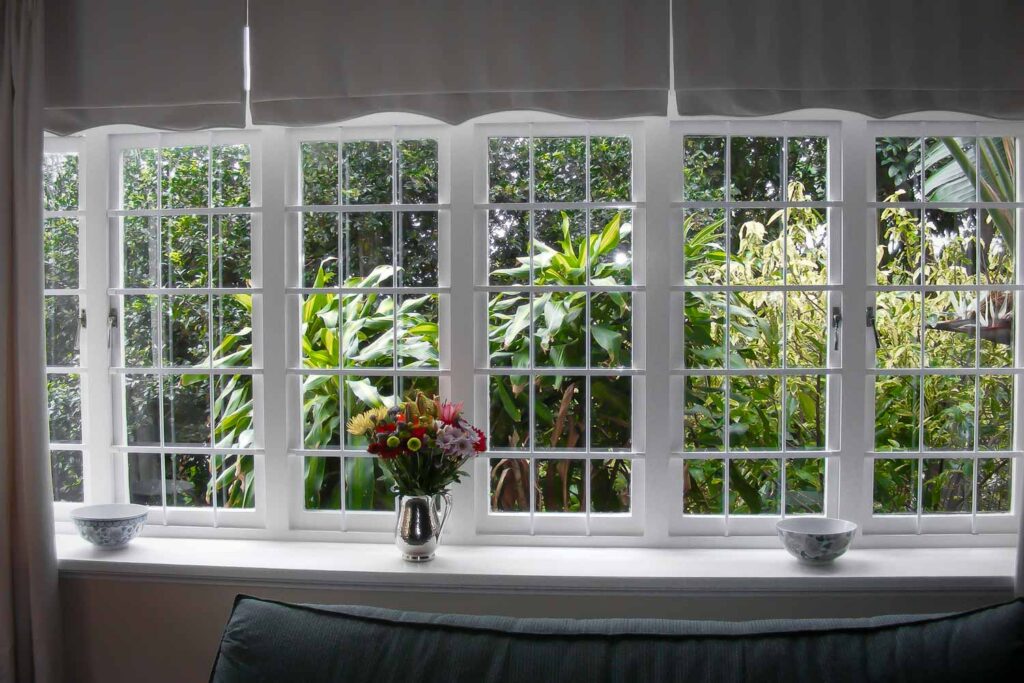
You’ll want to avoid placing sensors near heat sources such as HVAC units or in heavily shaded areas. Narrow your detection fields to cover specific zones instead of entire neighbourhoods, reducing unnecessary triggers. Proper grounding and weatherproof covers prevent electrical hazards that could compromise your security system’s reliability. For windows with traditional grid patterns, pairing lighting with cottage pane burglar bars adds a layered deterrent that reinforces vulnerable entry points without compromising your home’s architectural character. This targeted approach creates a cohesive security network protecting your property effectively.
Deterrent Effectiveness And Burglar Psychology
Motion-activated lighting works because it interrupts the three core assumptions burglars rely on: concealment, control, and time. When you install these lights at entry points, you force intruders to operate without darkness—their primary advantage.
Burglars assess risk versus reward before approaching your home. Sudden illumination shifts their perception dramatically. Motion sensor lights signal active security measures, introducing uncertainty into their planning. Well-lit spaces increase the likelihood of detection, making approach far less appealing.
Optimal lighting uses 800–1200 lumens at a 5000K colour temperature for facial recognition. Dual-tech sensors (PIR + microwave) reduce false triggers by 60% compared to PIR-only units. Mount sensors 7–9 feet high, angled 15° downwards towards entry points.
Set the activation duration to 30–90 seconds. Shorter bursts feel erratic; longer durations encourage habituation. Research shows that integrated lighting with visible cameras reduces incidents by 34% over six months. Pairing lighting with transparent barrier systems at windows and doors further compounds deterrence by removing both concealment and physical access at the same time.
Security Cameras: Placement, Resolution, and Night Vision
Security cameras form the electronic backbone of any all-encompassing home protection system, and their effectiveness depends entirely on three critical factors: where you place them, what resolution they capture, and how well they perform in darkness.
You’ll achieve best results by adhering to these placement principles:
- Cover all ground-floor doors and windows as primary entry points
- Mount cameras 8 to 10 feet high to prevent tampering
- Position units at 45-degree angles for up to 180-degree coverage
- Create overlapping coverage zones to eliminate blind spots
- Angle cameras 15 to 30 degrees downward for facial identification
Your camera selection matters notably. High-definition resolution with Wide Dynamic Range technology maintains clarity during challenging lighting conditions.
Position outdoor cameras under overhangs to protect night vision sensors. Mount units facing north to minimise lens glare and degradation. Test locations temporarily before final installation to verify performance and eliminate interference issues.
Alarm Systems: Audible Boxes vs. Professional Monitoring
When you’re evaluating alarm systems for your home, you’ll find that visible deterrents like audible boxes can discourage casual intruders, but professional monitoring centres provide the critical advantage of 24/7 response capability and direct emergency dispatch coordination.
You might consider a dual-box installation strategy—pairing an audible alarm with professional monitoring—to combine the psychological deterrent of an obvious security presence with the operational certainty that trained operators will contact authorities within minutes if a breach occurs.
This layered approach guarantees protection continues whether you’re home or away, addressing the reality that nearly 70% of break-ins involve forced entry through doors and windows that require both immediate detection and verified emergency response.
Visible Deterrent Impact
The effectiveness of alarm systems hinges on two distinct approaches: audible deterrence and professional monitoring services. Your choice between them determines your property’s protection level and response capability.
Audible alarms create immediate psychological impact on intruders:
- 95% of burglars flee upon hearing an alarm
- Noise combined with flashing lights triggers faster retreats
- Burglary attempts last under 10 minutes with active systems
- High-risk perception of detection deters criminal approach
- Intruders abandon targets recognizing sophisticated equipment
Professional monitoring delivers measurable advantages over self-monitored systems. Professionally monitored systems offer 43% risk reduction compared to self-monitored alternatives, which provide only 29% protection.
Real working devices backed by alarms provide stronger protection than fake indicators. Your alarm system’s true value emerges when combined with professional response, alerting both you and monitoring services simultaneously, creating layered defence against forced entry attempts.
Professional Monitoring Benefits
Professional monitoring converts your alarm system from a noisy nuisance into an active defence network that works around the clock. When an alarm triggers, monitoring centres contact you within about one minute to verify the emergency. If you don’t answer or confirm the threat, trained professionals automatically dispatch police, fire, or medical services.
This constant surveillance operates 24/7, protecting your home while you’re away, overnight, or during power outages when you can’t respond personally. Professional monitoring also goes beyond burglary detection to include fire, carbon monoxide, flooding, and temperature extremes via integrated sensors.
Insurance companies recognise this level of protection, offering discounts of up to 20% for monitored systems. These savings can substantially offset your annual monitoring costs, making professional monitoring a financially sound security investment for South African homeowners.
Dual Box Installation Strategy
As your home security strategy evolves beyond basic alarms, you’ll find that combining audible boxes with professional monitoring creates a thorough defence system that addresses both immediate deterrence and verified response. This dual-box approach separates perimeter protection from interior zones, allowing you to move safely indoors while keeping entry points secured.
Key installation elements include:
- Separate wiring runs between two panels prevent single-point communication failure
- Four-conductor cables connect units while minimising electrical interference
- Perimeter zones trigger immediate sirens to deter intruders
- Interior motion sensors activate only after verification from secondary devices
- Backup power systems guarantee functionality during mains power loss
Strategic zone programming lets you arm or disarm sections independently without confusion. Regular sensitivity testing and event log reviews maintain reliability. This configuration delivers great results when professional responders receive verified alerts through dual communication pathways.
Where to Hide Valuables and How to Fake an Occupied Home
When you’re protecting your home’s most precious possessions, understanding where burglars typically search is your first line of defence. Primary bedrooms get immediate attention from thieves, so mattresses, closets and drawers are poor hiding spots. Toilet cisterns and medicine cabinets are among the most common targets during searches.
You’ll find effective concealment by using household items strategically. Hollowed books can hide passports and jewellery. Fake electrical sockets create secure cavities for cash. Waterproof containers inside frozen vegetable bags remain undetected. Cut tennis balls and empty mayonnaise jars, when placed in freezer sections, offer moisture-resistant storage.
Structural components provide additional options. Removable wall panelling, floor panels and false-bottom drawers work effectively. Mislabelled storage boxes—marked “Holiday Décor” or “Summer Clothes”—discourage burglar interest by giving the impression of something ordinary.
Get your neighbours involved in neighbourhood watch
Your neighbourhood’s security improves dramatically when residents work together to identify and report suspicious activity.
Studies show that Neighbourhood Watch programmes reduce crime by 16% to 26% across participating areas.
You’ll find that collective effort strengthens your community’s defence against residential burglary.
Implementing an effective programme requires three key steps:
- Map out strategies addressing specific crime patterns in your area
- Build partnerships between the police and residents for coordinated response
- Assess neighbourhood needs to unite police and community on priority issues
- Encourage flexibility and innovation in programme structures for sustainability
- Integrate crime prevention with other neighbourhood concerns to maintain participation
Your involvement deters potential offenders who perceive heightened risk.
Improved police investigation in watch areas further incapacitates criminals.
Success depends on consistent participation and communication among neighbours committed to collective safety.
Daily Security Checklist That Sticks
Daily security habits form the foundation of effective home protection, yet many homeowners struggle to maintain consistent routines that prevent unauthorised entry. You’ll strengthen your defences by establishing a checklist you actually follow.
Lock all exterior doors with functioning keyed deadbolts every time you leave or enter your home. Set auto-lock timers for 2–5 minutes to prevent forgetfulness. Close and lock ground-floor windows at night and when away, then secure sliding glass doors with wooden dowels.
Remove visible valuables from street view and collect your mail during extended absences. Install motion detectors inside and outside high-traffic areas. Test your security system monthly and arm it regardless of absence duration.
Walk your property perimeter after dark, replacing any broken bulbs immediately. These consistent actions create dependable protection.