





Most homeowners assume bars and grilles are the only real window security—but that assumption is quietly costing them. Invisible, glass-strengthening systems can delay a determined intruder far longer than traditional methods, and the most vulnerable entry points in your home are almost never the ones you’ve reinforced. Security film and polycarbonate systems work in ways most people never consider. Before you invest another dollar in protection that might be pointed in the wrong direction, you need to understand exactly how these systems work.
Audit Your Home’s Vulnerable Windows First
Start your home security assessment by systematically evaluating every window on your property. You’ll identify structural weaknesses in frames and sashes first—inspect for wear, damage, or deterioration at frame-to-wall junctions where intruders commonly exploit gaps. Test every lock’s functionality and verify they can’t be bypassed with thin tools. Check for rust, corrosion, or scratches indicating previous attempts. A professional security adviser can conduct a free home security assessment to identify vulnerabilities you may have overlooked.
Inspect window frames and sashes for structural weaknesses at frame-to-wall junctions, then test lock functionality to ensure they can’t be bypassed.
Next, evaluate exterior visibility. Trim hedges and branches, removing hiding spots. Remove ladders, tools, or structures that provide climbing access to upper windows. Installing window security film can prevent breakage and add an additional layer of protection to your most vulnerable entry points.
First-floor windows account for 23% of burglaries, making them priority inspection points.
Document your findings through photos taken during daylight, dusk and darkness. Create a spreadsheet ranking vulnerabilities by likelihood and impact. Consider installing clear burglar bars, window sensors, or security film to reinforce weak points systematically.
Why Security Film and Polycarbonate Bars Work Better Than Standard Glass
While standard residential glass shatters into dangerous, razor-sharp fragments within seconds—creating an immediate entry point for intruders—security film and polycarbonate bars turn your windows into genuine barriers that require sustained effort and time.
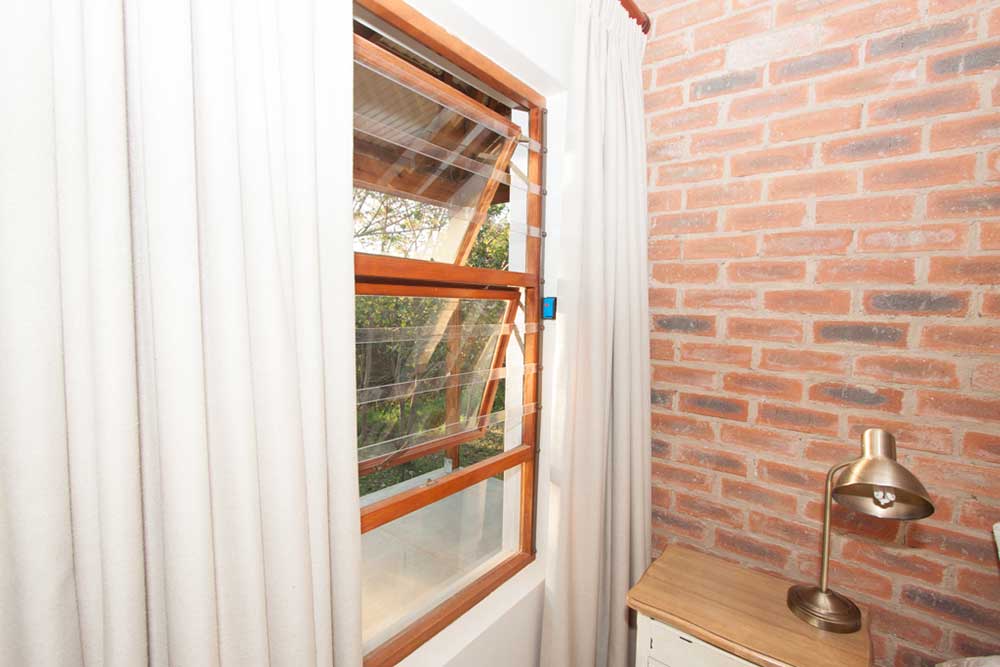
Security film works by sticking broken glass fragments together, creating a web-like structure that prevents walk-through entry. Intruders must strike your window 10 or more times to breach the film. Government testing confirms this adds 2 to 3 minutes to forced entry time. Approximately 60% of break-in attempts are abandoned when entry takes longer than 4 minutes. For optimal protection, attachment systems should be combined with security film to keep the glass unit anchored in the frame and significantly prevent entry.
Unlike standard glass, security film absorbs impact from hammers, crowbars, and rocks. The window cracks but remains intact within the frame. For properties in wildlife-prone areas, these reinforced windows also act as an effective deterrent against vervet monkey intrusions, adding a layer of protection that addresses both human and animal entry risks.
This resistance makes breaking in markedly harder, slower, and noisier—encouraging opportunistic criminals to look for easier targets instead.
Glass vs. Polycarbonate Bars: The Right Choice for Your Budget
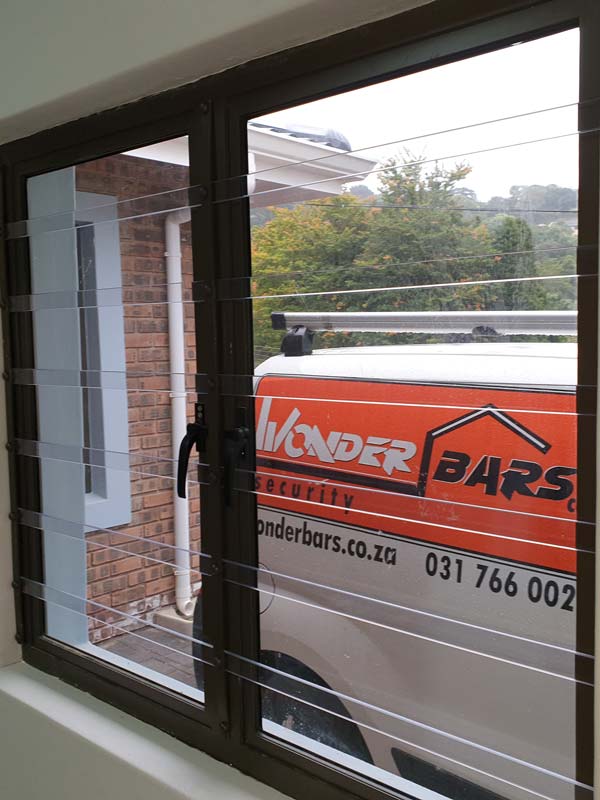
When you’re evaluating security bar options for your Durban property, you’ll find that reinforced glass typically commands a premium upfront cost of ZAR 200–300 per square metre, while polycarbonate alternatives run ZAR 220–320 per square metre for UV-protected grades.
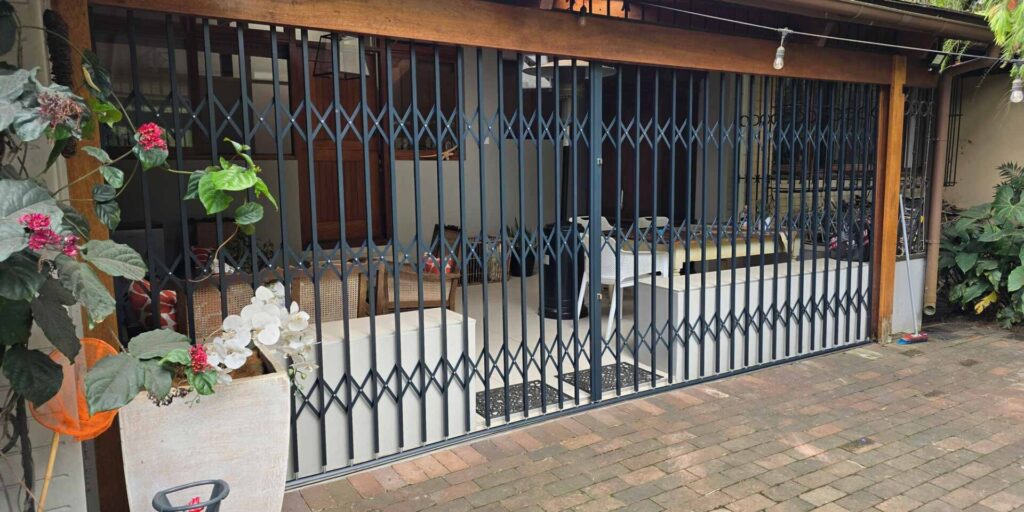
Your installation expenses shift dramatically based on material choice: polycarbonate’s lighter weight (7.2 kg/m² versus glass’s 15 kg/m²) reduces labour costs and structural requirements, potentially saving 30–40% on framing and support systems. Both materials are available as custom-made solutions that retract effortlessly, allowing homeowners to maintain open-space use without sacrificing security.
Over a 10–15 year period, polycarbonate’s lower maintenance costs (ZAR 1–2.50 per square metre annually versus glass’s ZAR 3–5) and superior impact resistance often deliver 25–40% better total cost of ownership, though glass maintains superior optical clarity and lasts 40–50 years compared to polycarbonate’s 10–25 year lifespan. Polycarbonate’s virtually unbreakable nature makes it particularly advantageous for properties in high-risk areas where repeated impact from attempted break-ins is a concern.
Reinforced Glass Cost Analysis
Choosing between reinforced glass and polycarbonate bars means understanding the real costs you’ll face—not just the initial price, but the total investment across materials, installation, and long-term maintenance.
Reinforced glass options vary significantly depending on thickness and type. Toughened glass typically costs ZAR 270–ZAR 360 per square foot, while laminated security glass is generally ZAR 180–ZAR 300 per square foot. Bullet-resistant variants usually exceed ZAR 300 per square foot. Manufacturing costs break down in a fairly consistent way: raw materials account for 60–70% of expenses, labour makes up 10–15%, and operational overhead comprises 20–25%. The rapid quenching process used in toughened glass production creates surface compressive stresses that substantially improve impact resistance and safety performance.
Your transparent security investment goes beyond the material itself. Edge polishing, specialist coatings, and custom fabrication all add further costs. Standard installation ranges from ZAR 3,000–ZAR 7,500. Wonder Bars provides bespoke security installations that integrate smoothly with your home’s architecture, helping you get maximum value from the material you choose. Consider these factors when comparing total ownership costs against polycarbonate alternatives.
Polycarbonate installation costs
Polycarbonate bars offer a more budget-friendly route to security than reinforced glass, but your actual installation costs depend on material thickness, labour complexity, and regional factors.
Professional installation typically costs ZAR 15 to ZAR 33 per square foot for residential projects. Material costs vary significantly: 6mm twin-wall panels cost ZAR 50–ZAR 70 per square foot installed, while 16mm multi-wall sheets reach ZAR 85–ZAR 130. UV coating and premium fasteners can add ZAR 8–ZAR 25 per panel to your material expenses.
A 200 square foot installation typically ranges from ZAR 17,000 to ZAR 26,000 depending on the polycarbonate bars thickness you choose. Complex framing and site preparation can increase labour rates substantially. Reputable security providers use SABS and UKAS approved components to ensure each installation meets recognised quality and safety standards.
Import duties add 15–30% to material expenses in South Africa. Choosing polycarbonate bars delivers excellent value compared with reinforced glass alternatives, providing strong security without premium pricing.
Long-Term Durability Comparison
Your investment in security barriers shouldn’t end the moment installation is complete—it’s the years that follow that truly test a material’s worth. Polycarbonate offers exceptional long-term value compared with traditional glass solutions. You’ll find that polycarbonate systems maintain structural integrity for up to 30 years, while standard glass typically needs replacing within a decade. Modern coatings on polycarbonate provide optical clarity comparable to glass while resisting yellowing, hazing and scratching over the extended service period.
| Metric | Glass | Polycarbonate |
|---|---|---|
| Service Life | 10 years | 30 years |
| Chipping/Cracking | Frequent | Rare |
| UV Yellowing | Minimal | Prevented with coatings |
| Impact Resistance | Shatters instantly | Absorbs force via flexing |
| Maintenance Cost | High replacement | Low maintenance |
Engineered polycarbonate burglar-proofing systems resist surface degradation through glass cladding and UV-protective coatings. Your barriers remain optically clear and functionally superior throughout their extended lifespan, providing genuine protection and aesthetic appeal for decades. For homeowners seeking additional layered security, pairing polycarbonate barriers with retractable trellis doors offers a comprehensive solution that addresses both durability and flexible access control.
Install Window Security Film and Bars: Precision Matters
You’ll achieve superior security performance when you combine proper film application technique with precise bar spacing and alignment, as both elements work together to maximise your system’s effectiveness.
Correct film installation—including thorough surface preparation, slip solution application, and squeegee technique—ensures the polycarbonate bonds uniformly without air pockets that weaken impact resistance. The soapy solution must fully saturate both the glass and the adhesive side of the film to achieve optimal adhesion and prevent bubbles from forming during application.
Your bars must be spaced and positioned according to engineering specifications to create a seamless defensive barrier that resists forced entry. For cottage pane windows specifically, bespoke craftsmanship ensures bars are fabricated to match the exact window design rather than relying on standard off-the-shelf options that may compromise both fit and security.
Film Application Technique
Installing window security film demands painstaking precision to achieve both supreme protection and professional results. You’re joining a community of property owners who prioritise invisible safety without compromising aesthetics.
Follow these critical steps for professional installation:
- Prepare the glass surface by removing dirt, old film residue, and sealant with an alcohol-based degreaser
- Spray slip solution heavily until beads of soapy water run down the surface
- Position the wet film at the top, aligning edges with masking-tape hinges for precise control
- Work from the centre outwards using overlapping squeegee strokes to eliminate water and air bubbles
Apply squeegee pressure at the top and middle first to tack the film, then work left and right. Limit squeegee passes to two maximum to prevent adhesive sliding. Environmental conditions such as temperature between 60–90°F significantly affect adhesive behaviour and curing performance during application.
Allow 3–7 days curing time before cleaning or touching. Apply silicone-based sealant around the perimeter to prevent edge lifting and ensure lasting protection. For a comprehensive security approach, pairing window film with robust locking mechanisms on entry points further strengthens your property’s overall defence against intruders.
Bar Spacing And Alignment
Precise bar spacing and alignment form the foundation of effective window security, directly determining whether your installation can withstand genuine intrusion attempts. Maximum gaps between bars must not exceed 102mm, preventing body passage through weak zones. You’ll maintain consistent spacing at three measurement points (top, middle and bottom) using 1mm-precision tape measures to detect any frame warping.
Your bars must be aligned perpendicular to the ground with deviations of under 2mm for an invisible, aesthetically pleasing finish. Anchor points spaced every 12–18 inches prevent sagging under lateral pressure. Laser levels guarantee tolerances within 1/16 inch across the entire assemblies.
Wonder Bars’ burglar bars KZN installations prioritise this precision engineering. Side gaps match the individual bar spacing, ensuring uniform load distribution. Pre-drilled holes and stainless steel fixings prevent splitting and corrosion. This technical rigour delivers security systems that remain structurally sound against determined intrusion attempts. For properties in Hillcrest and the surrounding areas, Wonder Bars operates from Brackenhill, KZN, offering free, personalised quotes to help homeowners select the right bar configuration for their specific window dimensions.
Motion Sensors and Exterior Lights: Coverage That Works
Motion sensors paired with exterior lighting form one of the most effective deterrence strategies available to homeowners in the greater Durban area. You’ll protect your property by combining detection technology with visible illumination, creating a thorough home security South Africa approach that discourages intruders.
- Mount sensors 6–10 feet high to maximise coverage and reduce false alarms from pets or passing vehicles
- Install 700–1,300 lumens on driveways for clear visibility of approaching threats
- Position floodlights exceeding 1,500 lumens in dark corners for maximum deterrence
- Calibrate sensitivity settings starting at the lowest level, then adjust range by walking progressively wider circles
You’ll achieve great results by placing sensors away from heat sources like HVAC units. Hardwired connections with surge protectors guarantee longevity during Durban’s storm season.
Proper maintenance and strategic placement create layered security that complements your custom security barriers seamlessly.
Keep Your Films and Bars Working: Maintenance Guide
Your motion sensors and exterior lighting create a strong outer perimeter, but you’ll need consistent maintenance to keep your burglar bars and security films performing at their peak.
Motion sensors and exterior lighting form a strong perimeter, but consistent maintenance keeps burglar bars and security films performing optimally.
Clean your crystal-clear polycarbonate barriers monthly using premium salt-free car wash liquid and soft cotton cloths. For hard-to-reach areas, use soft nylon bristle brushes.
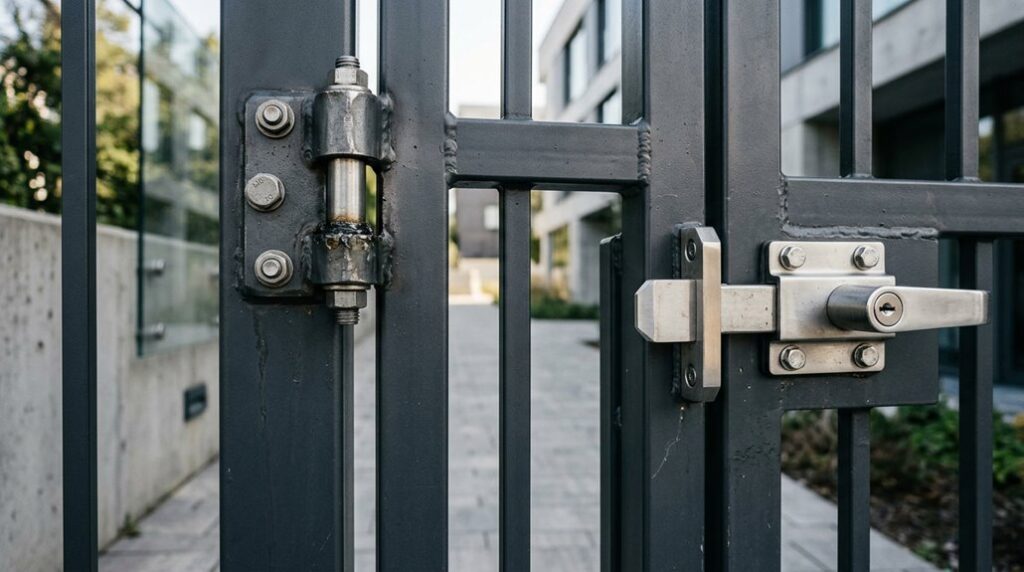
Inspect the connection points where bars meet frames to ensure there are no gaps. Lubricate hinges and moving parts with weather-resistant silicone lubricant applied from a distance of 20cm.
Tighten any loose screws monthly and replace them with tamper-proof bolts as needed. Check security film every three to six months for cracks or peeling edges.
Beachfront properties require weekly cleaning; homes 5–10km from the coast need attention every two to three months. This routine maintenance preserves both appearance and security performance.