


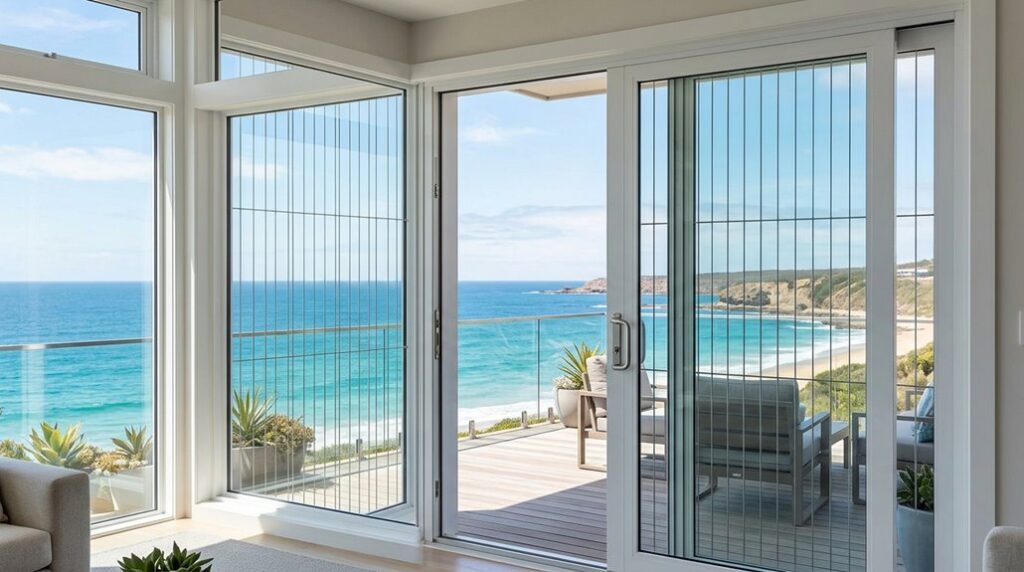

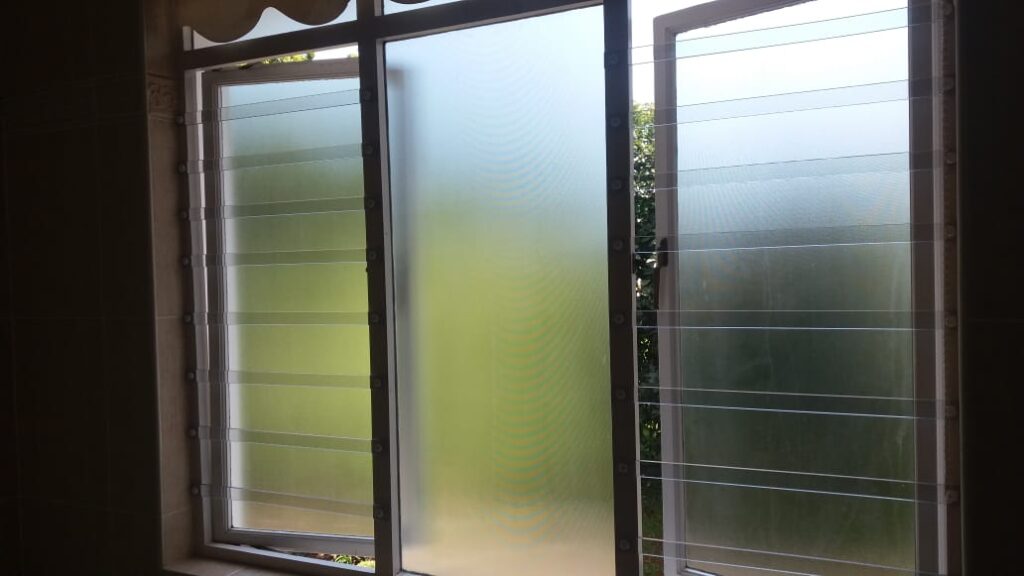


Most burglar bars turn your windows into cell walls—yet there’s a smarter way to secure your home without the visual prison effect. Clear polycarbonate glazing bars offer genuine, tested resistance against break-ins while staying virtually invisible to the naked eye. The real question isn’t whether they work—it’s whether your installation method is quietly defeating their purpose.
Why Polycarbonate Outperforms Steel Burglar Bars
Regarding physical security barriers, polycarbonate offers advantages that steel simply cannot match.
You’re investing in a material with tensile strength exceeding 3 tonnes—actually stronger than steel under load.
Unlike rigid steel that may fail under a single blow, polycarbonate flexes under force and resists shattering, making it virtually indestructible.
Your clear burglar bars won’t rust or corrode when exposed to moisture, a critical failure point for steel installations.
Steel requires ongoing maintenance to prevent decay and aesthetic deterioration from rust staining.
Polycarbonate maintains material integrity indefinitely without upkeep.
You’ll also appreciate the visual advantage.
Clear polycarbonate preserves your property’s appearance while providing serious resistance against cutting, prising, and sustained attacks.
Window security is a key priority in any comprehensive home safety strategy, second only to barriers protecting exit doors.
Internal reinforcing elements, such as steel cabling, provide additional structural strength, ensuring long-term security without compromise.
Reputable manufacturers back their products with a 5-year guarantee covering workmanship and materials, giving you confidence in the longevity of your installation.
How much does polycarbonate cost versus steel over 10 years?
While polycarbonate’s superior durability and resistance to corrosion make it an attractive long-term security choice, the upfront cost difference between polycarbonate and steel requires careful analysis.
You’ll invest R800 to R2,500 per square metre for polycarbonate bars, compared to R500 to R1,500 for steel. That initial premium ranges from R300 to R1,000 per square metre.
However, steel’s total cost of ownership rises dramatically. Steel requires consistent maintenance averaging R1,000 annually to prevent rust and corrosion, particularly in coastal environments.
Over a decade, maintenance expenses compound markedly. Reputable security providers back their installations with a 5-year workmanship guarantee, giving homeowners added financial protection against premature material failure.
Polycarbonate bars with UV2 protection incur minimal maintenance costs. They resist corrosion entirely and maintain clarity for over ten years. Unlike steel bars that can fail at fixing points when subjected to twisting force, polycarbonate’s tamper-proof compression rivets ensure long-term security integrity without degradation.
Many manufacturers offer lifetime UV warranties, yielding excellent results for your investment. When you calculate ten-year expenses, polycarbonate bars provide superior long-term value despite higher initial pricing.
Will Polycarbonate Bars Match Your Home’s Style?
Security doesn’t have to mean sacrificing your home’s visual appeal, and that’s where clear polycarbonate bars deliver a distinct advantage over traditional steel options. Your home’s architectural character remains intact because transparent security integrates seamlessly with any design style.
Polycarbonate bars preserve sightlines and natural light that steel guards obstruct. You’ll appreciate the modern, upmarket appearance that distinguishes polycarbonate from prison-style metal barriers. The material adapts to your home’s contours without compromising aesthetic consistency. Polycarbonate is extremely strong, used in applications ranging from jet plane cockpits to bulletproof glass, ensuring your security doesn’t compromise on durability.
Installation precision matters significantly. Even gaps between strips guarantee a professional appearance, while uneven spacing creates visual distraction. Wonder Bars customises glazing bars in white timber, aluminium, and PVCu options to match your existing finishes perfectly. With over 4,000 bespoke installations completed, the team brings refined expertise to every fitting, ensuring consistent quality across a range of home styles and window configurations.
Your transparent security solution won’t advertise protection—it’ll simply vanish visually while safeguarding what matters most.
What Makes Proper Installation So Critical?
Aesthetic appeal means little if your clear polycarbonate bars don’t perform when they’re tested. Professional installation separates genuine burglar-proofing from decorative barriers. You’ll want anchoring at a minimum of six points, ideally eight, using three- or four-inch bolts that penetrate structural studs. This depth of engagement prevents removal under force.
Position the bars approximately four inches inside windows to eliminate cutting gaps that compromise security. Quality assurance verification includes tamper checks, signal testing, and failover confirmation before handover. Polycarbonate shields are approximately 250 times stronger than glass, providing high-impact resistance that flexes and deflects energy from blunt-force attacks.
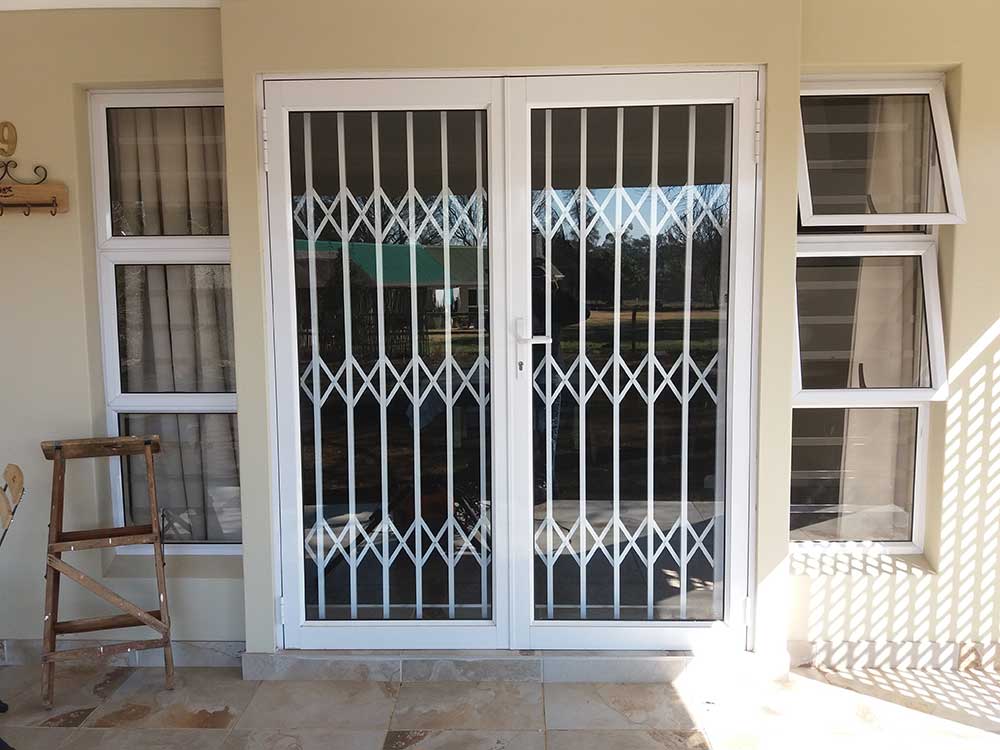
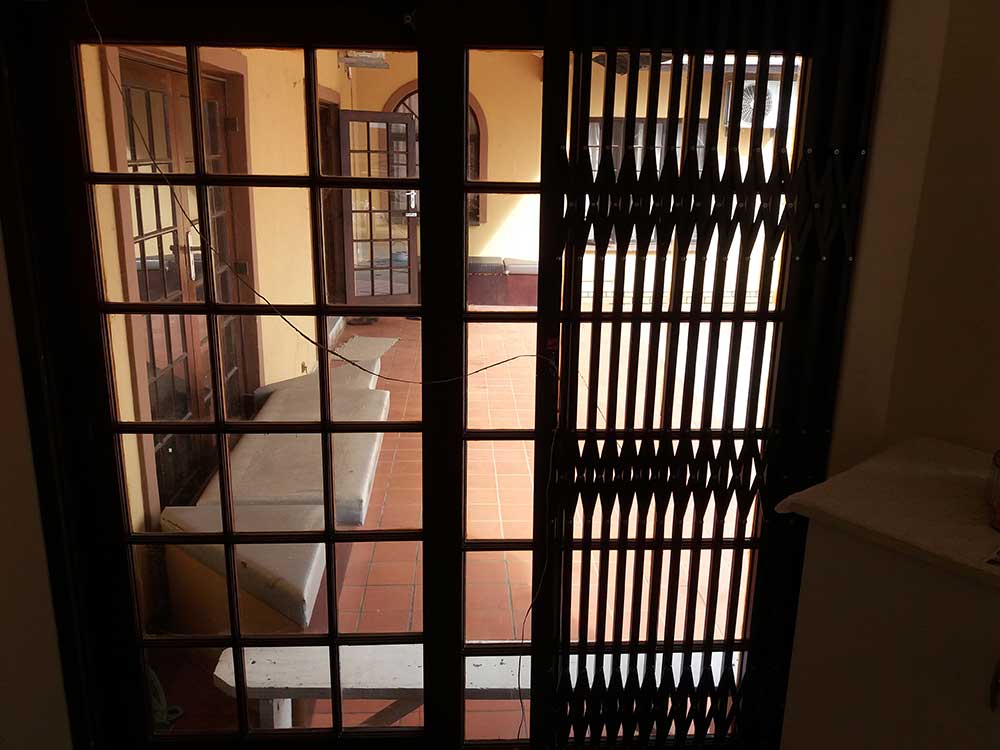
Pre-project site audits covering layout and material review ensure accuracy for your specific property. On-site installation checklists address bracket placement and wire management precisely. Commissioning through RF mapping and field-of-view analysis validates operational readiness. For properties with unique access points, specialists also offer solutions such as retractable trellis doors that complement clear burglar-proofing across multiple entry zones.
Professional installation turns your clear polycarbonate investment into reliable protection while maintaining unobstructed views.
Polycarbonate vs. steel: durability and maintenance
When you’re evaluating burglar-proofing materials, you’ll notice that steel requires protective coatings to prevent rust and corrosion over time, whereas polycarbonate is inherently resistant to corrosion and ideal for outdoor applications exposed to the elements.
While stainless steel 316 resists chlorides and industrial chemicals better than polycarbonate, standard steel requires regular maintenance touch-ups to its protective finish every few years to extend its lifespan.
You’ll find that polycarbonate may experience stress cracking in harsh environments and can degrade without UV stabilisers, but UV-protected polycarbonate blocks rays effectively and resists yellowing better than unstabilised plastics. Polycarbonate enclosures can weigh up to 6 times less than comparable metal enclosures, reducing shipping and installation costs significantly.
Both materials can be incorporated into bespoke security solutions that are fabricated to suit your property’s unique features, ensuring a precise fit alongside your existing architecture.
Rust and Corrosion Resistance
Polycarbonate and steel take fundamentally different approaches to resisting rust and corrosion, and understanding these differences helps you make an informed choice for your home’s security barriers.
Polycarbonate contains no iron, making it scientifically incapable of oxidising into rust. Steel, however, corrodes when iron reacts with moisture and oxygen unless it is protected by coatings. Once a steel coating is scratched or dented, the protective layer fails and rust begins immediately.
You’ll find polycarbonate inherently resistant to water, humidity, acids, bases and salts without the need for surface treatment. It performs exceptionally well in damp, marine and moderately corrosive environments where steel often fails.
Steel requires periodic maintenance, repainting or additional protective measures if corrosion starts. Polycarbonate enclosures remain virtually maintenance-free, providing greater long-term savings and durability in harsh KwaZulu-Natal conditions.
Specialists offering transparent barrier options use high-quality, durable polycarbonate materials precisely because they withstand both weather and wildlife pressure without degrading over time.
Long-Term Structural Integrity
Because you’re investing in security barriers for your KwaZulu-Natal home, understanding how these materials age and perform over decades matters substantially.
Polycarbonate burglar bars typically last 20–30 years with proper maintenance. Steel burglar bars markedly outperform this timeline, lasting 40–70 years. You’ll find that steel maintains consistent mechanical properties throughout its lifespan, while polycarbonate gradually becomes brittle despite UV stabilisation.
Temperature swings affect materials differently. Polycarbonate withstands –40°C to 120°C without failure but can become brittle in extreme cold. Steel maintains full strength from –60°C to beyond 400°C, providing superior reliability across seasons.
Weight and rigidity favour steel construction. Steel’s 8.0 g/cm³ density offers unmatched load-bearing capacity and long-term structural permanence. Polycarbonate’s 1.2 g/cm³ lightness makes installation easier but reduces durability. For a lasting security investment, steel delivers the better result homeowners deserve. Steel’s structural durability also extends to swing gate construction, where robust materials and advanced locking mechanisms combine to provide decades of reliable perimeter protection.
How to install polycarbonate bars correctly
Proper installation of polycarbonate bars determines whether your security solution performs as designed. You’ll achieve the best results by adhering to precise technical specifications throughout the process.
Start with accurate measurements of your window dimensions. Use 6 mm polycarbonate strips as standard, with 8 mm available for improved strength. Keep the protective film on the strips during handling to prevent surface damage.
Position drilling holes at least 1.5 times the bar thickness from the edges, preventing cracking. Center holes in wooden strips to avoid weak points. Maintain 100–120 mm spacing between bars, depending on the distances between fixing points. Avoid drilling holes directly into window frames, as this creates structural vulnerabilities and requires untrained installers to navigate complex fitting challenges.
Secure the bars exclusively with stainless-steel rivets and exterior timber screws. Space fasteners at 200–300 mm intervals for timber-supported structures. Leave 4–5 mm expansion gaps on each side to accommodate thermal movement. For a free home security assessment, a professional can evaluate whether your chosen materials and spacing meet the specific security demands of your property.
Professional burglar bars KZN installation requires attention to these specifications for long-lasting security and unobstructed views.
Bar Spacing and Thickness: The Security Formula
The distance between your polycarbonate bars and their thickness work together as a security formula—one cannot function effectively without the other.
You will maintain maximum gaps of 4 inches (102 mm) between vertical bars to prevent passage of the head and manipulation of the locks by hand.
Thicker bars, measuring 0.75 inches (19 mm), provide superior resistance against bending compared with thinner 0.5-inch variants.
Your bar diameter directly affects how many bars you will need to safely fill your window width.
Wonder Bars Durban professionals calculate even spacing by subtracting the total bar widths from your internal window width, then dividing by the number of gaps.
Standard spacing increments such as 200 mm or 250 mm significantly reduce measurement errors.
This integrated approach—correct spacing combined with adequate thickness—creates your customised security barrier without compromising visibility or aesthetic appeal.
Wonder Bars prioritises high-grade materials over lower-grade industry alternatives to ensure your security bars maintain structural integrity over the long term.